Era specific opener hardware
That's different from what we'd load for a call to one of the 1960s-era neighborhoods elsewhere in the service area, where extension springs and older relay-style openers are still common.
Algonquin, Schaumburg
Emergency garage door repair for Algonquin, IL, run from Schaumburg. What the 15-mile drive means for the call, and why Algonquin's newer housing stock breaks differently than older parts of the territory.
The repair
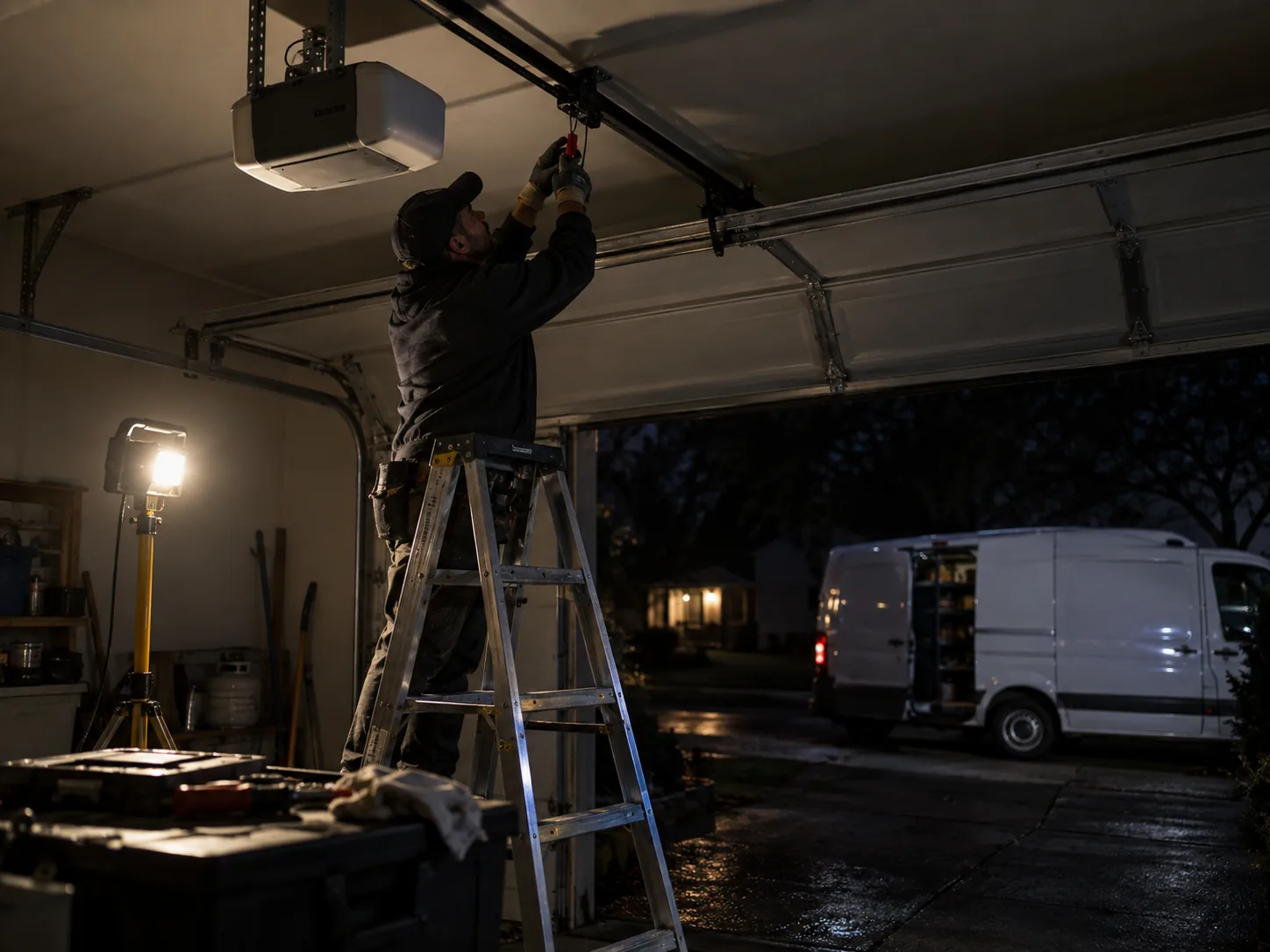
Algonquin sits about fifteen miles from our Schaumburg shop, which is farther out than most of the towns we run calls to. That distance doesn't change what a broken spring or a dead opener needs, but it does change how the call has to be planned - the truck needs to be loaded with the right spring size and the right opener logic board before it leaves, because there's no quick turnaround to grab a part we didn't bring. A stuck door with a car trapped inside gets triaged first; a door that's merely off-track and closed can wait its turn behind that call.
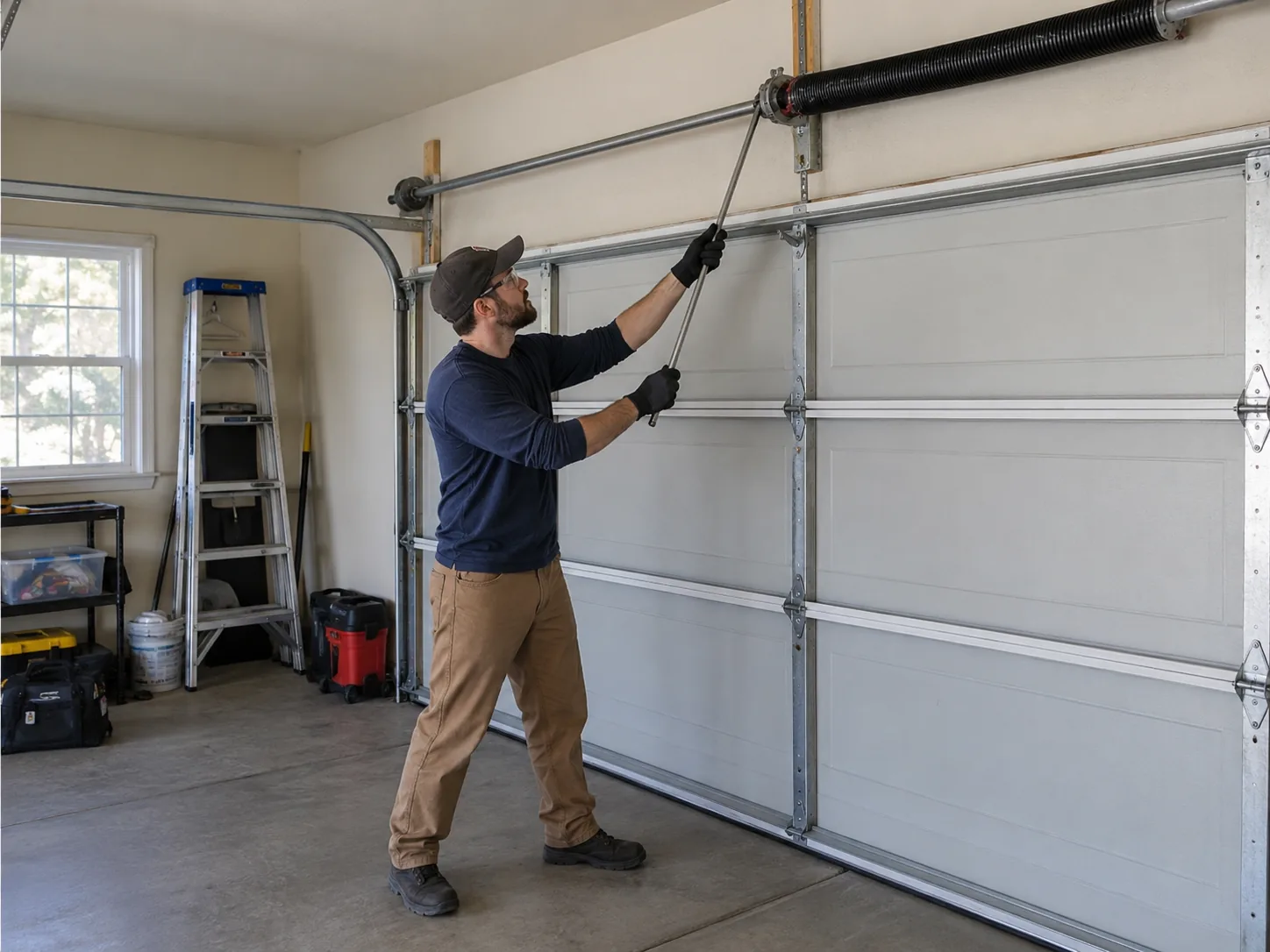
Once we're on-site, the fix itself is standard trade work: identify whether the failure is a broken torsion spring, a snapped cable, a burned-out opener motor, or a track that's come loose from the wall. We diagnose before we quote, and we don't replace a whole door assembly when a spring or a hinge will do the job. The fifteen-mile run just means we plan the truck load tighter and we don't double back mid-job for a missing part.
On the truck
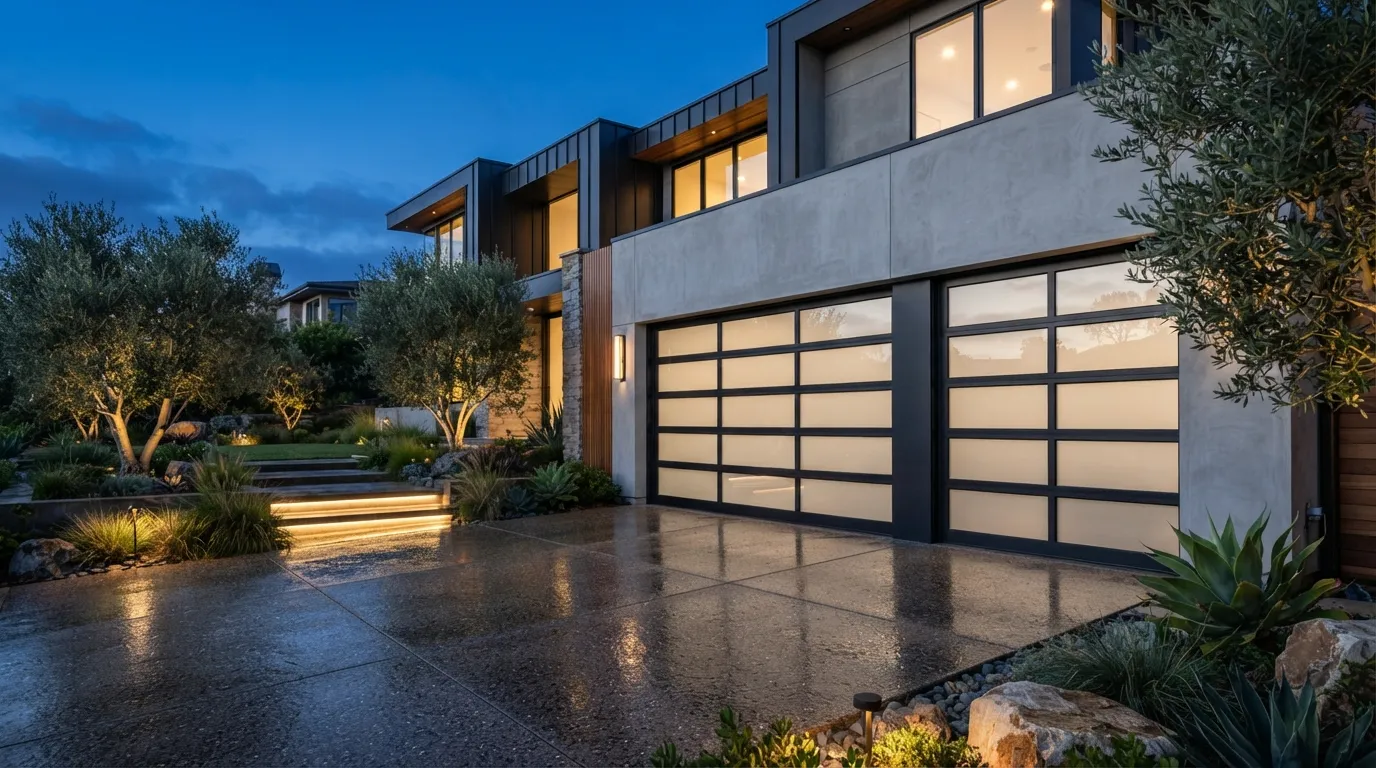
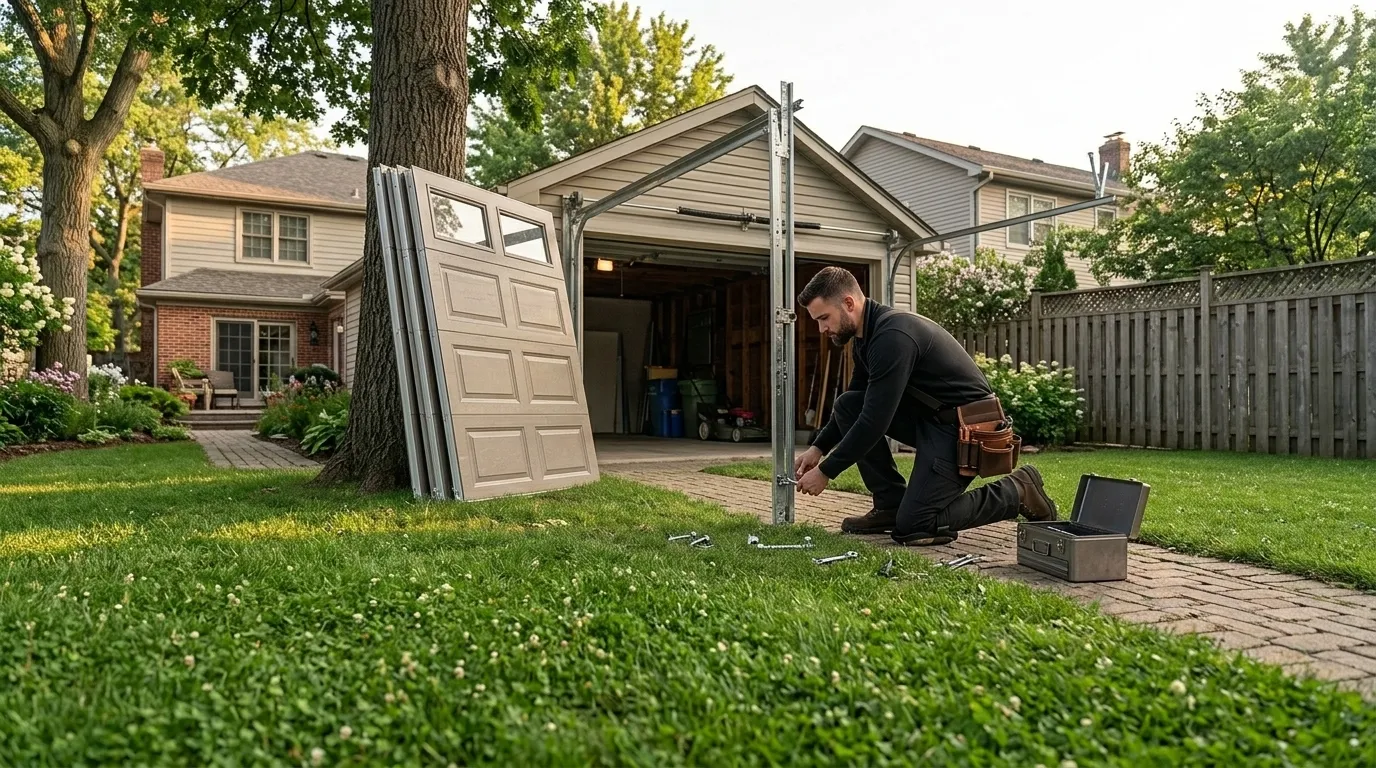
Because Algonquin's homes run newer than the older pockets of the territory, the truck carries stock sized for it: torsion springs rated for standard 7-foot steel doors, steel raised-panel sections in common widths, and opener boards compatible with the safety-sensor systems that became standard on garage doors built from the 1990s onward.
That's different from what we'd load for a call to one of the 1960s-era neighborhoods elsewhere in the service area, where extension springs and older relay-style openers are still common.
We also carry rollers, cables, hinges, and the sensor eyes that cause a surprising number of "the door won't close" calls - a knocked or dirty photo-eye is often mistaken for a spring or opener failure.
What we don't carry is a full stock of every custom panel color or insulated-door variant on the market; if the fix calls for a special-order panel, that part has its own lead time and we'll tell you upfront rather than guess.
Watch-outs
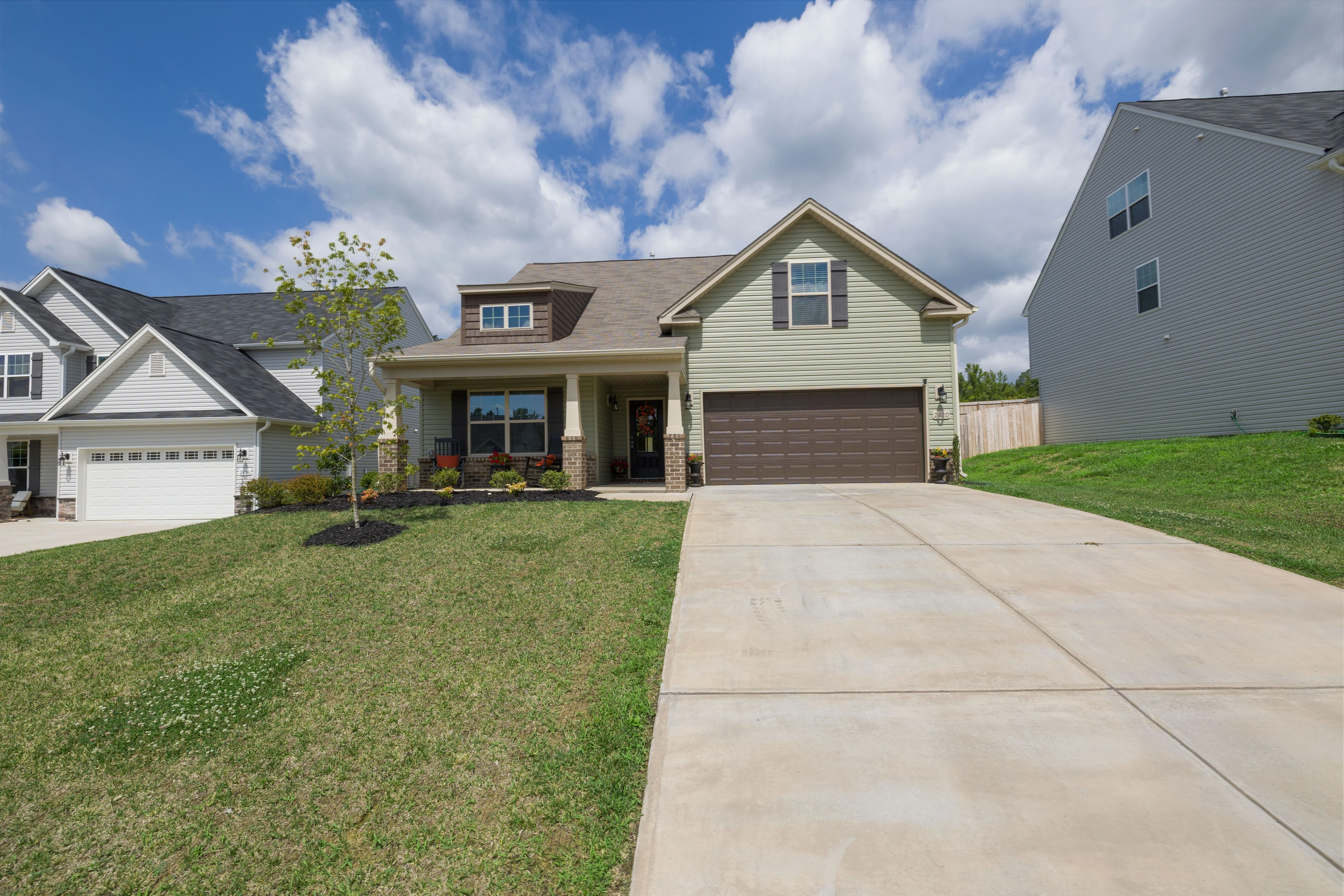
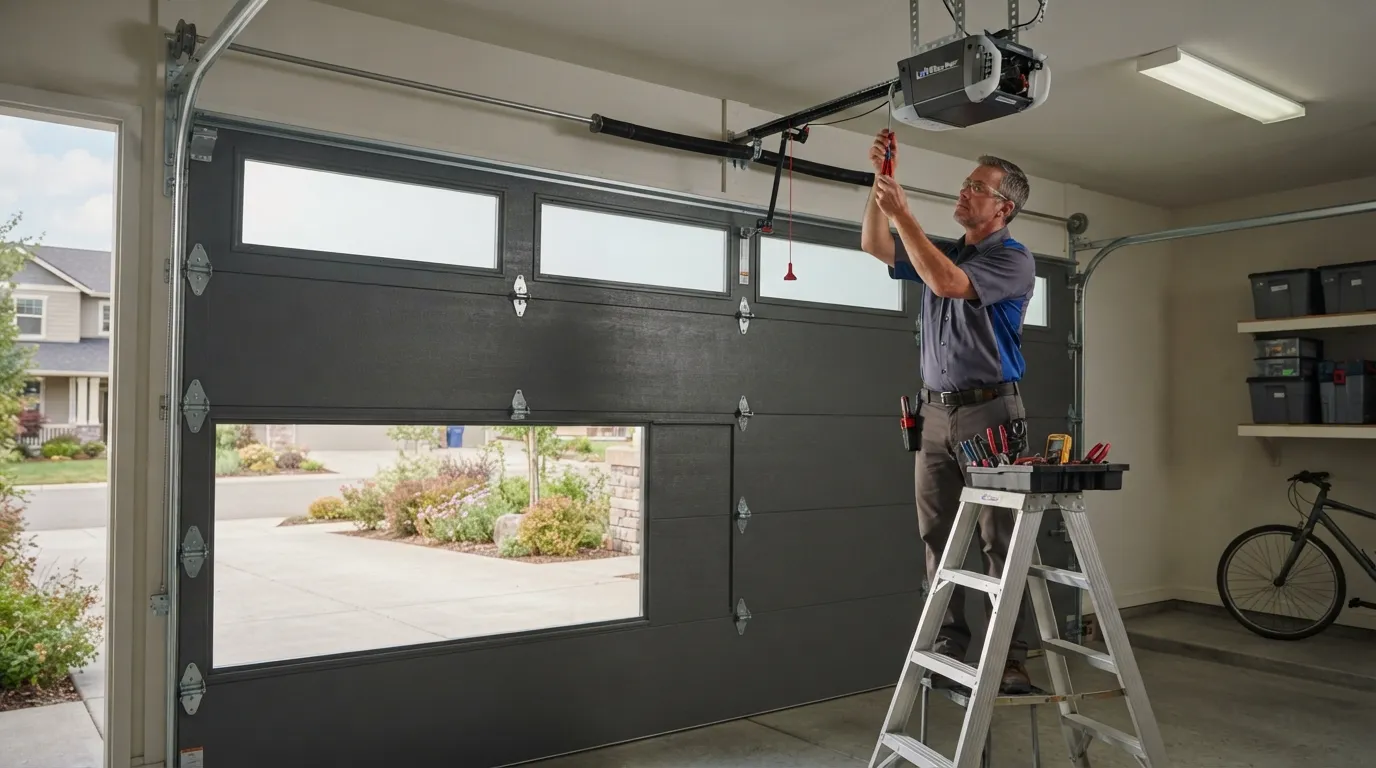
On homes built around the 1994 median for Algonquin, the failures we see most are torsion spring fatigue after years of daily cycles, opener circuit boards going out (especially on units original to the house), and worn nylon rollers that eventually bind in the track and strip the opener's gears trying to force the door through. Cable fraying shows up too, usually on one side, which makes the door hang crooked before it fails outright.
What we see less of here than in older parts of the territory is the one-piece door on outdated side-mounted hardware - that's a 1950s-60s problem, not a 1990s one. Algonquin's stock is young enough that most failures are wear-and-tear on original torsion systems rather than obsolete parts nobody stocks anymore. That's a genuine advantage when it comes to repair versus replace: more of these doors are worth fixing.
Local causes
The rest of the territory we cover from Schaumburg carries a median build year of 1977, with most of the stock dating to the 1960s and 70s.
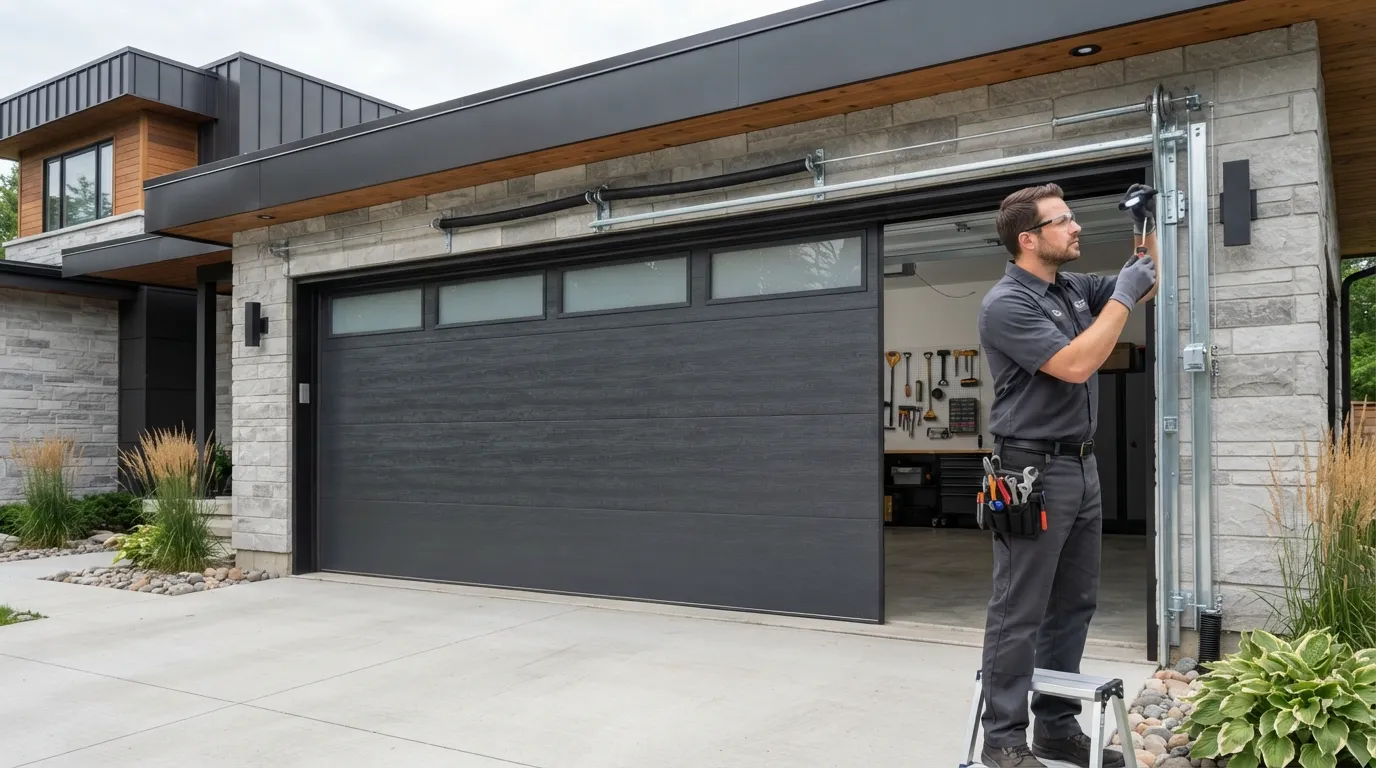
Algonquin's homes run a median seventeen years newer, at 1994, and that gap shows up directly in the hardware we're pulling off doors. Newer torsion-spring systems fail differently than the older extension-spring setups still common closer to Schaumburg - they're more consistent to size and replace, but the openers paired with them have more electronics to go wrong.
Algonquin is also a smaller slice of the territory by household count - roughly 10,914 households against 525,414 across the full service area - and its median household income of $131,753 runs well above the area-wide median of $112,168.
That doesn't change how a spring breaks, but it does mean more of these calls end up as opener or full-assembly upgrades rather than patch repairs, since owners here are more likely to replace an aging unit than nurse it along.
Pricing
We don't have a published price list for this page, and we're not going to invent one. What a call runs depends on the part - a torsion spring, a roller set, an opener board, or a full opener swap all land in different ranges, and we quote after we've looked at the door, not before. What we can say is that Algonquin's newer housing stock tends to need opener and electronics work more than the frame or panel replacement that's common on older doors elsewhere in the territory, and electronics parts generally cost more than mechanical ones.
One honest limitation: if a job needs a special-order panel or an opener model we don't stock on the truck, that part has its own lead time from the supplier, and we won't pretend otherwise just to close the call faster.
Questions
About fifteen miles from our Schaumburg location. We load the truck with the parts sized for the job before we leave, since there's no quick trip back for something we forgot.
Generally yes. Most homes here were built around 1994, well newer than the 1977 median across the wider service area, so torsion-spring systems and opener electronics are more common failure points than the older one-piece doors and extension springs you see on 1960s-era stock.
We carry a broad stock covering both newer and older door types, since the territory spans a wide range of build years. If a job needs a special-order or discontinued part, we'll tell you before we quote, not after.
Explore more
Ready when you are
Schaumburg Garage Door Pros repairs and installs garage doors, springs and openers in Schaumburg, IL and the surrounding area.