
Spring fatigue ends door life
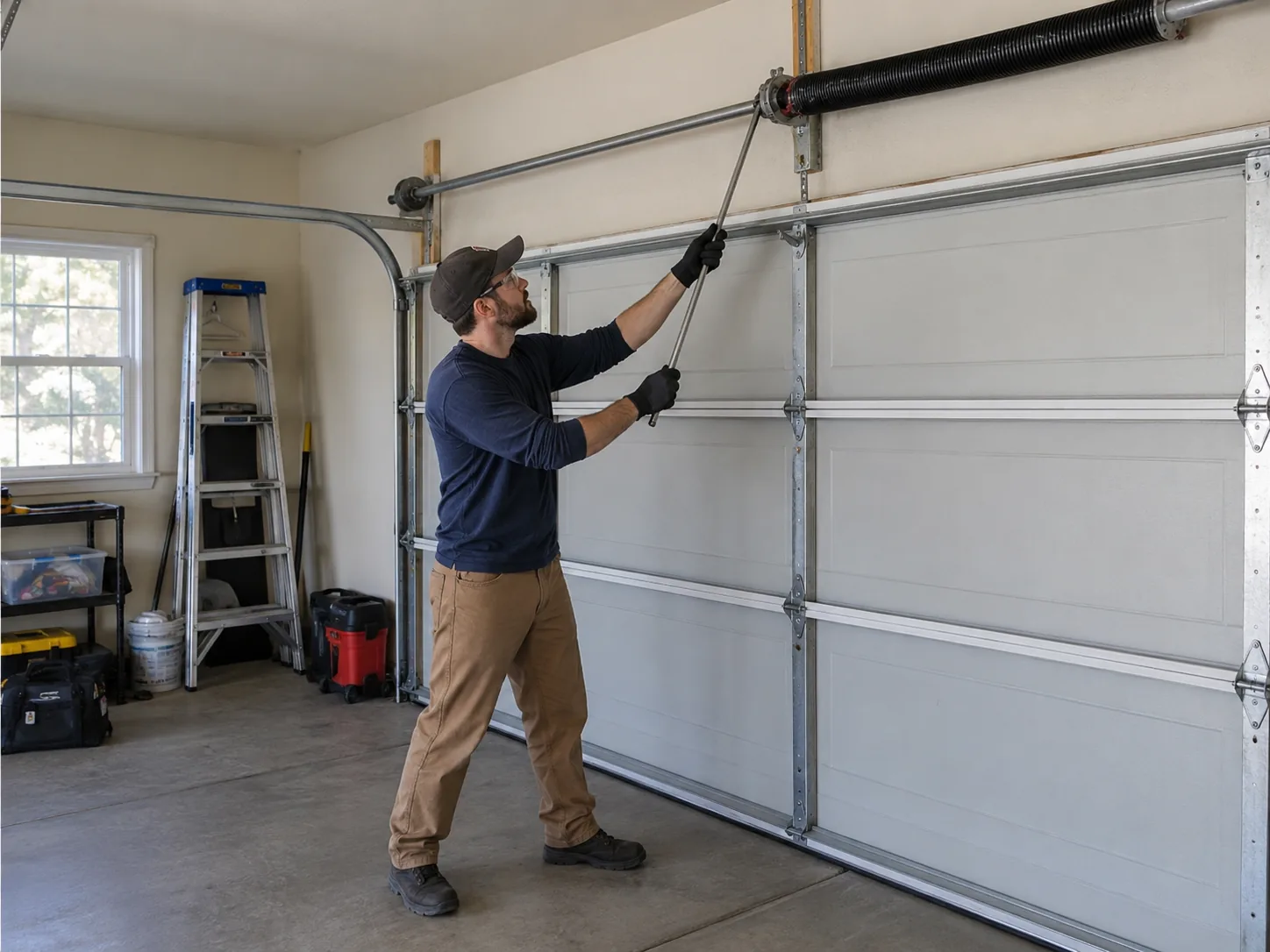
The failure we see most in this age of home isn't a rotted panel - steel doesn't rot - it's a spring that's cycled tens of thousands of times and finally lets go, or an opener logic board that's outlived its gears.
Algonquin, Schaumburg
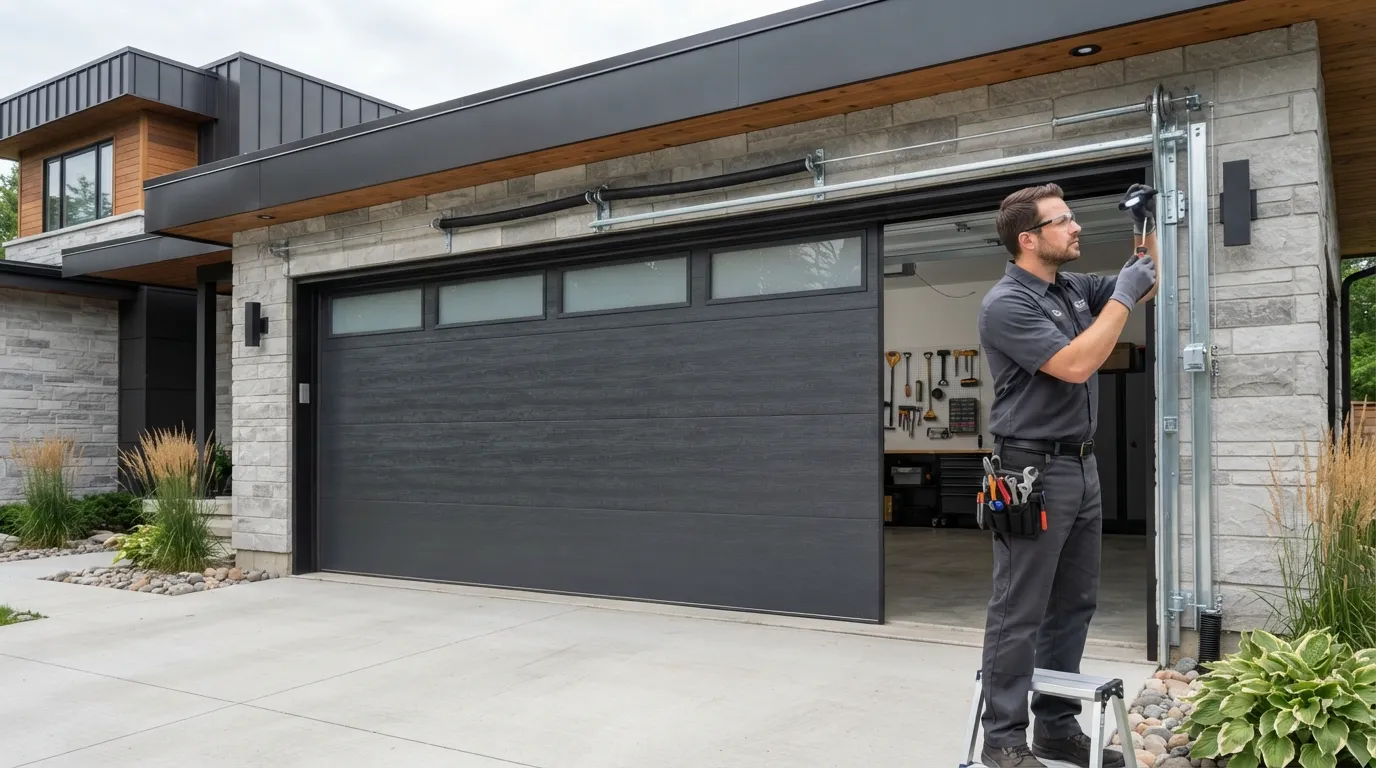
New garage door installation for Algonquin's 1990s-era homes. Steel sectional doors sized for wider bays, insulated for cold winters. Quoted from Schaumburg, 15 miles out.
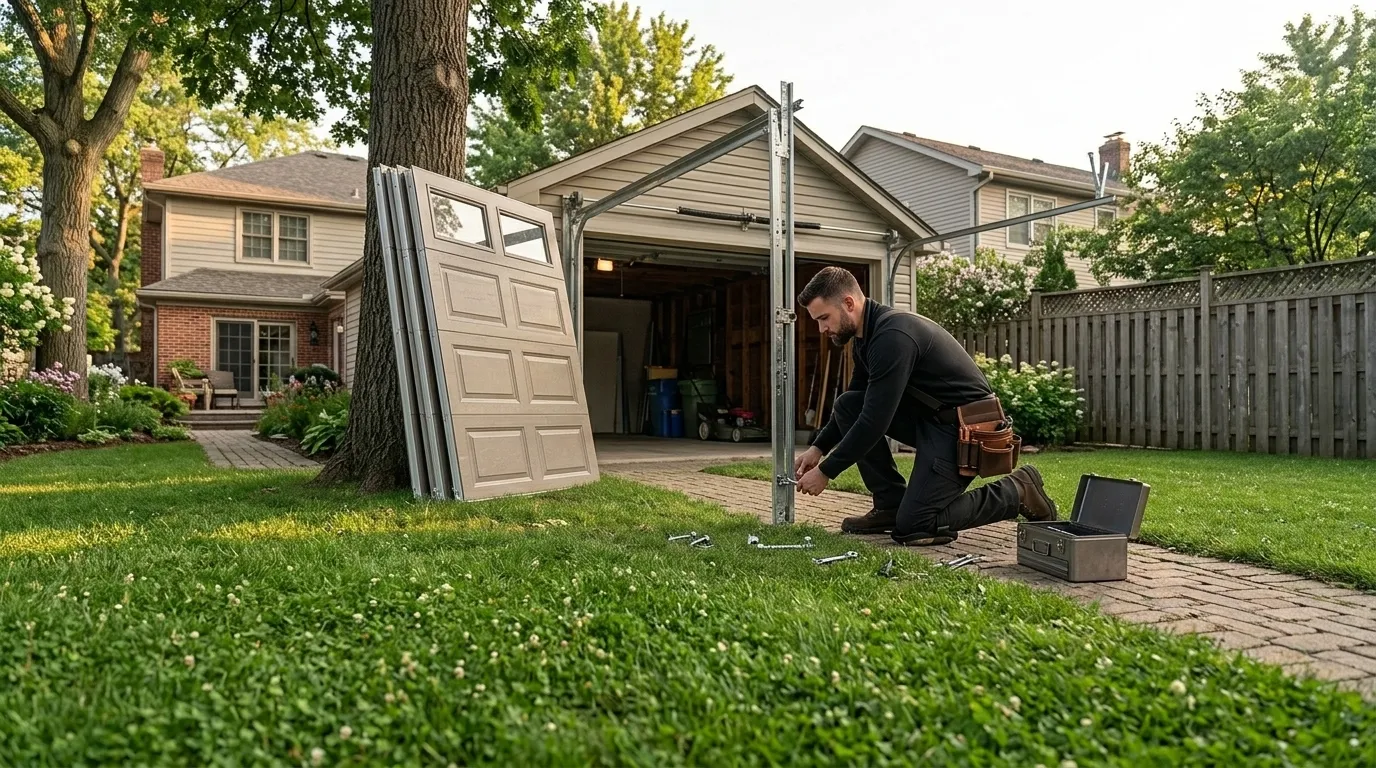
The repair
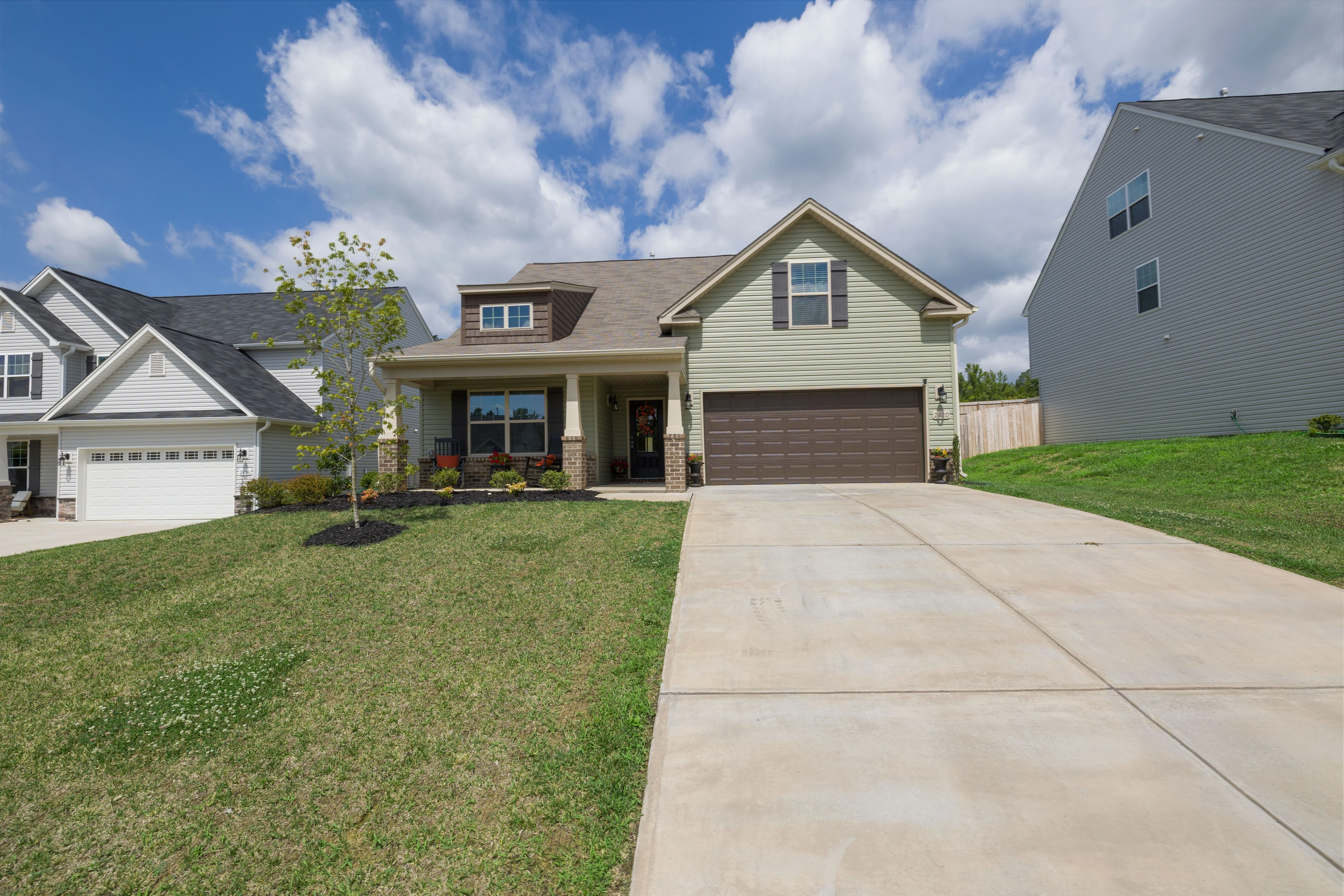
Most houses in this part of the service area went up well after the older 1960s-70s wave that fills most of our call list - Algonquin's homes cluster closer to a median build year of 1994.
That means the garage bays are already sized for modern cars: wider single doors, often a 16-foot double, built for steel sectional panels rather than the narrow one-piece slabs we still pull off older houses. When we're doing a new install here, we're not fighting a tight opening or an odd header height.
The work is mostly straightforward: measure the existing jamb, confirm headroom and backroom clearance, and set a properly sized steel sectional door with factory insulation, since this area sits in a cold moderate climate band and an uninsulated door loses the fight against a January garage.
We also swap the track and rollers to match, since a wider or heavier door needs hardware rated for it, not whatever came with the smaller door it's replacing.
On the truck
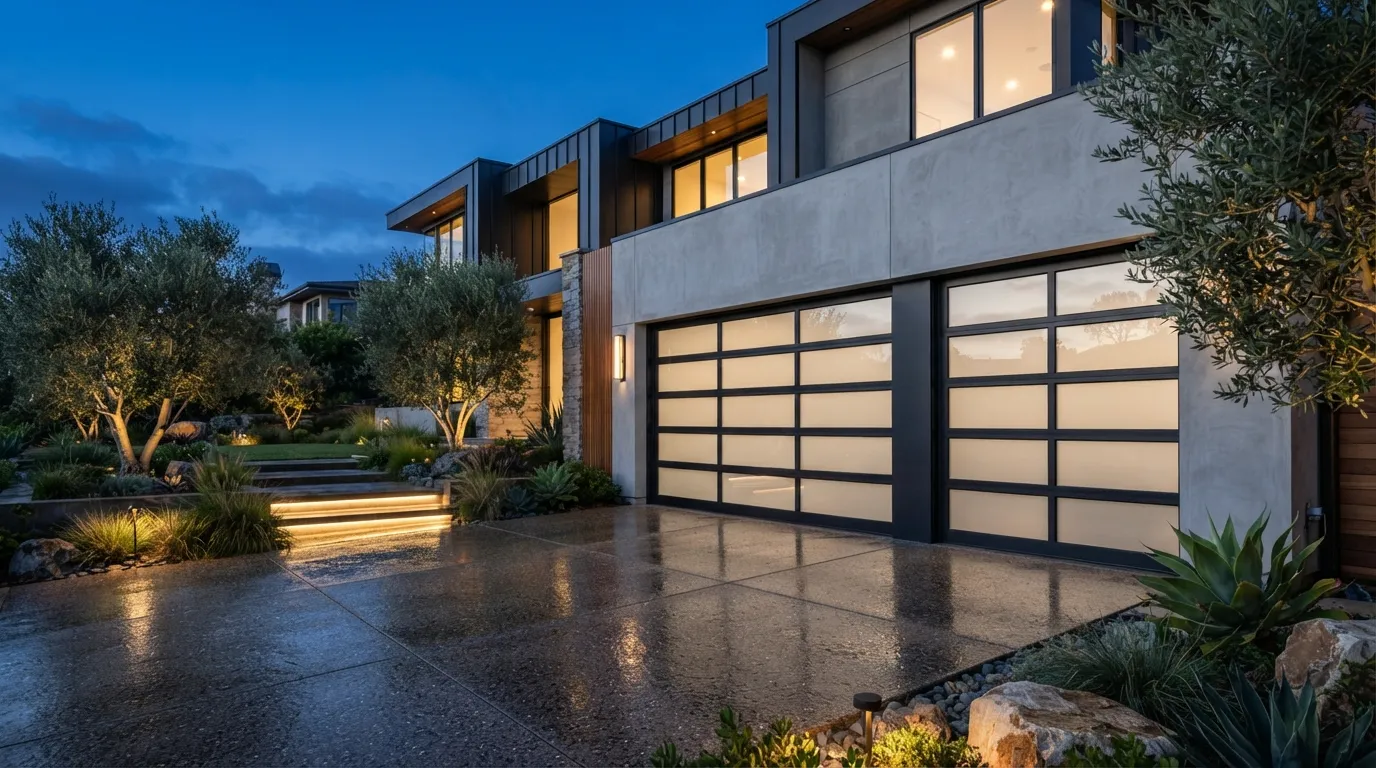
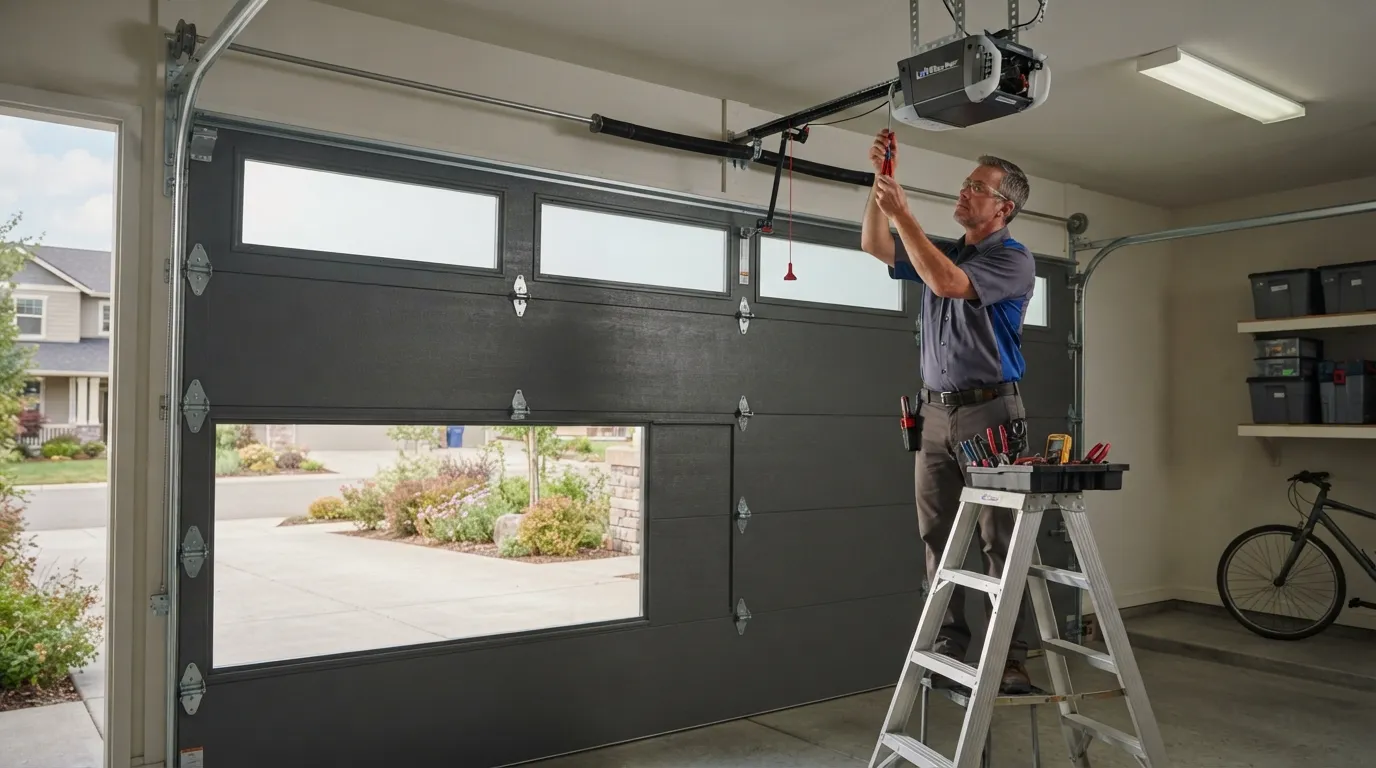
For a 1990s-built house we bring steel sectional panels in the common widths - single and double - with polystyrene or polyurethane insulation cores, since a bare steel door in this climate band sweats and rattles more than it should. We carry torsion spring sets rated for the heavier insulated doors that era's garages were built to hold, plus galvanized track sections long enough for a full-size double bay. Openers on the truck are current models with battery backup and rolling-code security, which is a real upgrade from the chain-drive units that were standard when these houses were framed. One limit worth being upfront about: if your opening has a nonstandard header or an unusual jamb condition, we may need a special-order panel, and that adds lead time we can't shorten from a truck in Schaumburg.
Watch-outs
A house built around 1994 usually still has its original torsion spring and opener, both now over three decades old, and springs don't announce they're about to go.
The failure we see most in this age of home isn't a rotted panel - steel doesn't rot - it's a spring that's cycled tens of thousands of times and finally lets go, or an opener logic board that's outlived its gears.
When a homeowner calls about a new install, it's often because the door itself is fine but the operating hardware isn't worth chasing part by part anymore. We'll tell you straight if that's the case: replacing a 30-year-old opener and spring set piecemeal can cost close to a new door assembly, and at that point matching new panels to old track is false economy.
Local causes
Algonquin sits about 15 miles from our Schaumburg base, in a household bracket of roughly 10,914 homes with a median income near $131,753 - noticeably higher than the roughly $112,168 median across the broader service area we cover. That income profile shows up in the door choices people actually want here: higher-end insulated steel or composite overlay panels, and openers with smart-home features, rather than the bare economy door that moves fastest in older, denser parts of the territory. The failure mode that's specific to this area isn't weather damage or age-related panel rust - the stock is too young for that - it's mismatched hardware from a partial repair, where a homeowner swapped an opener but kept a spring sized for the original door weight, or vice versa. That combination fails faster than either part would on its own.
Pricing
We don't have a published price list for this specific job, and quoting a number without seeing the opening would be a guess dressed up as a fact. What we can say is that pricing depends on door width - single versus double bay - insulation level, and whether the opener is included in the same visit. A straightforward swap on a standard double bay runs differently than a custom-width single with a smart opener added on. Because every job here means a drive out from Schaumburg, we quote by phone or in person rather than by a flat rate, so you're not paying for guesswork on either end.
Questions
Often yes. With a median build year around 1994, most bays here were framed for modern cars, so double doors and wider singles are common, unlike the narrower openings typical of 1960s and 70s construction elsewhere in our territory.
No. We run this work out of Schaumburg, about 15 miles away, and load the truck for your job before we drive out. There's no local branch or warehouse here.
Usually not. Openers from that era are near the end of their working life, and pairing new panels with old gears or a worn spring set tends to fail faster than either part alone. We'll look at the whole assembly, not just the door, before recommending what to replace.
Yes. This area sits in a cold moderate climate band, and an uninsulated steel door performs noticeably worse through winter than an insulated sectional door, both for temperature and for condensation on the panel.
Explore more
Ready when you are
Schaumburg Garage Door Pros repairs and installs garage doors, springs and openers in Schaumburg, IL and the surrounding area.