1970s original hardware ubiquity
That matters more than most homeowners think, because a garage door installed in 1976 has had roughly fifty years to need one spring replacement, maybe two, and a whole lot of owners just never got to it.
Hanover Park, Schaumburg
Garage door repair and service for Hanover Park homes built mostly in the 1970s, covered from Schaumburg, 4 miles away. Same original hardware, real fixes.
DIY or pro
The typical house in Hanover Park went up around 1976, which puts it right in the thick of the 1960s-70s stock that dominates this whole service area.
That matters more than most homeowners think, because a garage door installed in 1976 has had roughly fifty years to need one spring replacement, maybe two, and a whole lot of owners just never got to it.
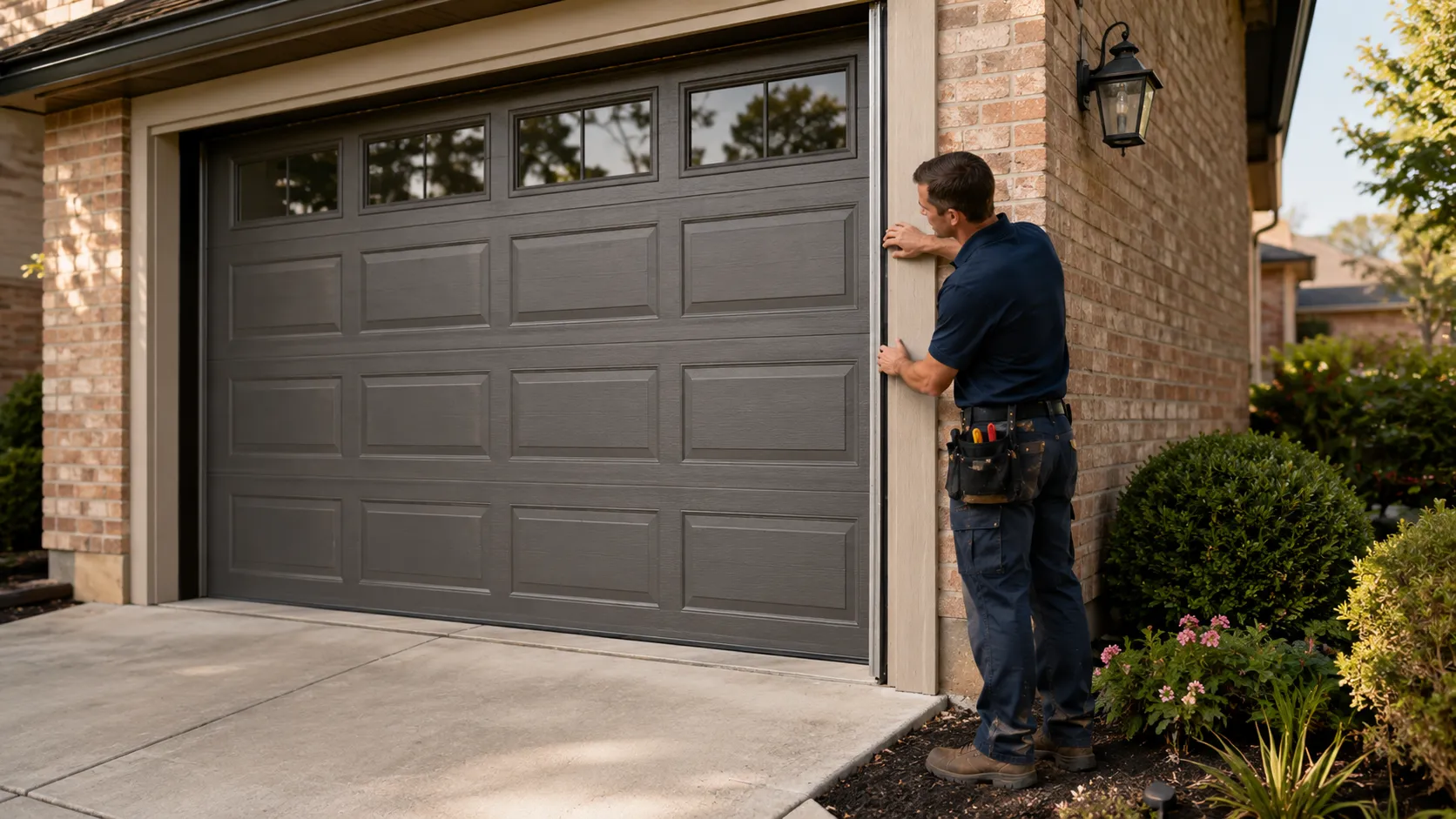
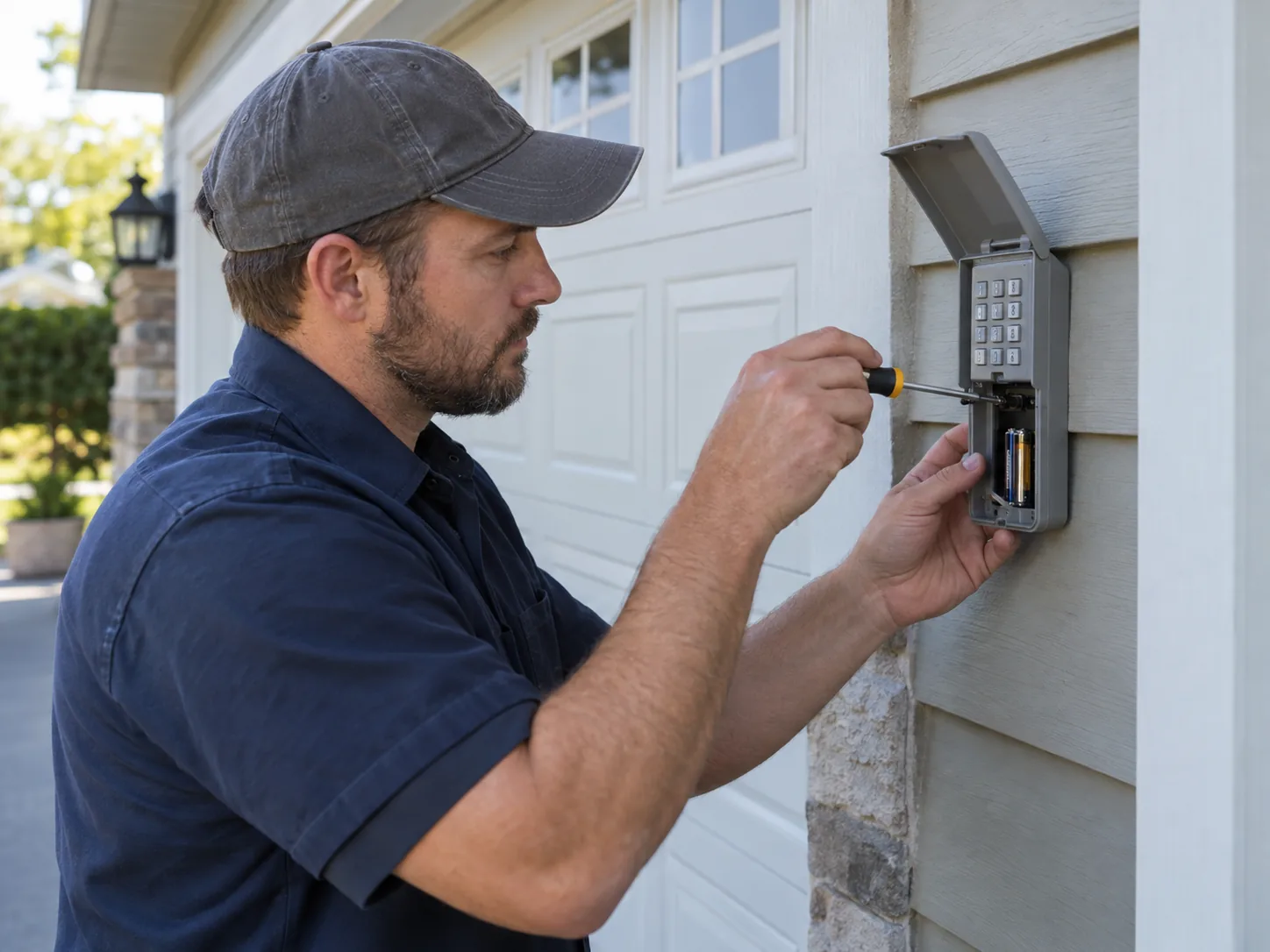
If your opener still runs on the original torsion spring and the original bracket set, you're not unusual here - you're the norm. So can you fix it yourself? Depends what "it" is. Swapping a remote battery or lubricating a track, sure.
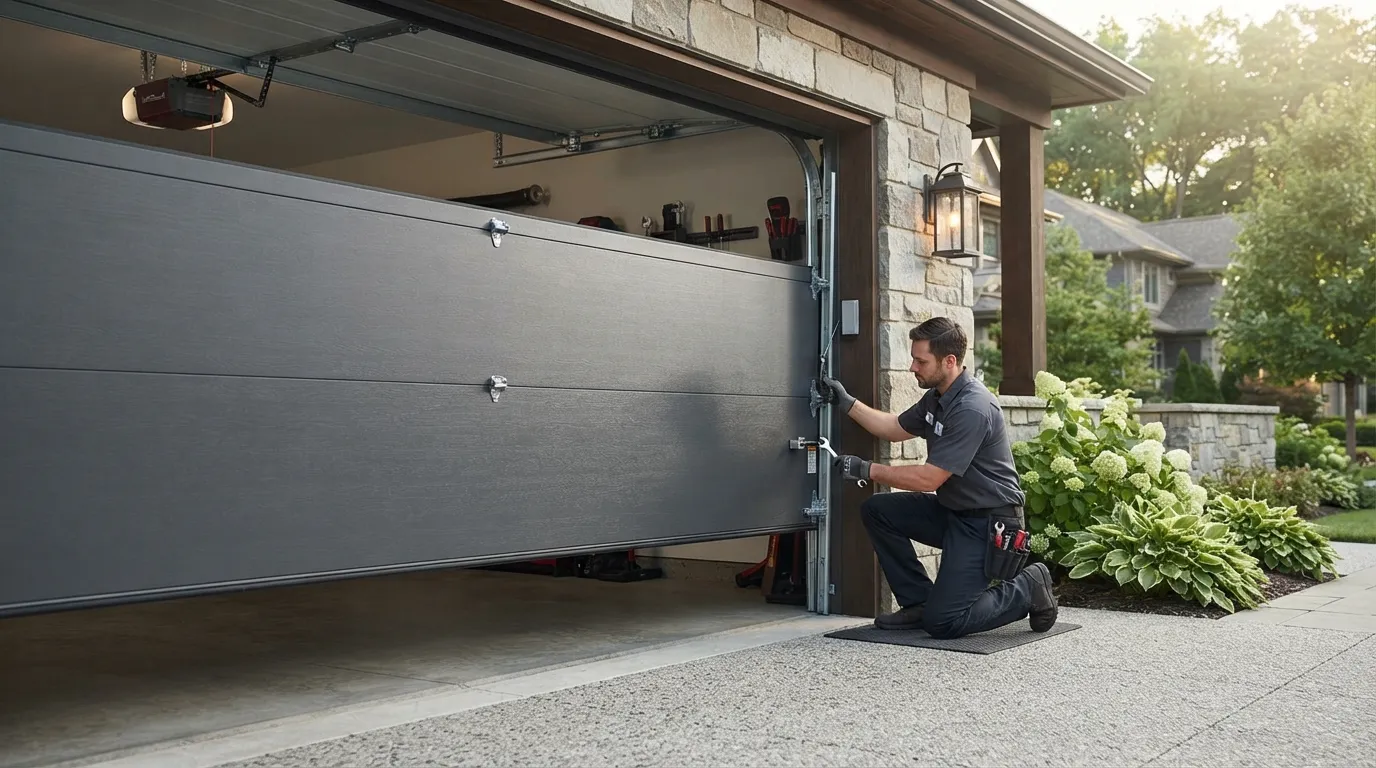
Pulling a wound torsion spring off a 1970s-era shaft is a different story - the winding cones on hardware this old are often rusted or slightly out of spec for anything sold today, and a spring under tension that lets go wrong has put people in the hospital. We'll tell you straight when a job is a ten-minute fix you can do yourself and when it isn't.
The repair
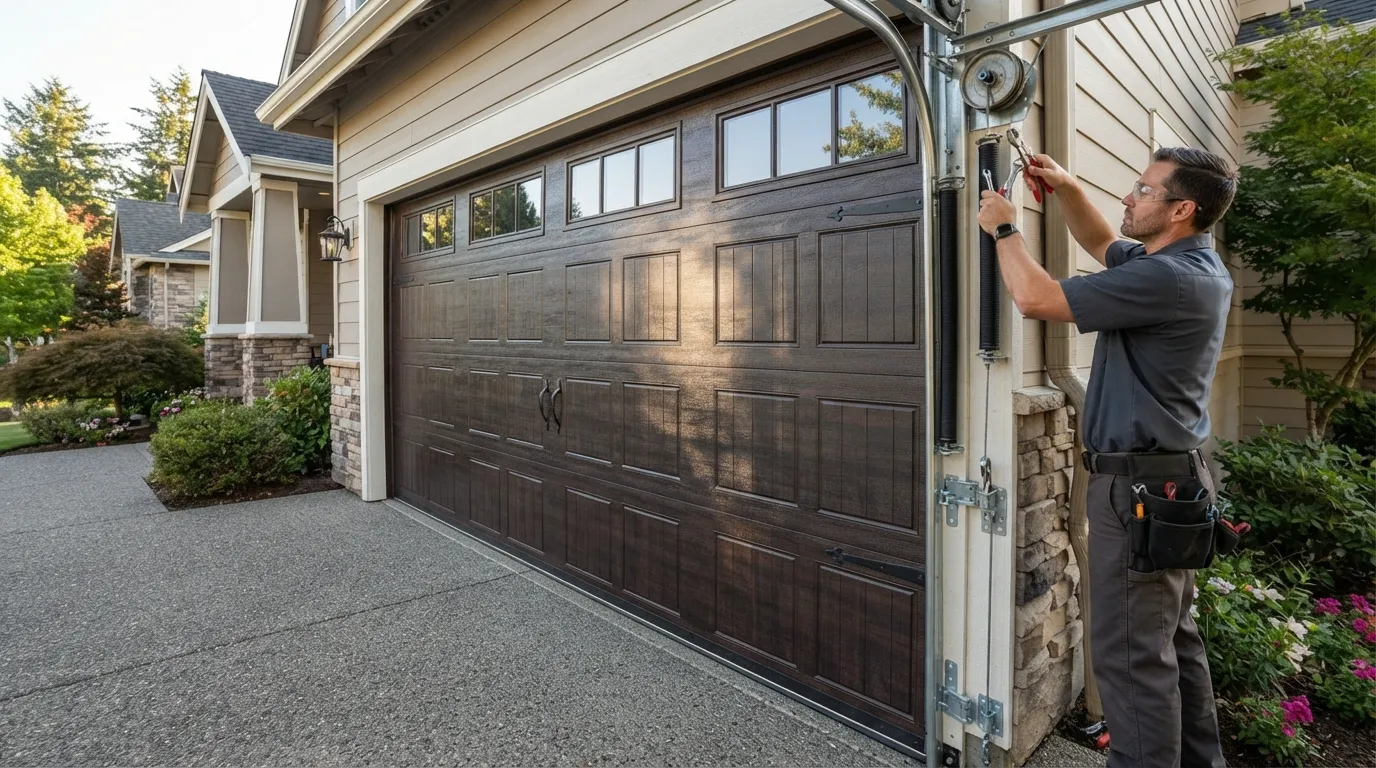
On a house built in the mid-1970s, the door itself is rarely the problem - it's the hardware around it. Torsion springs from that era were sized for lighter, thinner panel doors than what's often on the opening now, so a spring swap usually means recalculating the wind, not just matching what's already there.
We measure the drum, the door weight, and the cable drum diameter before we order anything, because guessing wrong on a torsion spring means doing the job twice.
Cold-climate hardware also matters here. Steel brackets and hinges that have sat through decades of Illinois winters develop surface rust at the mounting points, even if the door still opens fine.
Part of the fix, more often than not, is replacing those brackets while the spring side is already open, rather than leaving compromised metal holding a new spring. We don't replace what doesn't need it - if the track and rollers are sound, they stay.
Watch-outs
The most common call we get from this stretch of Hanover Park is a door that won't open past a foot or two, or one that slams down instead of lowering.
Both usually trace back to a broken torsion spring - on a door this age, the spring has simply outlived its wind count. Less common but not rare: cables that have frayed against a rusted drum, which on original 1970s hardware often means the drum needs replacing too, not just the cable.
What we watch for on older stock specifically is a door that's had a partial repair already - a mismatched spring from a prior owner, or a cable that's the wrong gauge for the drum.
That kind of patch job can look fine for years and then fail all at once. If we find it, we'll tell you rather than just retighten it and send you off, because a door that's mismatched at the hardware level is a repeat call waiting to happen.
Booking
We run out of Schaumburg, four miles from Hanover Park, so there's no separate branch here - one truck, one dispatch, covering both towns and the rest of the service area on the same schedule. Booking works the same whether you're calling about a broken spring or a door that's just gotten noisy.
Give us the door's approximate age if you know it, whether it's a single or double, and what it's doing (or not doing). That's usually enough for us to bring the right spring size and bracket hardware on the first trip instead of a second one. See our Hanover Park garage door service page for what we cover here, or the main Schaumburg service page for the full list of what we do across the area.
Symptoms
The call we hear most from Hanover Park addresses is some version of: "it was fine yesterday, now it won't budge.
On a door with original 1970s-era hardware, that's almost always a torsion spring that's finally given out after decades of cycles - not a sudden event, just the last one in a long line. The door usually feels heavy the moment before it happens too, which owners notice in hindsight but rarely catch in the moment.
A second, quieter symptom worth mentioning: a door that reverses partway down on its own. That's often a sensor alignment issue rather than the spring, and it's a much cheaper fix - which is exactly why we ask what the door is doing before we guess at what's broken. Two different symptoms on hardware this old can look similar from the driveway but call for completely different repairs.
On the truck
For a service area where median household income runs $112,168 across roughly 261,093 owner-occupied houses, but Hanover Park itself sits closer to $92,263 across its own 11,210 households, we stock a spread of torsion spring sizes rather than betting on one standard. That range matters on 1970s stock specifically, since door weights and spring winds from that period vary more than newer builds do.
We carry standard cable, drums, and bracket hardware sized for older torsion setups, plus the openers and sensors for a straight swap when a spring repair isn't worth it anymore. One honest limit: if a specialty panel size or a discontinued opener model needs a special order, we won't have it on the truck the first visit - we'll tell you that up front rather than stall you with a guess, and get it scheduled for the return trip.
Questions
Yes. Most houses here date to the mid-1970s, and a lot of garage door hardware from that period was never touched after installation. A torsion spring lasting decades isn't rare on this stock - it's actually the more common case we run into on service calls.
No. We run out of Schaumburg, about four miles away, and cover Hanover Park on the same trucks and schedule as the rest of the service area. There's no separate depot here, just one dispatch covering the towns nearby.
On hardware this old, mounting brackets often show rust at the fastener points from years of cold-climate exposure. If the bracket is compromised, hanging a new spring on it just sets up the next failure. We only replace what's actually worn, not everything on principle.
If the spring, cables, and track are original from a mid-1970s build and more than one component is failing at once, replacement often costs less over time than repeated repairs. We'll give you the honest comparison rather than default to the bigger job.
Explore more
Ready when you are
Schaumburg Garage Door Pros repairs and installs garage doors, springs and openers in Schaumburg, IL and the surrounding area.