Hanover Park, Schaumburg

Fixing Torsion Springs on Hanover Park's 1976-Built Garage Doors

Most Hanover Park houses went up around 1976, so most doors run standard torsion springs sized for that era's builder-grade hardware. We drive in from Schaumburg, 4 miles away.

Fixing Torsion Springs on Hanover Park's 1976-Built Garage Doors in Schaumburg
Same-day service in most cases
Serving Schaumburg, ILBackground-checked techsHonest, upfront pricingFast local response

DIY or pro

The DIY Question

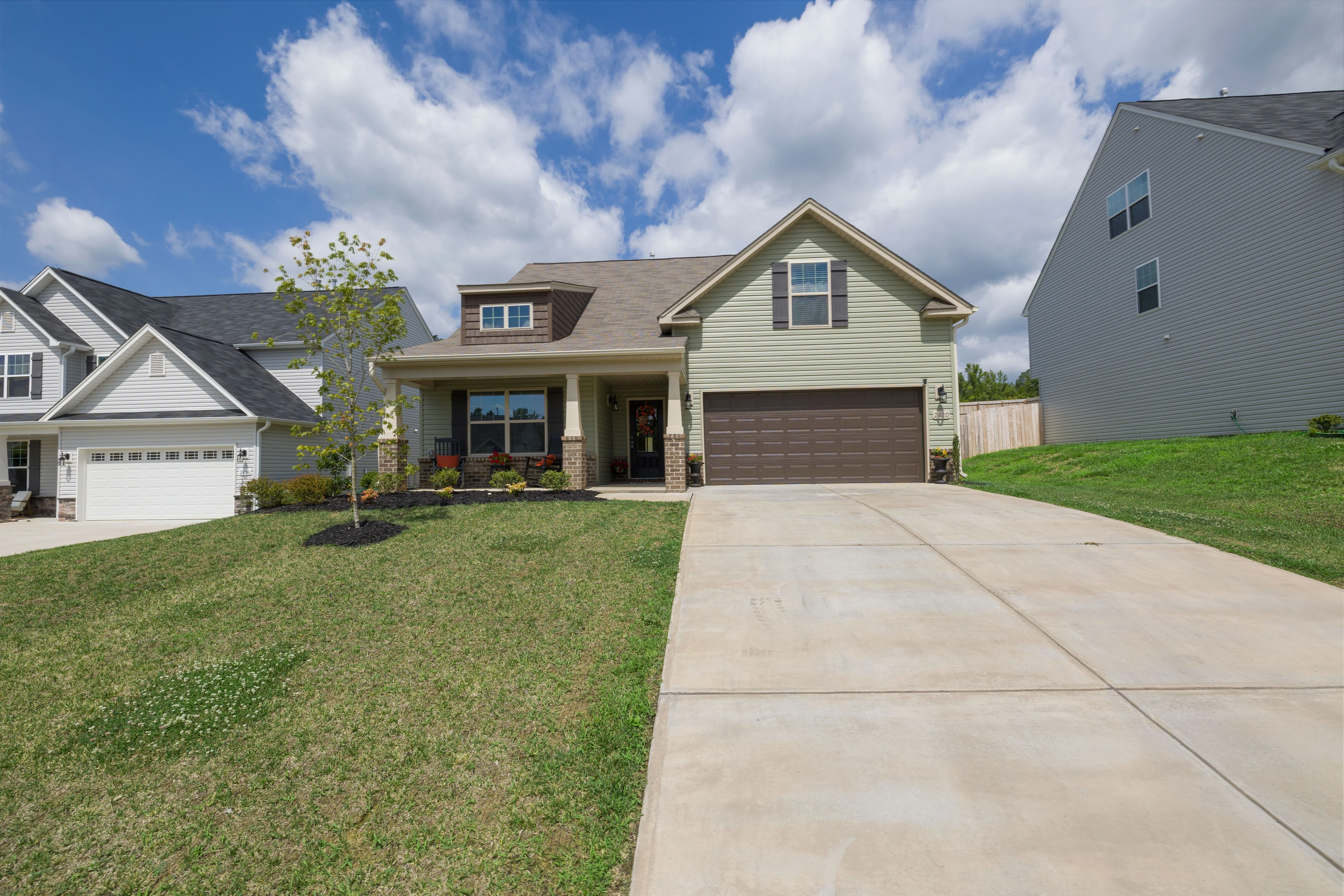
Across the wider Schaumburg service area, houses run anywhere from 1938 to 2009, with a median around 1977. Hanover Park doesn't spread that wide. The bulk of its houses cluster tight around 1976, which means the garage doors behind them are mostly the same weight, the same width, and the same torsion hardware - not a mixed bag like you'd find in an older or newer pocket of the region.

Torsion spring force danger

That uniformity is actually good news for diagnosis, but it doesn't make the job safe to do yourself. A torsion spring wound to lift a standard 1970s builder-grade door stores enough force to break fingers or worse if the winding cone slips.

Limited holiday availability

We don't stage a truck in Hanover Park itself - the nearest depot is in Schaumburg, about 4 miles off - so if you're calling around 11 p.m. on a holiday hoping for a same-hour fix, we can't promise that.

Predictable era hardware

What we can do is get a properly sized spring and the right winding bars on the truck before we leave, because we already know what era of door we're driving to.

The repair

What the Fix Involves

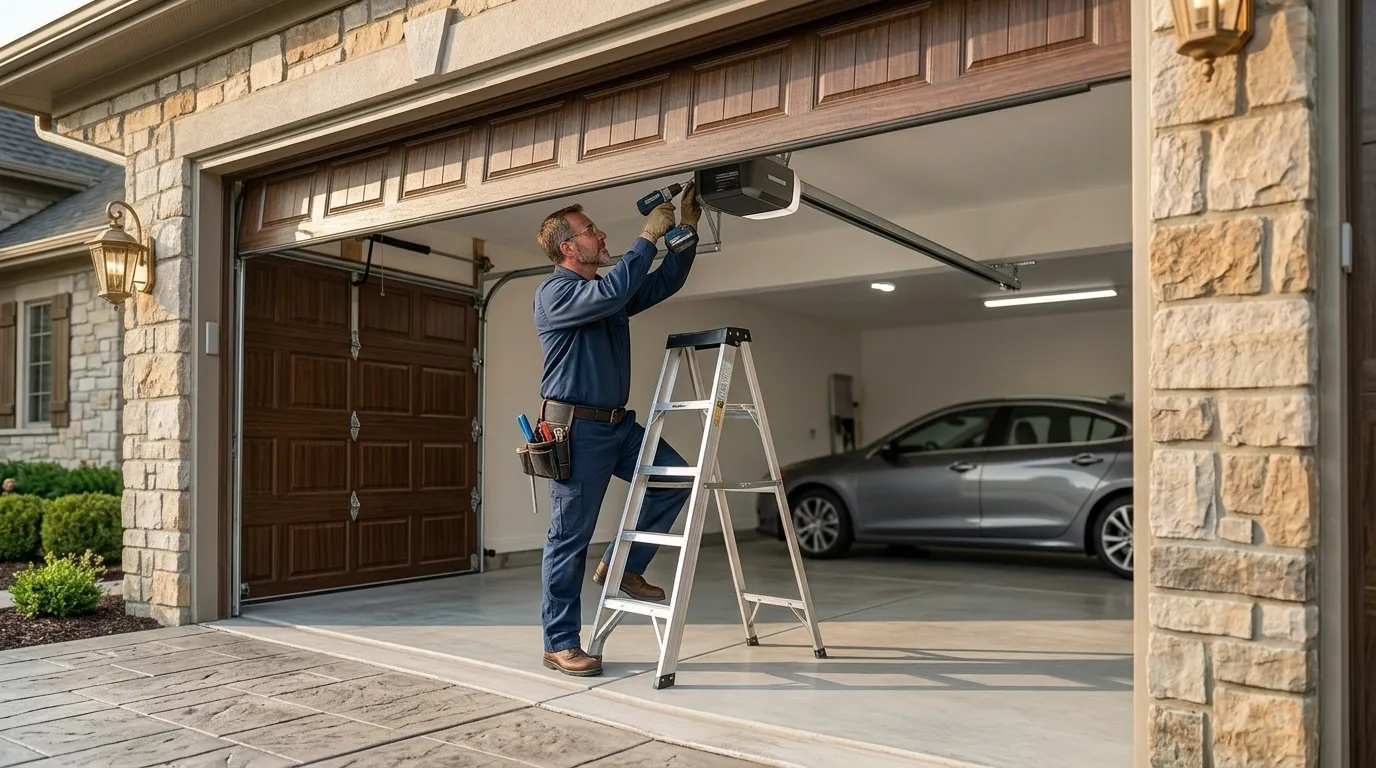
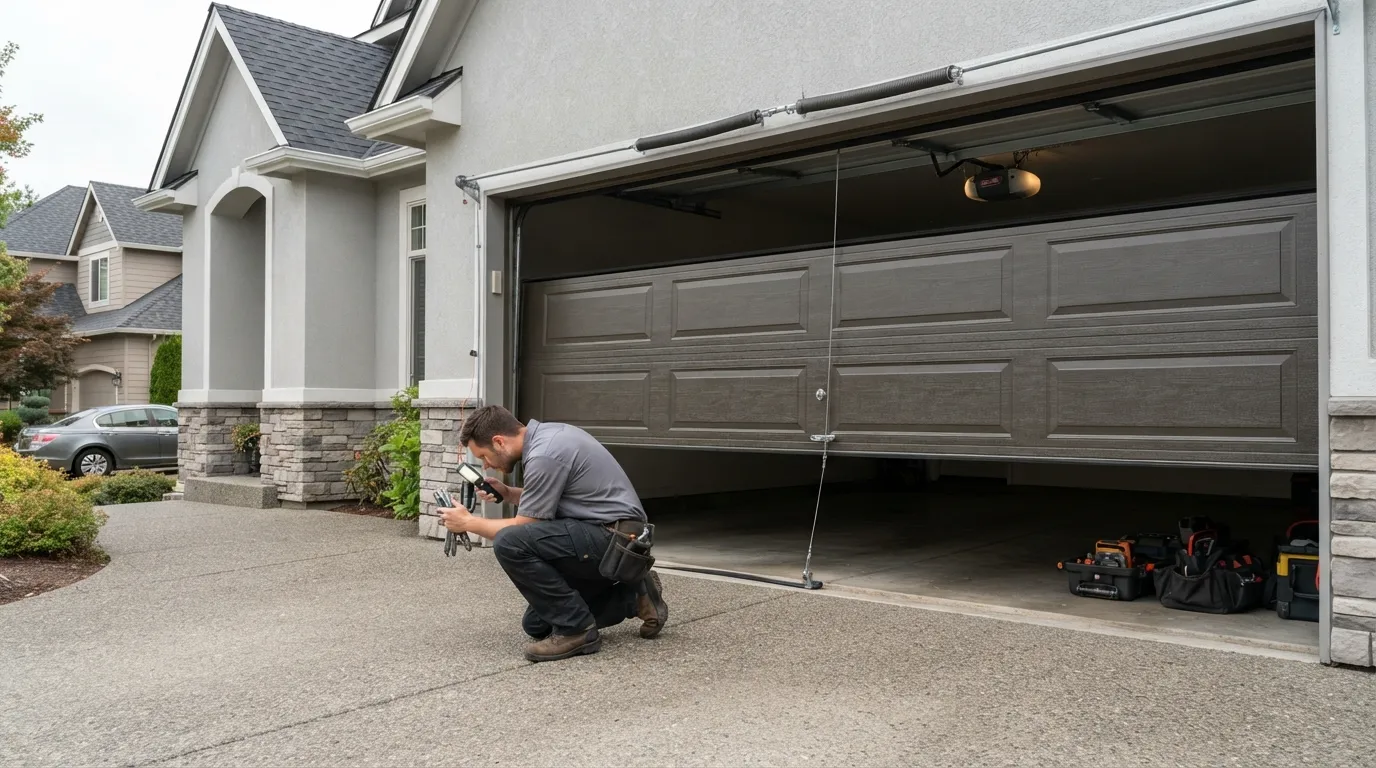
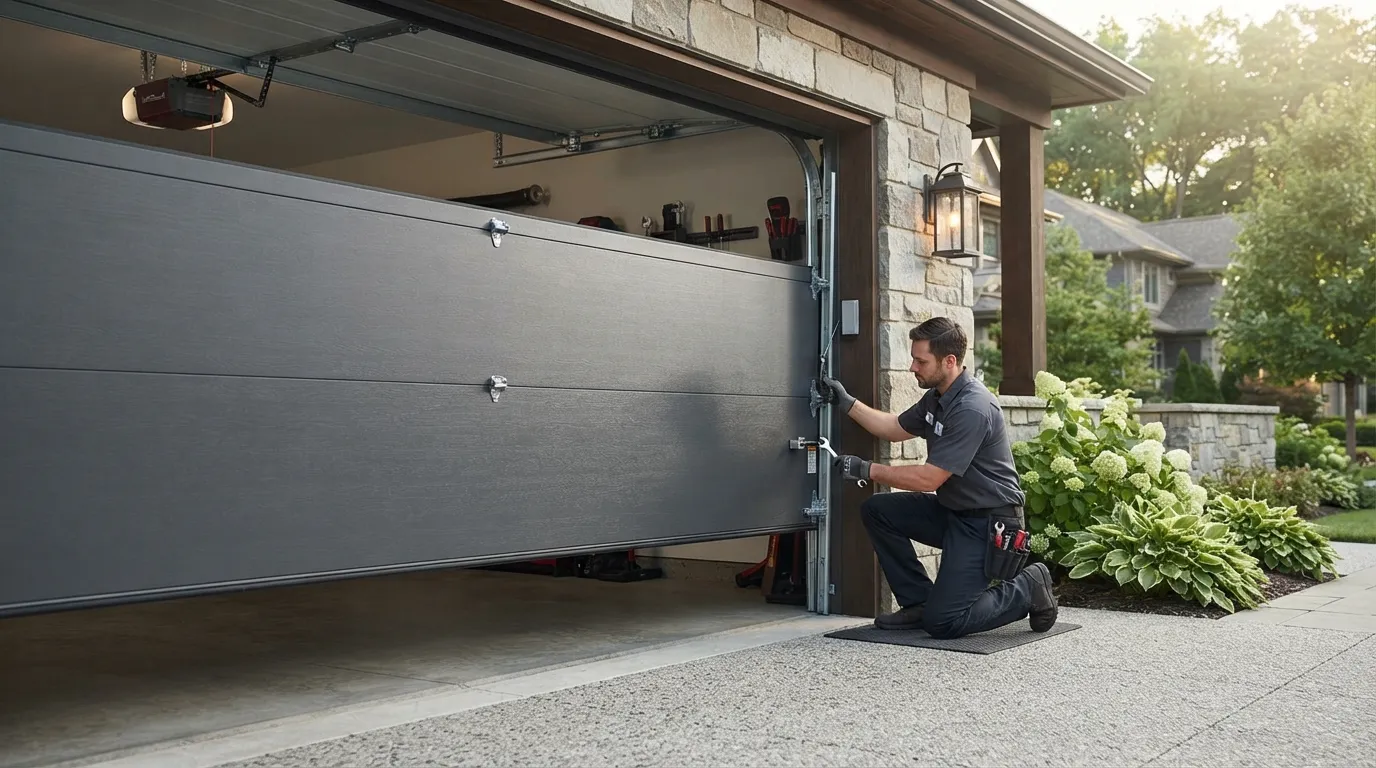
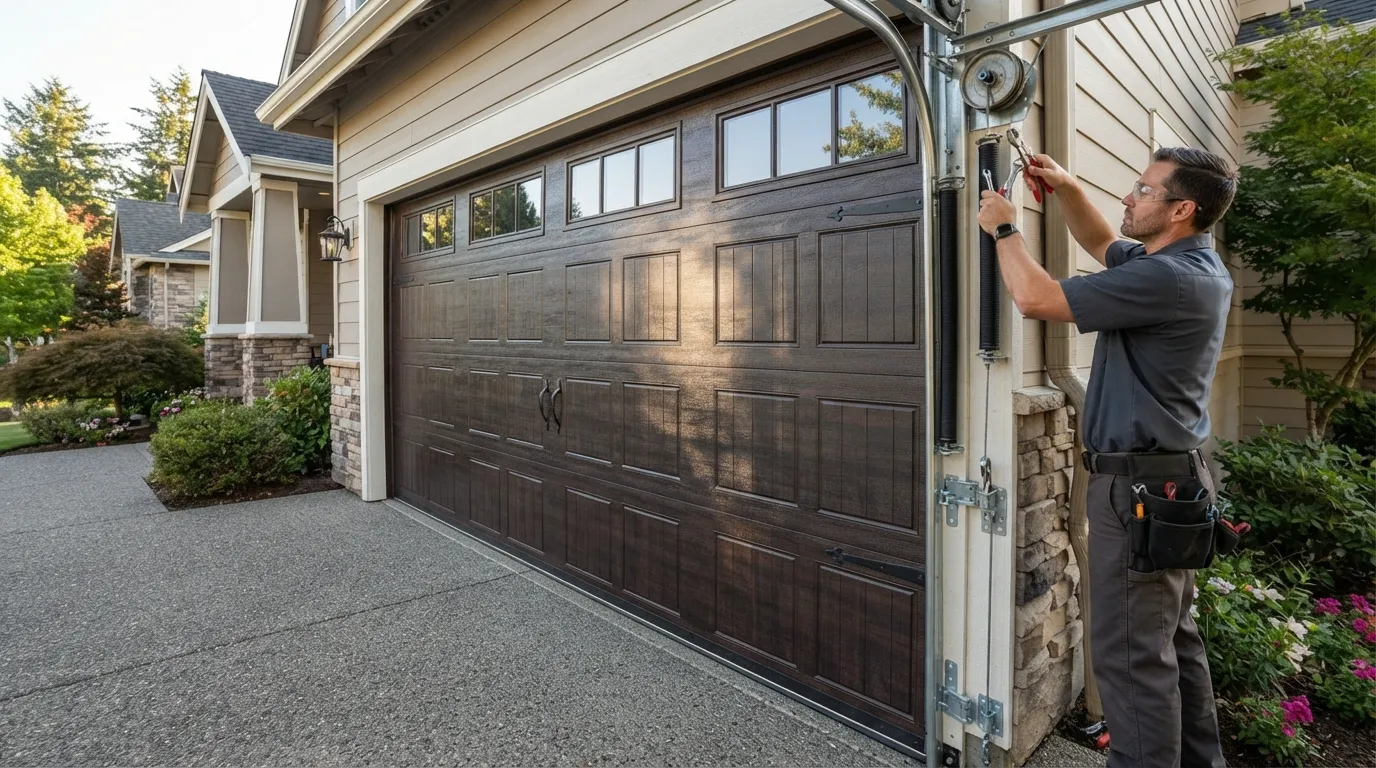
On a house from the mid-1970s, the setup is almost always a single torsion bar mounted above the door, wound with one or two springs depending on door weight. The job starts with clamping the door in the open position so the torsion tube can't drop the panels while we work. We back off the old spring's winding cone, cut it free, slide it off the bar, and check the bar itself and the bearing plates for wear - after roughly fifty years, a lot of that original hardware has some surface rust even if it still turns free. The replacement spring gets matched to the door's actual weight and the drum size on the bar, not just swapped for whatever's closest on the shelf. We wind it to the correct number of turns for that door, set the winding cone screws, and cycle the door several times to check balance - a hand-lifted door should hold roughly level at waist height on its own. If it doesn't, the spring's still wrong and we adjust before calling it done.
What the Fix Involves

Watch-outs

What Can Go Wrong

The most common problem on a house this age isn't the spring itself - it's what's holding it. Stationary cones and center brackets that have sat through fifty winters in a cold-climate area sometimes have enough surface corrosion that they don't grip the bar cleanly, and a spring wound onto a compromised bracket won't stay balanced for long.

Safety cable missing hazard

Extension-spring setups, which show up on some doors from that era instead of torsion bars, bring their own issue: the safety cables meant to contain a broken spring are often missing entirely on original installs, since they weren't required the way they are on newer work.

Mismatched spring wind gauge

We also run into doors where a previous repair used a spring that's the wrong wind or wire gauge for the door's actual weight - it'll lift the door, but it strains the opener and wears the cables faster.

Unreliable phone quotes

None of that shows up until we've got the old spring off, which is one reason a quoted price over the phone before we see the door is never reliable.

How to Book

Booking

How to Book

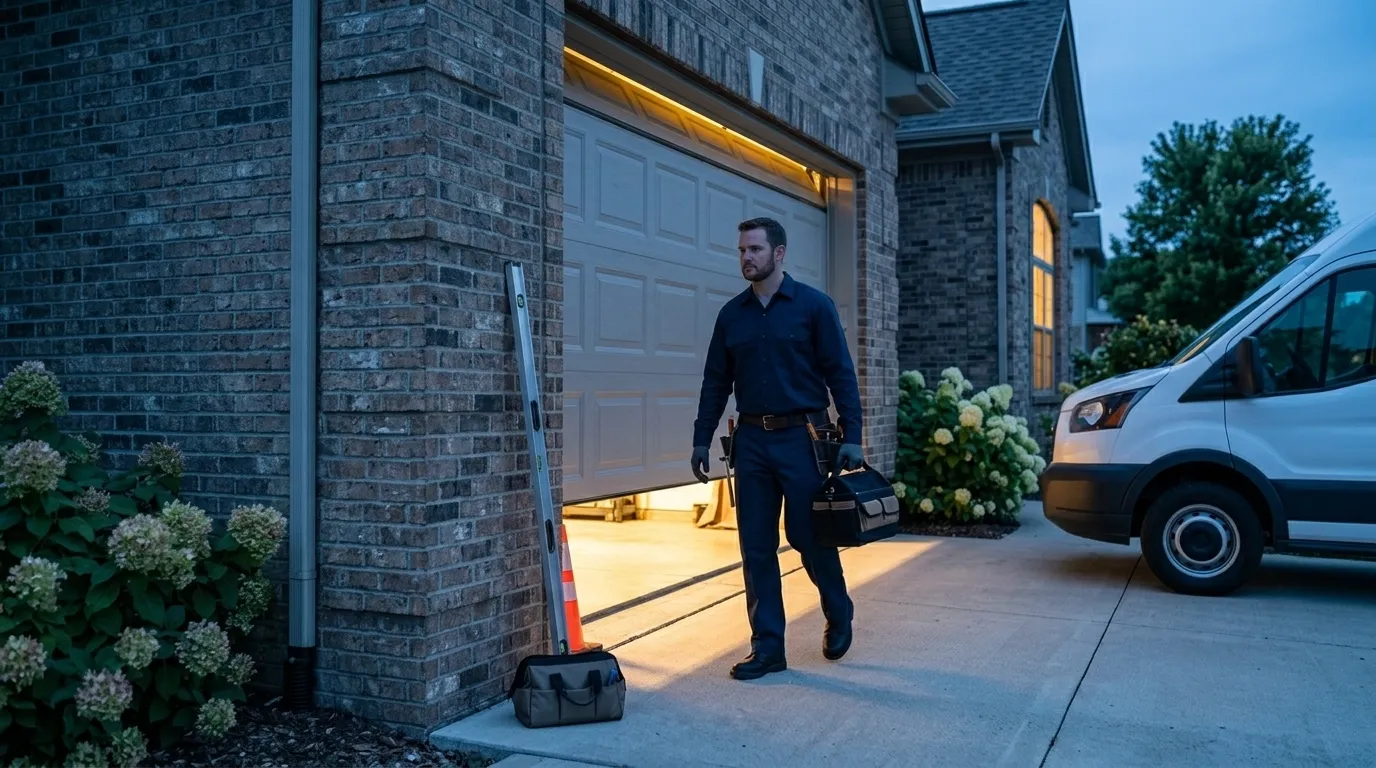
We work Hanover Park from the Schaumburg side, about 4 miles out, so there's no local branch to call - just the same crew and the same truck stock making the short drive in. Start on the Hanover Park service page for what we cover in the area beyond spring work. If you already know it's a spring - door won't budge, or it drops the second you let go of it - you can go straight to booking a repair visit and describe what's happening on the call. Have the door's rough width and whether it's a one-piece or sectional panel door handy if you know it; it saves us a guess before we've even loaded the spring size onto the truck.

Symptoms

The Symptom

A broken torsion spring on a house this age usually announces itself the same way: the door feels normal one day, and the next it either won't lift off the floor or it slams down hard the moment the opener releases it.

Spring snap bang occurrence

Sometimes you'll hear it before you see it - a loud bang from the garage, often mistaken for something falling, which is actually the spring itself snapping under tension. If the opener is still trying to do the work of the spring, you may notice it straining, running slower than usual, or tripping its overload protection partway through a cycle.

Cable whip spring failure

On older extension-spring setups without a safety cable, a broken spring can also let a cable end whip loose, which is one more reason not to keep forcing the opener once you notice something's off.

Door opening safety

Stop using the opener and don't try to lift the door by hand past a couple of inches - get it looked at before the cables or track take damage from an unbalanced door.

What Is on the Truck

On the truck

What Is on the Truck

Because most Hanover Park doors fall into a narrow build window, our stock is built around that: standard torsion springs sized for typical builder-grade sectional doors from the 1970s, matching winding bars, and stationary cone hardware to replace corroded originals rather than reuse them. We also carry extension spring kits with safety cables for the older setups that never had one installed. What we don't always have loaded is a spring for a nonstandard or custom door - anything wider than a typical two-car opening, or a heavier insulated panel door someone added later - and that occasionally means a short order-in delay rather than a same-visit fix. We'd rather tell you that up front than pretend every door in the area is the same weight.

Questions

Common questions

Why does my garage door slam shut instead of lowering slowly?

That's almost always a broken torsion spring. Once the spring snaps, the opener is trying to lower and lift a door with no counterbalance, so it drops fast on the way down and won't lift on the way up. Stop using the opener until the spring is replaced - running it broken puts extra strain on the cables and drum.

Do you have a depot in Hanover Park?

No. We work out of Schaumburg, about 4 miles from Hanover Park, and drive in for jobs. There's no local branch or staged truck sitting in town, so we don't promise a response time specific to Hanover Park - just that the crew and parts come from nearby.

Is my door's spring setup unusual for the area?

Probably not. Most houses in Hanover Park were built around 1976, so the torsion or extension spring hardware behind the door tends to be the standard setup builders used in that period. Custom or oversized doors added later are the exception, not the rule.

Can I just replace the spring myself?

We'd advise against it. A wound torsion spring holds enough stored force to cause serious injury if the winding cone slips, and matching the right spring to your door's weight isn't guesswork - it's measured. If you're not set up with winding bars and a clamped door, it's not a safe DIY job.

Ready when you are

Need a garage door sorted in Schaumburg?

Schaumburg Garage Door Pros repairs and installs garage doors, springs and openers in Schaumburg, IL and the surrounding area.

Call NowGet a quote