
Commercial jobs need more time
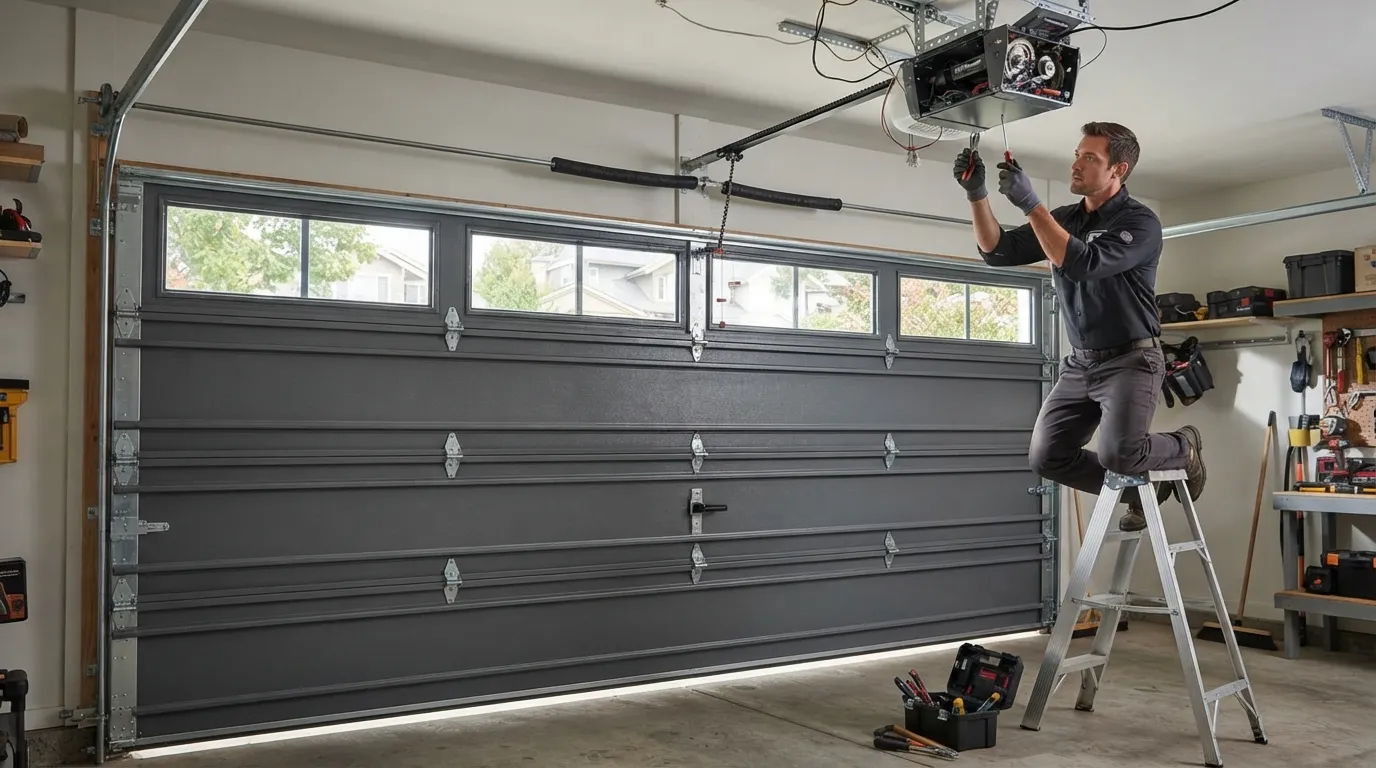
On a commercial call, time on site usually runs longer than a residential fix anyway: bigger door, heavier panel sections, and often two people to handle a spring safely.
Mount Prospect, Schaumburg
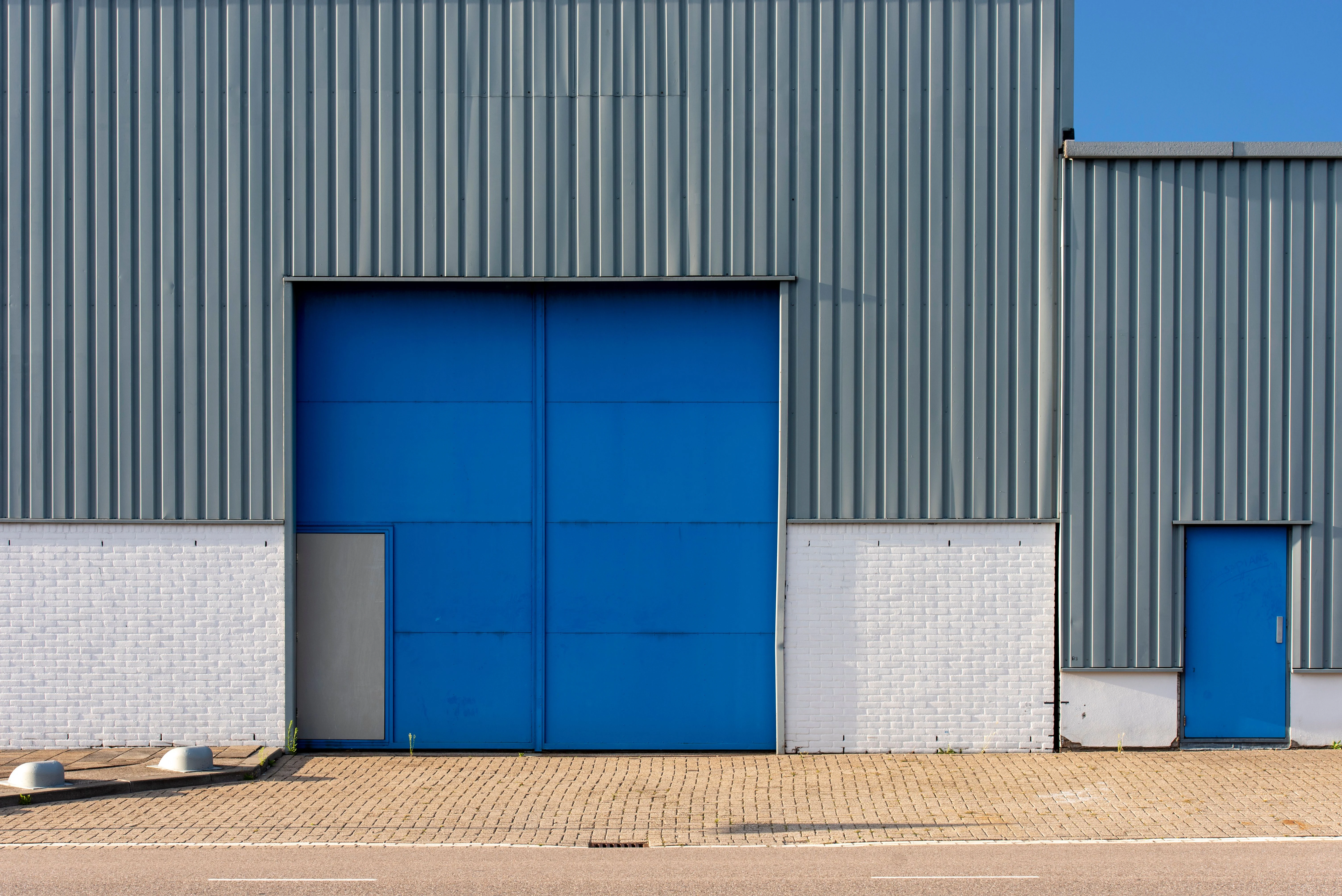
Mount Prospect's commercial buildings mostly date to 1969 - older hardware than most of the service area. We travel from Schaumburg to fix it.
Local causes
The median build year for Mount Prospect sits at 1969, a decade earlier than the 1977 median across the wider service area we cover. That gap matters on a commercial door more than a house door, because a bay that's been rolling up and down for a loading dock or a retail strip five or six days a week for over fifty years has put a lot more cycles through its hardware than a residential door ever sees. A lot of that original gear is still in place: single torsion springs sized for lighter daily use, steel rollers instead of nylon, openers with no reversing sensor because those weren't standard when the building went up. None of that is unusual for a building this age - it's just aged out. The service area overall runs 525,414 households with 261,093 owner-occupied houses, and Mount Prospect's building stock leans older within that mix. That's the number that should shape how you think about a service call here, not a generic 'garage door problems' pitch.

Job timing
We run this out of Schaumburg, and Mount Prospect sits about 8 miles out. We don't operate a branch or depot in town, so we're not going to promise a local response window - what we can tell you is that the drive is short enough that a truck already routed through the northwest suburbs isn't going far out of its way to get to you.
On a commercial call, time on site usually runs longer than a residential fix anyway: bigger door, heavier panel sections, and often two people to handle a spring safely.
Diagnosing what's original versus what's been patched over the years also takes a few extra minutes on a door this old, since replacement parts installed at different points may not match the original spec.
DIY or pro
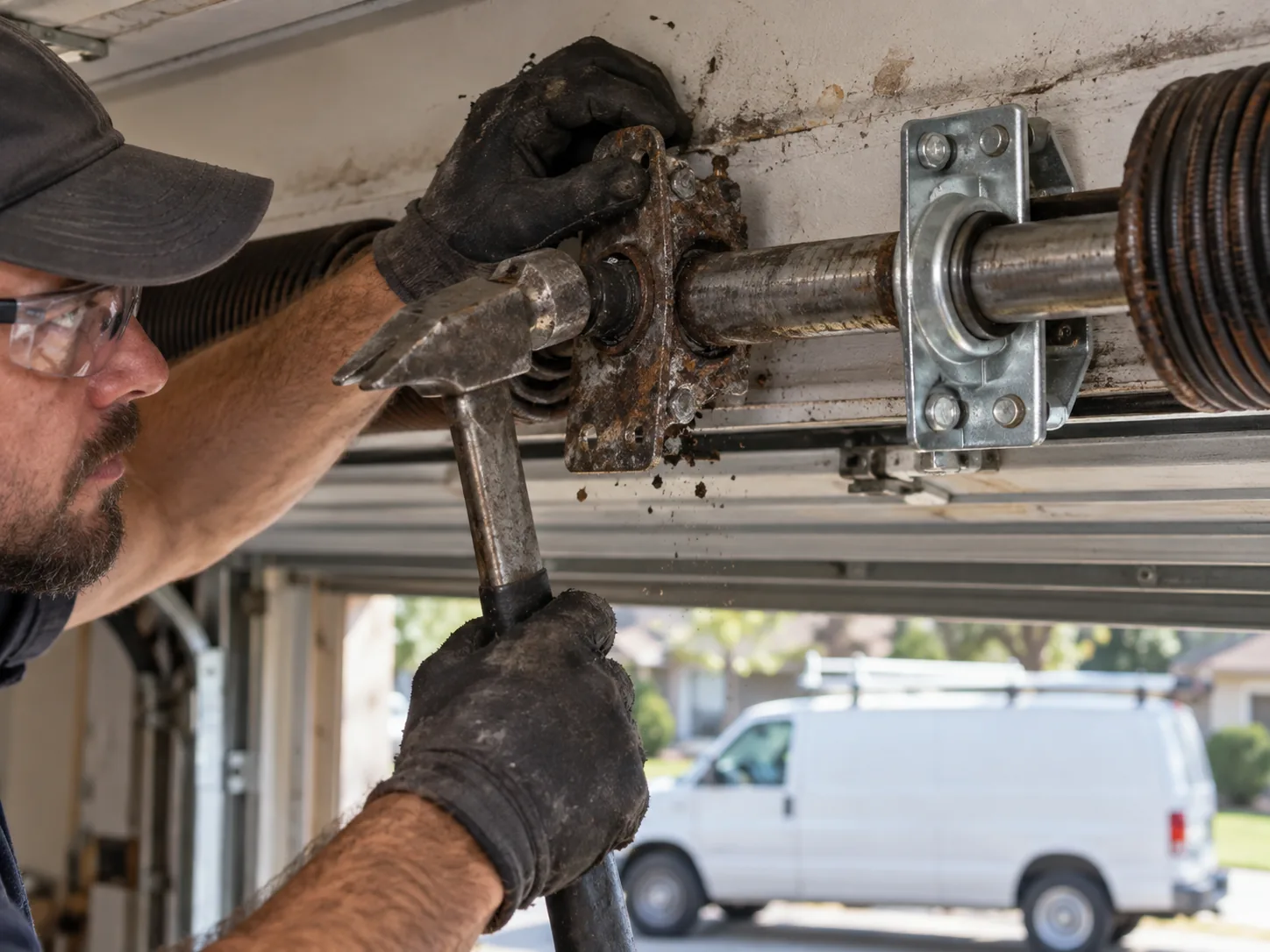
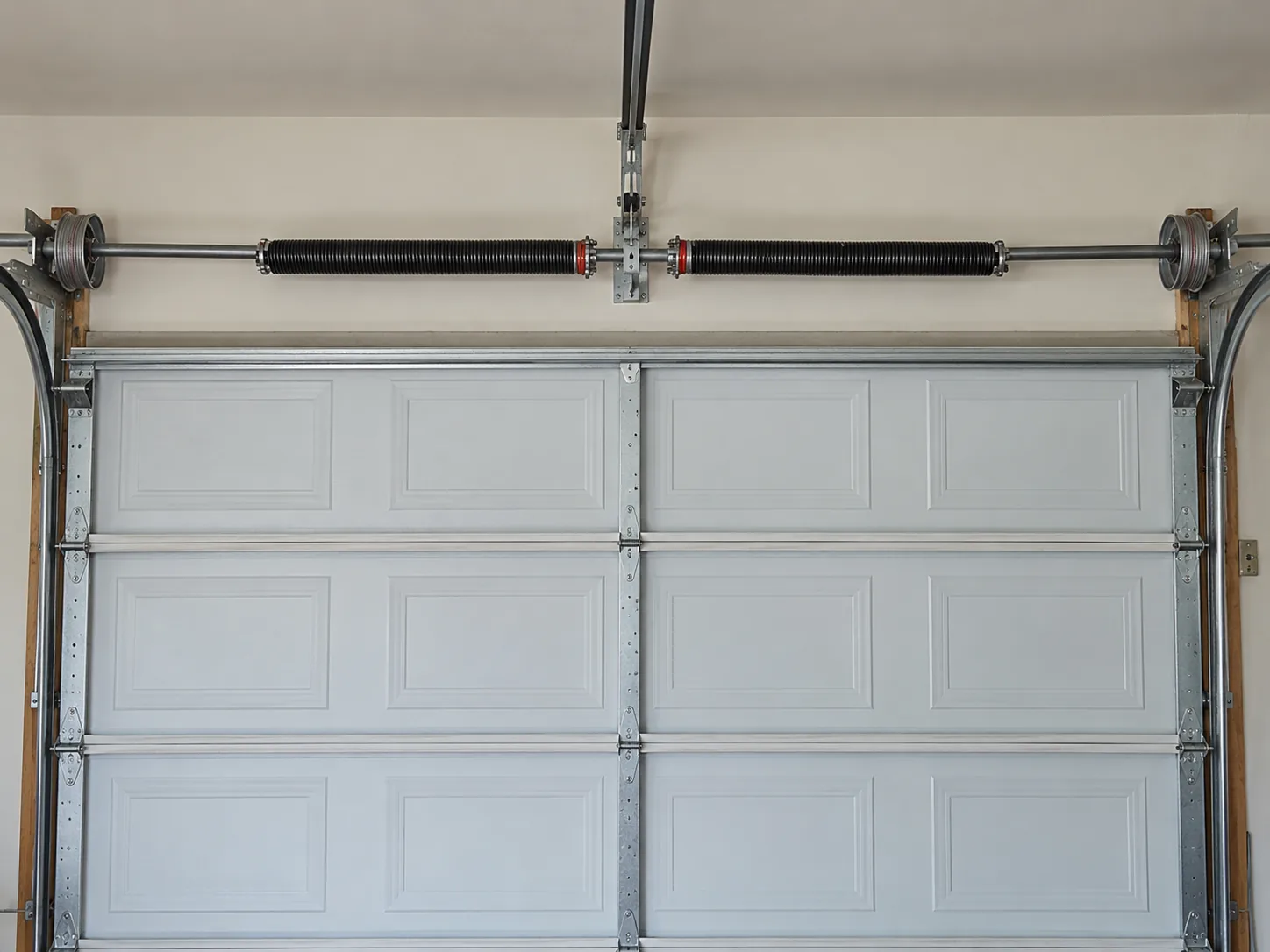
A commercial door spring holds a lot more stored tension than anything on a house, and on a building with 1969-era hardware you're often dealing with a spring that's outlived its rated cycle count with no record of when it was last swapped.
That's not a bolt you loosen with a wrench and a YouTube video. Track alignment on a wide commercial bay is another one - shim it wrong and the door binds under its own weight, which stresses the opener motor next.
Where we draw the line honestly: cosmetic stuff, like a dented bottom panel that still tracks fine, can wait and doesn't need a truck roll. A door that's started reversing mid-close on its own, or a spring that's visibly stretched or gapped, isn't a wait-and-see repair.
Booking
If you're not sure yet whether this is the right service for your building, the residential-facing overview at Mount Prospect garage door service covers the general side of what we do in town. For the full commercial lineup - openers, sectional doors, dock equipment - our home base page at commercial garage door service in Schaumburg lays out what's available across the area we run trucks through, Mount Prospect included.
Symptoms
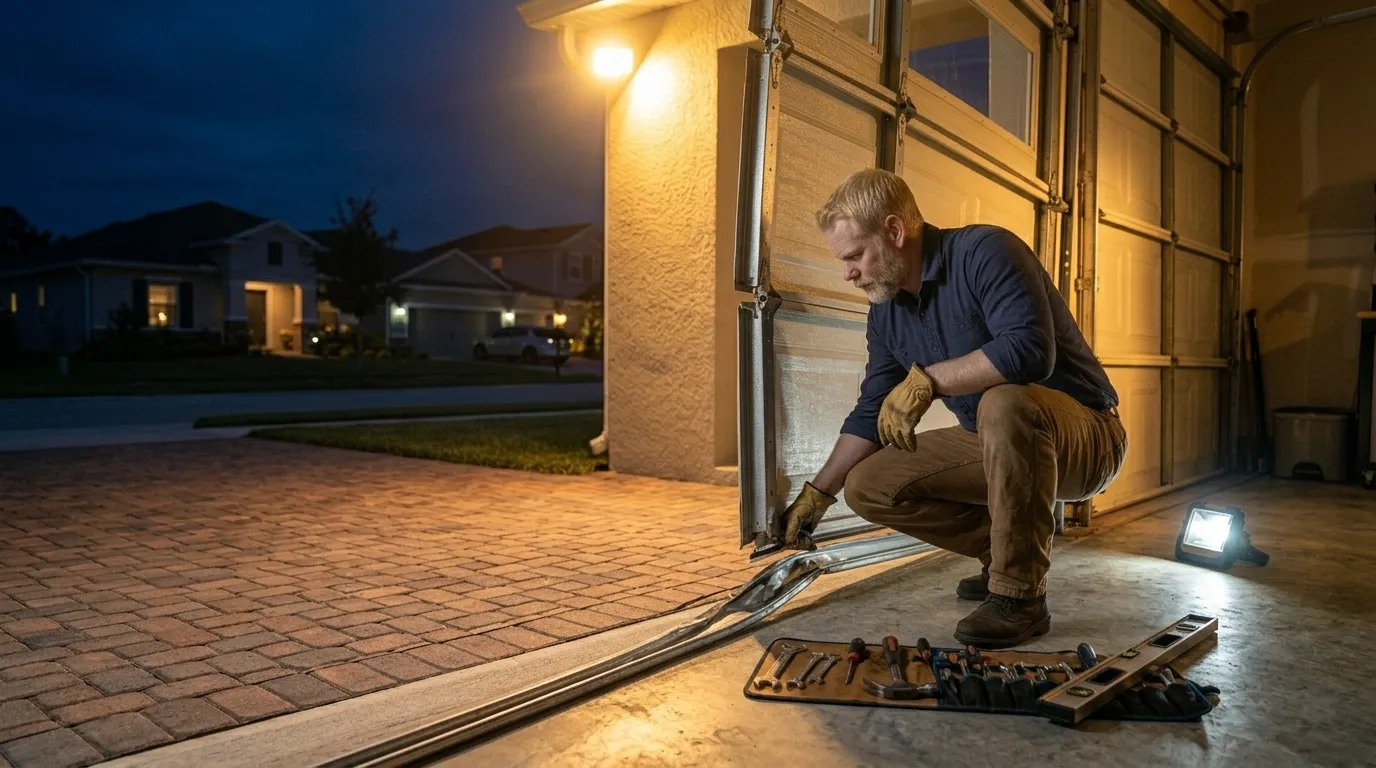
The complaint we hear most from buildings this age is a door that closes unevenly - one side reaches the floor a beat before the other, or the door catches partway down and has to be walked the rest of the way manually. On original 1969-era track, that's usually the hardware finally giving out after decades of daily cycles: a bent track section, a roller worn down past round, or a cable that's stretched unevenly on one side. It shows up gradually, so most owners live with it for months before it stops closing at all. On a commercial bay, an uneven close is also a safety issue, not just an annoyance - a door that doesn't seat evenly on the floor track isn't sealing, and with the moderate cold winters this area sees, that gap adds up in heating cost fast.
The repair
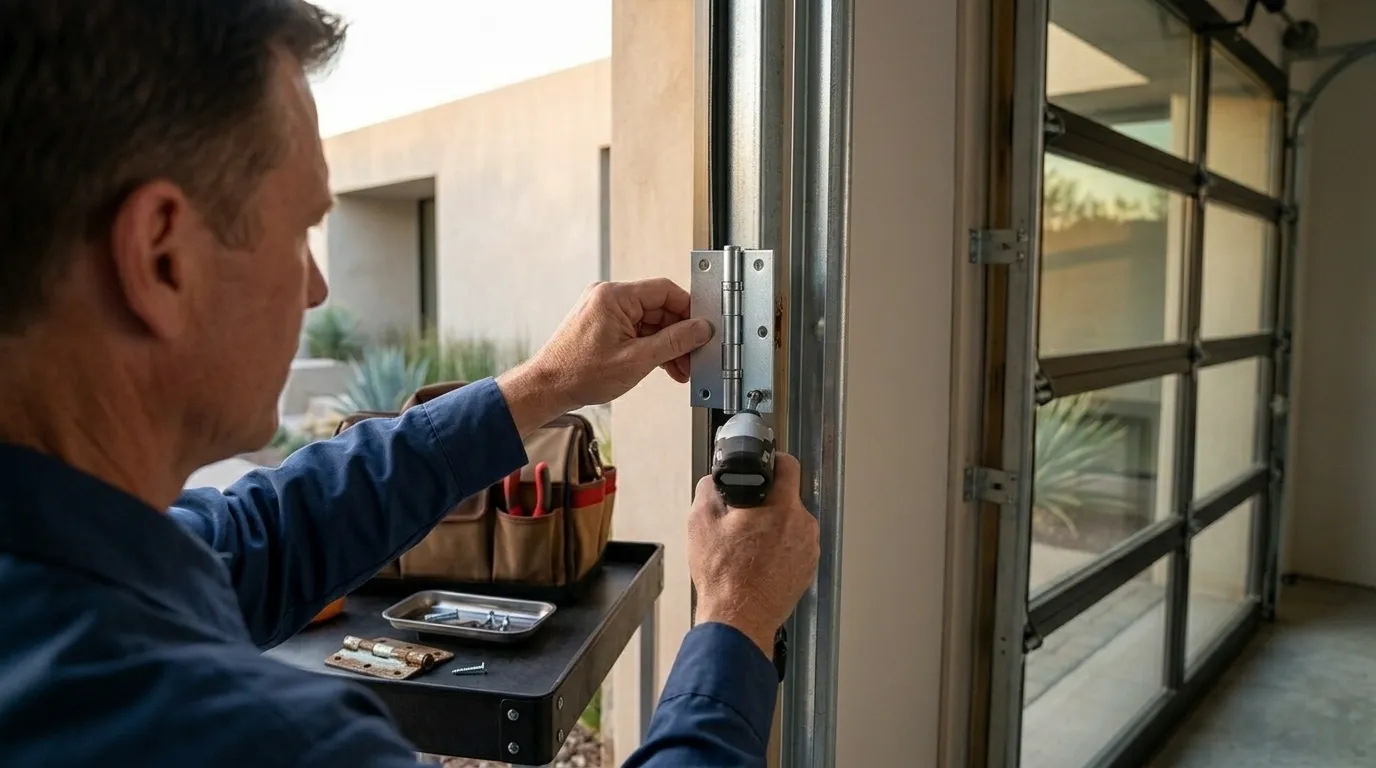
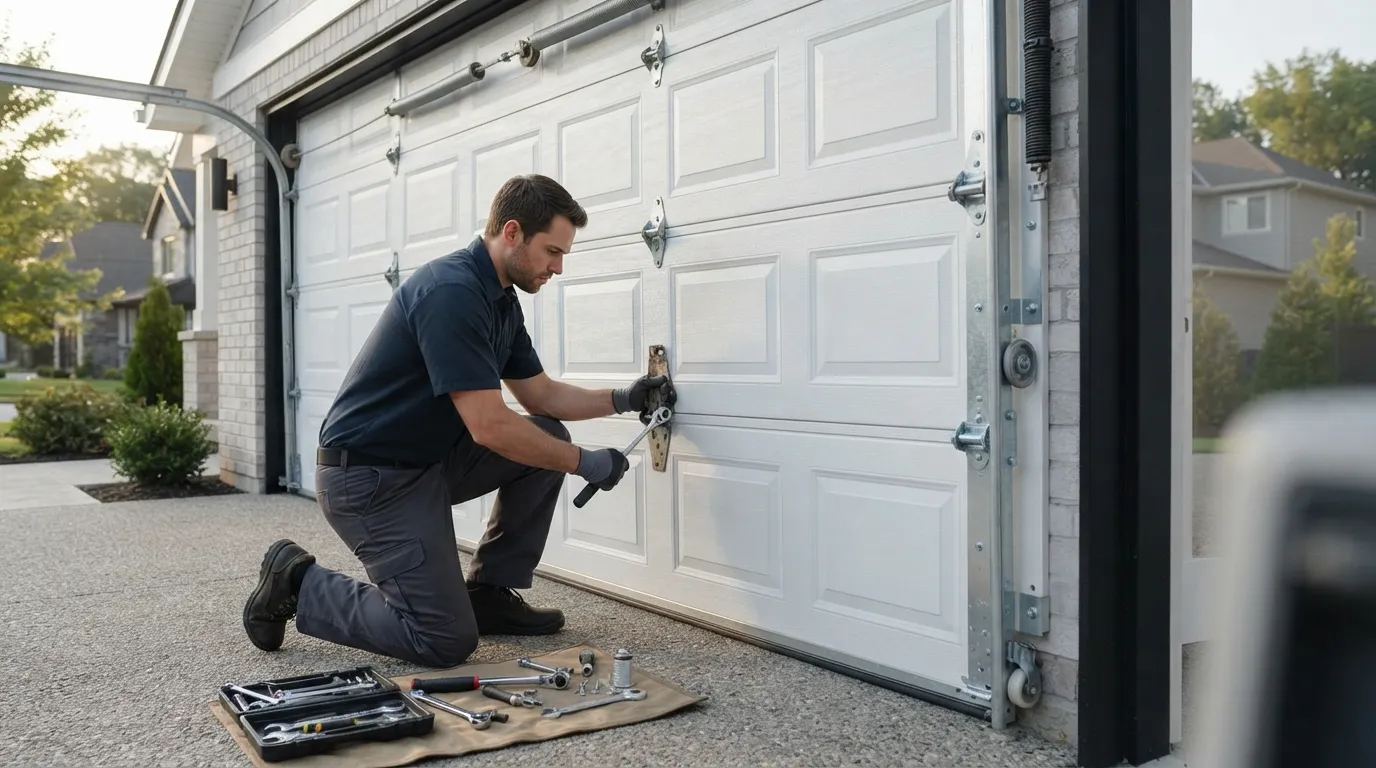
On a door with original hardware, the first step is figuring out what's actually from 1969 and what's been swapped along the way - springs and openers get replaced piecemeal over fifty years, and mismatched parts are half the reason for uneven wear.
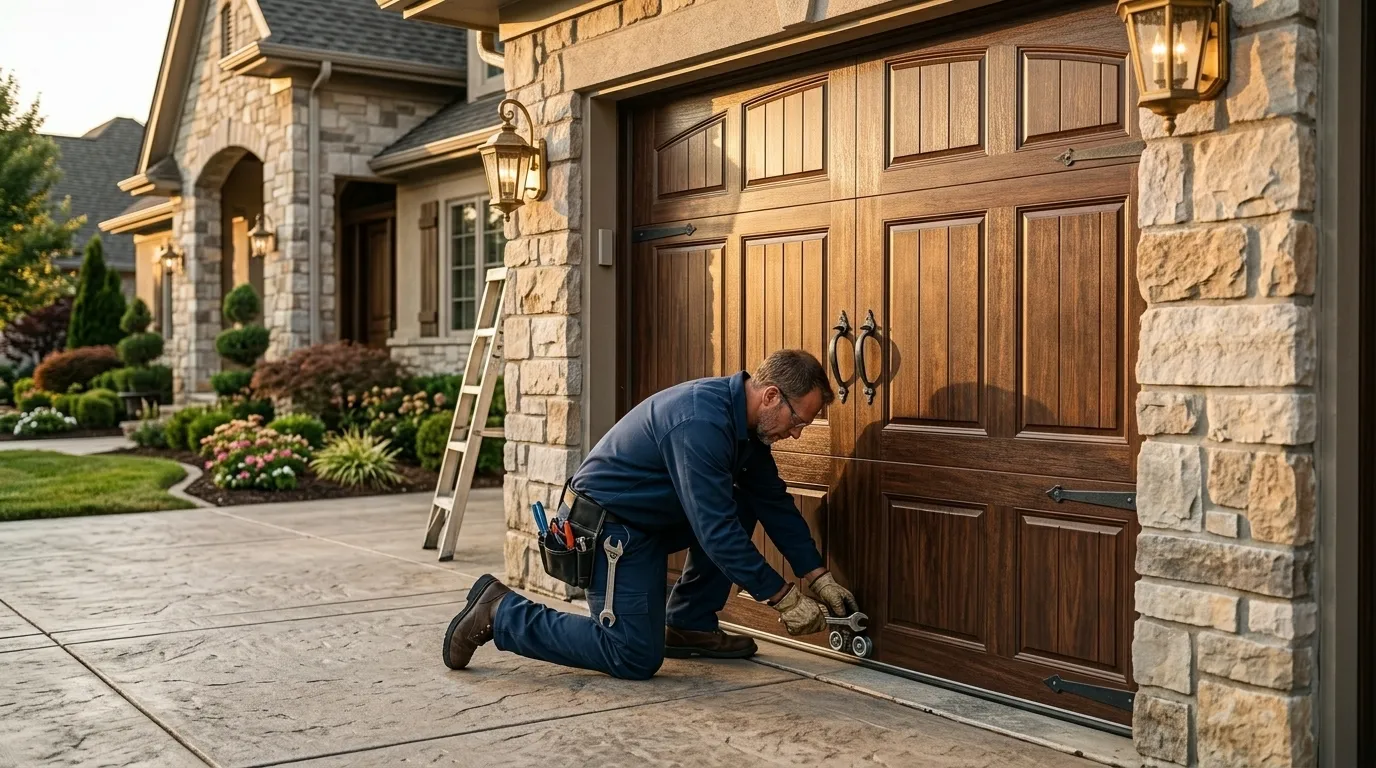
If the track is bent or the rollers are worn oval, that gets replaced section by section rather than the whole run, unless the whole track has gone out of square.
A stretched or ungapped spring gets swapped in a matched pair if the door runs on two, since replacing just one leaves the door pulling to one side again inside a year.
If the opener has no reversing sensor at all, that's worth flagging to the building owner separately - it's a bigger job than the door itself and not always one we can finish same visit, since sensor kits aren't something we stock for every opener model.
Questions
Given the median build year of 1969 for the area, yes - a lot of buildings never had a full hardware swap, just patched repairs over the decades. Springs, rollers, and openers from the original install are common, especially on buildings that haven't changed ownership.
No. We run this out of Schaumburg, about 8 miles away, and travel to Mount Prospect for calls. We don't operate a local depot or promise a set response window in town.
Not safely on a commercial door. A bent track section or worn roller you can sometimes spot yourself, but the spring tension involved on a commercial bay is enough to cause serious injury if you're not trained to release it. Call it in instead.
Usually just the failed part - track section, spring pair, or roller set - unless the whole assembly is out of square or the door itself is too far gone to align properly. We'll tell you honestly which situation you're in before starting work.
Explore more
Ready when you are
Schaumburg Garage Door Pros repairs and installs garage doors, springs and openers in Schaumburg, IL and the surrounding area.