
1969 build extension hardware
Given the 1969 median build year, that means carrying extension spring hardware and older-pattern rollers alongside the standard torsion parts, because guessing wrong on a first trip means a second trip.
Mount Prospect, Schaumburg
Mount Prospect homes cluster around 1969, a decade older than much of the wider Schaumburg service area. That gap in build year changes what fails and how we fix it.
Local causes
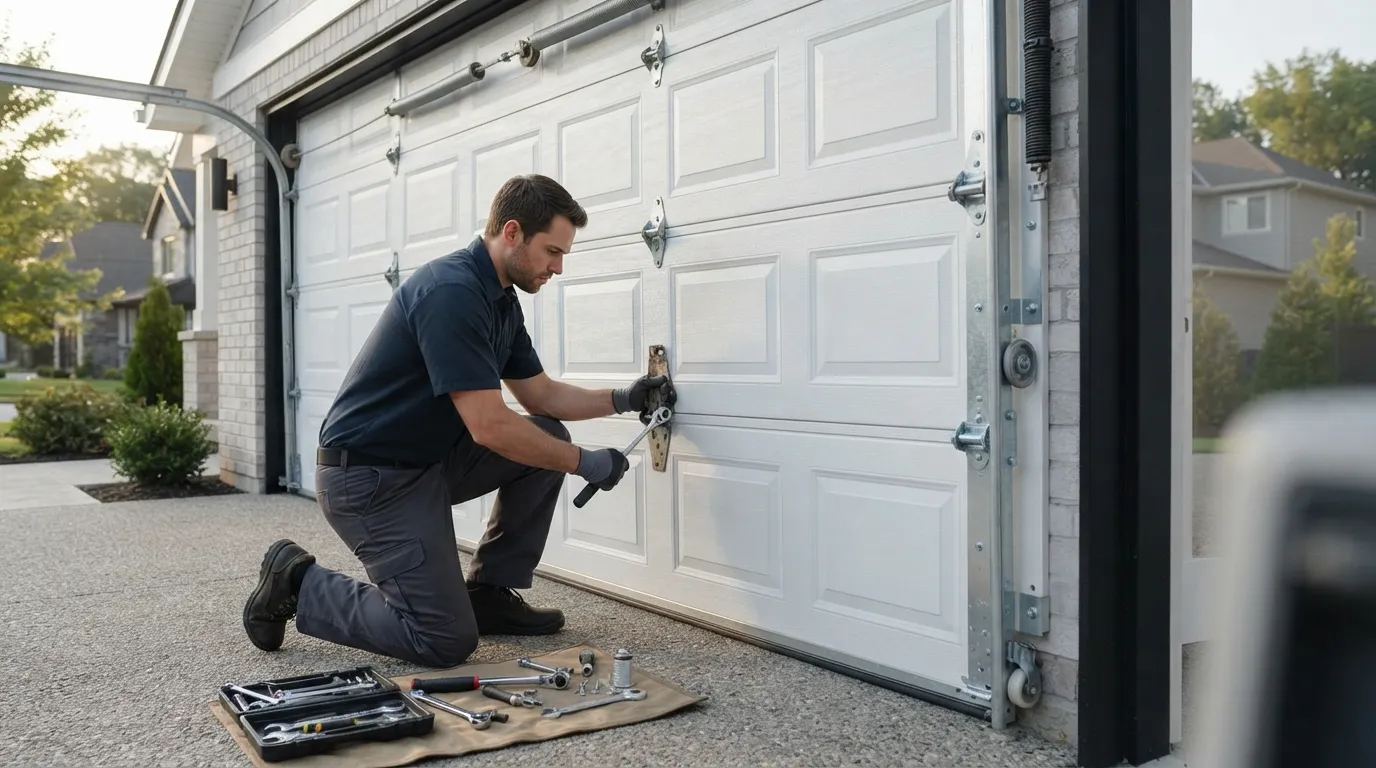
Across the wider Schaumburg service area, the median home was built in 1977. Mount Prospect skews older, with a median build year of 1969. That eight-year gap matters more than it sounds. Doors and openers installed in the late 1960s and early 1970s came before the current wave of standardized torsion spring cones and universal opener rail kits. A lot of these garages still carry their original steel doors, sometimes with the extension-spring setup that was common before torsion systems became the default in new construction here.
When a door from that era fails, it's rarely a clean, drop-in fix. Track widths, hinge patterns, and the mounting brackets for the spring anchor plate all shifted over the decades that followed. A tech pulling up to a 1969 build needs to know that before touching the door, not after ordering the wrong bracket. This isn't a knock on the houses - they're solid - but the hardware inside them belongs to a different generation of garage door manufacturing than what shows up in newer subdivisions closer to the middle of the wider service area.
Job timing
We come out of Schaumburg, about 8 miles away, so the job doesn't start with a local depot - it starts with a truck loaded for the specific kind of door this town tends to have.
Given the 1969 median build year, that means carrying extension spring hardware and older-pattern rollers alongside the standard torsion parts, because guessing wrong on a first trip means a second trip.
Winters here fall in the same cold-moderate climate band as the rest of the region, which means steel doors see the same seasonal contraction and expansion cycle that stiffens torsion springs and dries out roller bearings every year.
On an older door, that stress lands on hardware that's already had five decades of cycling. We budget the visit around diagnosing the actual point of failure first - spring, cable, track, or opener - rather than assuming the newest-looking part is the problem.
DIY or pro
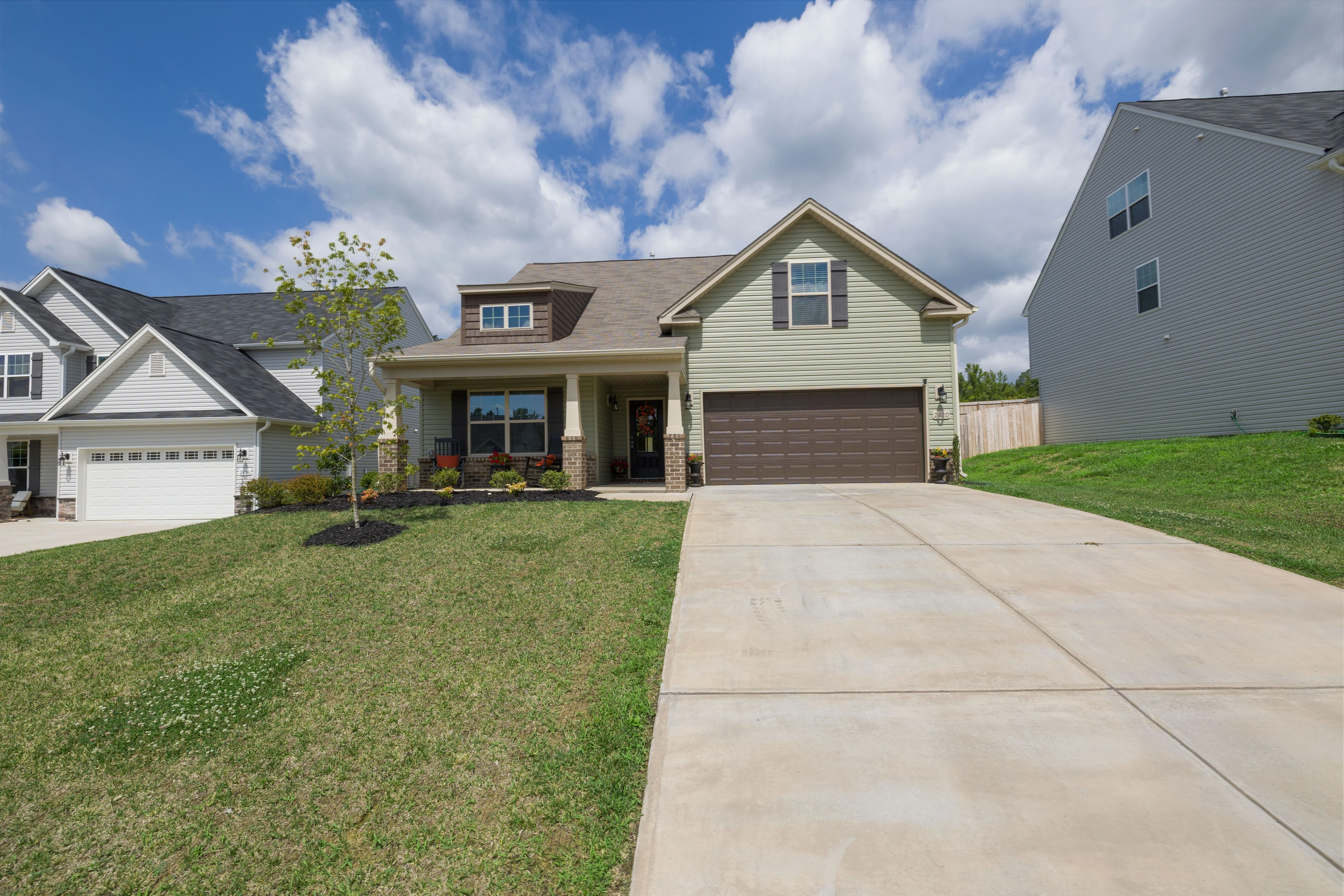
A homeowner can safely handle small things: lubricating hinges and rollers, tightening loose bracket bolts, clearing a photo-eye sensor that's knocked out of alignment. None of that requires touching a spring.
What you shouldn't do yourself is anything involving a wound torsion spring or an extension spring under tension - and on a 1969-built garage, there's a real chance you're dealing with an older extension-spring system that doesn't have the safety cables modern code requires. Without that cable, a snapped spring has nowhere to go but loose, and that's how people get hurt. If your door won't budge, or one side of it hangs lower than the other, stop and call. That symptom pattern almost always means a spring or cable problem, and it's not a bracket you tighten your way out of.
Booking
We route jobs from Schaumburg, roughly 8 miles from Mount Prospect, so scheduling works the same way it does for the rest of the towns we cover from there - you call, describe what the door is doing, and we plan the truck around the parts an older build year like this one tends to need.
See our Mount Prospect garage door service page for what's included, or check the main Schaumburg service page if you want the full rundown of what we handle across the area.
We don't keep a branch in Mount Prospect itself, so every visit is planned as a trip out from Schaumburg, not a drop-in.
Symptoms
The complaint we hear most from this stretch of town is a door that reverses partway up, or one that groans and hesitates before it moves at all. On a house from the late 1960s, that's often a spring that's simply worn out from decades of cycling rather than a sudden failure - the coil has lost tension gradually, and the opener has been compensating for months before it finally can't anymore.
A second common pattern: a door that's noticeably heavier to lift by hand than it should be, even with the opener disconnected. That points to the spring bearing most of the load it was originally sized for, which on an older extension-spring setup can mean the spring itself was undersized for the door even when it was installed. Either symptom is worth a call before the opener motor burns out trying to force a door that isn't balanced anymore.
The repair
For a spring failure on a home from this era, the job usually means matching wire gauge and coil length to a door and track configuration that predates today's standardized parts.
That sometimes means we don't have the exact match on the truck and need to source it, which is the honest limitation here - a 1969 build can require a part that isn't a stock item the way a 2005 build's would be.
If the extension-spring hardware lacks a safety cable, we add one as part of the repair; it's cheap insurance and current code expects it regardless of when the door went in.
For openers, if the unit itself is original or close to it, replacement often makes more sense than repair, since motor parts for units that old are harder to source than the mechanical hardware. We'll tell you straight which side of that line your door falls on before we start any work.
Questions
It comes down to build year. Mount Prospect's median home dates to 1969, while much of the wider service area is closer to 1977. Hardware standards shifted in between - spring types, bracket patterns, and track widths all changed - so a tech needs to know your home's era before pulling parts for the job.
No. We run jobs out of Schaumburg, about 8 miles away. There's no local depot here, so every visit is a planned trip with a truck loaded for the kind of door and hardware common to this town's housing stock.
Not on a wound torsion spring or a tensioned extension spring, especially on an older extension-spring setup that may lack the safety cable current code requires. That's the job most likely to cause a serious injury in a home garage. Call for that one.
Often the opener isn't the real problem - it's compensating for a spring that's gradually lost tension over years of winter cycling in this climate. Forcing an unbalanced door shortens the motor's life fast, so it's worth checking the spring before replacing the opener.
Explore more
Ready when you are
Schaumburg Garage Door Pros repairs and installs garage doors, springs and openers in Schaumburg, IL and the surrounding area.