
Guide
What Schaumburg's Older Garage Doors Are Up Against
Most Schaumburg garage doors date to the 1960s and 70s, built before insulation codes existed, and now struggle with cold-climate swings. Here's what to watch.
Local detail
How Local Conditions Play In
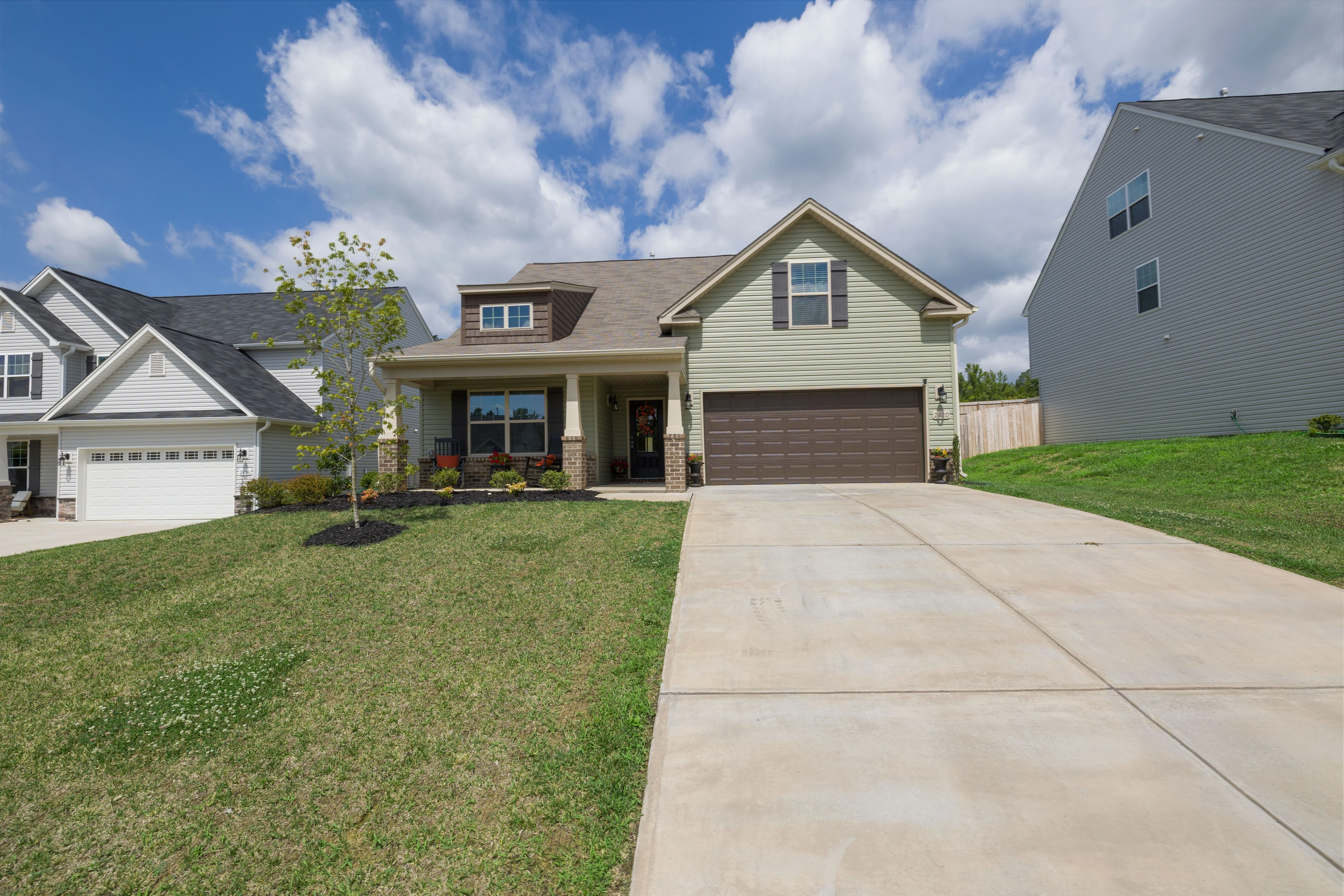
Schaumburg sits in a cold moderate climate band, which means real freeze-thaw swings every winter, not just a few cold nights. That matters more here than in a warmer market because most of the town's housing went up between 1938 and 2009, with a median build year of 1977, and the bulk of it clustered in the 1960s and 70s. Garage door insulation requirements weren't standard when those houses were framed, so a lot of original doors are a single skin of steel with no foam backing and no thermal break at the seams.
What that means day to day: the door itself acts like a cold plate. Metal contracts in low temperatures, which changes how the panels sit in the track and how much play there is at the hinges. On a door that's 40-plus years old, that flexing has already worn the roller channels and stretched the hardware past its original tolerances. It's not damage from one storm - it's decades of a single-layer door doing a job it wasn't built for in this climate. Newer insulated doors installed as replacements handle the same swings without the same wear, which is the main reason age and insulation matter more than brand or color here.

The area
What to Look At First
Start at the bottom seal. On an older uninsulated door, cold air comes through the weather strip long before it shows anywhere else, and you'll often feel a draft along the slab floor even with the door shut. Next, check the inside face of the panels on a cold morning - frost or a fine sheen of condensation on bare steel is a sign there's no insulation layer doing any work, not a sign the door is broken.
Look at the rollers and hinges next. On doors from the 1960s and 70s stock common around here, the steel gauge is thinner than what's used now, and repeated contraction in cold weather has usually stretched the hinge holes into ovals rather than round holes. That's what causes the sag you see at the center of a wide double door.
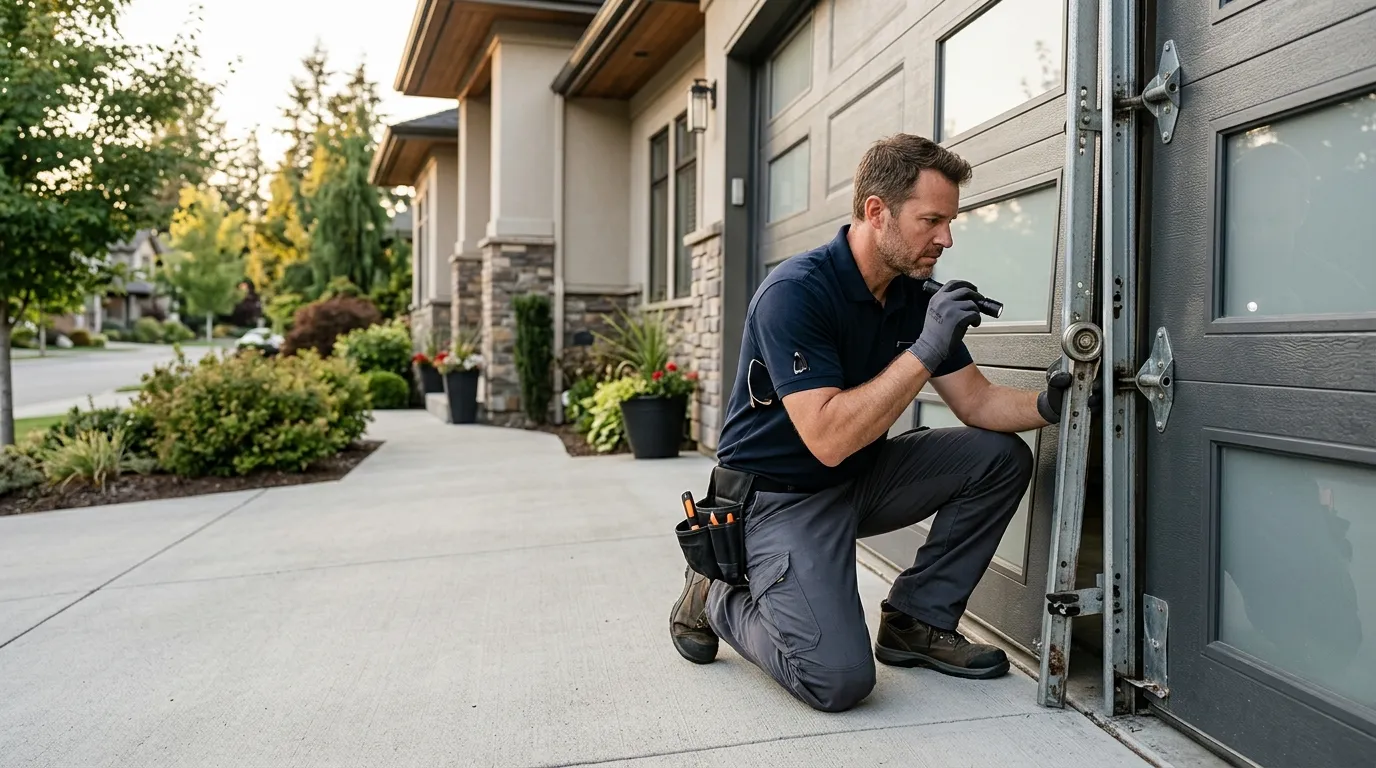
Last, check whether the opener has to strain more on cold mornings than in summer. A colder, stiffer track combined with an aging spring set is a common combination on original hardware from this era, and it's worth flagging before the spring itself lets go. None of this requires taking the door apart - a flashlight and five minutes will tell you most of what you need to know.
What we find
The Situation
Across the wider service area there are roughly 525,414 households and about 261,093 owner-occupied houses, and the median household income sits around $112,168. That's relevant here because it means most owners in this part of the map can afford to replace an old door with an insulated one - the money isn't usually the barrier. The barrier is that the housing stock itself is old enough that a lot of doors simply haven't been touched since the house was built.
Schaumburg sits close to a ring of towns with a similar profile - Roselle three miles off, Hanover Park four, Streamwood and Itasca and Bloomingdale each about five - and all of them share the same postwar construction wave. That matters because parts and hardware for doors from that era aren't stocked the way current models are. If your door is original to a house built in the 60s or 70s, don't expect a same-day match on springs or track brackets pulled off a shelf; some of that hardware has to be sourced or adapted rather than swapped straight across.
How we work
What It Costs
I'm not going to put a number here that I can't back up. Pricing on a job like this depends on whether the fix is a bottom seal and a hinge adjustment, a full insulation retrofit kit, or a straight swap to a new insulated door - and those are three very different jobs with different material costs. Nothing in what I know lets me quote a flat number without seeing the door.
What I can tell you honestly: on a door original to a house built before insulation rules applied, patching in insulation panels after the fact rarely performs as well as a door built insulated from the factory. If the steel skin is already stretched at the hinge points or the bottom seal channel is warped, a retrofit kit won't fix the underlying wear - it just adds weight to hardware that's already past its intended life. Past a certain point, replacement is the more honest answer than repair, even though it's the bigger number up front. That's a call worth making in person, not over the phone.
Questions
Common questions
Why does my garage door feel colder than the rest of the house?
If your house was built in the 1960s or 70s, which covers most of Schaumburg's stock, the original garage door likely has no insulation layer at all - just a single steel skin. Insulation requirements for garage doors weren't standard then, so the door itself has nothing stopping cold transfer, unlike your insulated exterior walls.
Is it worth adding a foam insulation kit to an old door?
Sometimes, but not always. If the hinges and roller channels are already worn from decades of cold-weather flexing, the extra weight of a foam kit can stress hardware that's already at the end of its life. Worth having someone check the panel condition and hardware wear before spending on insulation alone.
How do I know if my door's hardware is original?
If the house was built before the 1980s and the door has never been replaced, it's likely original. Look for oval-shaped wear in the hinge holes and a bottom seal that's hardened rather than flexible - both point to decades-old hardware working through more winters than it was designed for.
Ready when you are
Need a garage door sorted in Schaumburg?
Schaumburg Garage Door Pros repairs and installs garage doors, springs and openers in Schaumburg, IL and the surrounding area.