
Guide
Why Your Garage Door Jumped Its Track
Schaumburg's mix of 1960s-70s track hardware and cold winters is why doors jump track here. See what to check first and what actually needs a service call.
Local detail
How Local Conditions Play In
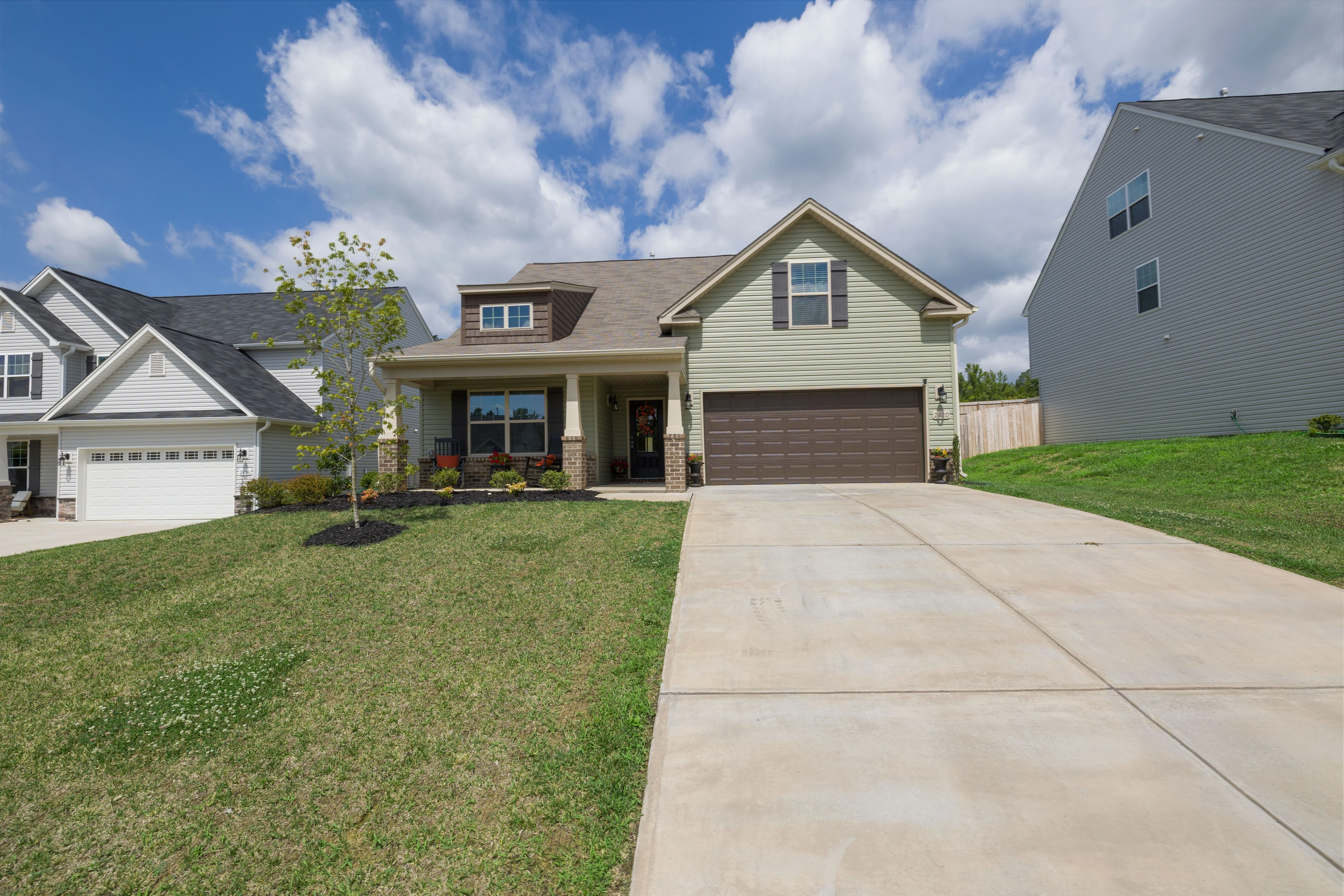
A lot of what we see on off-track calls in Schaumburg traces straight back to the age of the house. Housing stock across this service area runs from 1938 up through 2009, but the bulk of it - including most of the 92 named subdivisions we work in - went up in the 1960s and 70s. That era used steel track hung on brackets that were fine for the doors of the time but were never built with today's heavier insulated panels in mind.
Add a moderate cold climate band with real freeze-thaw swings each winter, and you get metal that contracts, fasteners that back out a turn at a time, and track sections that slowly rack out of plumb. None of this shows up overnight. It's a slow drift over a decade or two, and then one cold morning the door catches a roller wrong and jumps the rail.
We're not saying every off-track call in town is a 1970s bracket - some of it is a car bumper, some is a broken cable that let the door fall crooked. But if your house falls in that mid-century build window, hardware fatigue is the first thing worth ruling out, not the last.

The area
What to Look At First
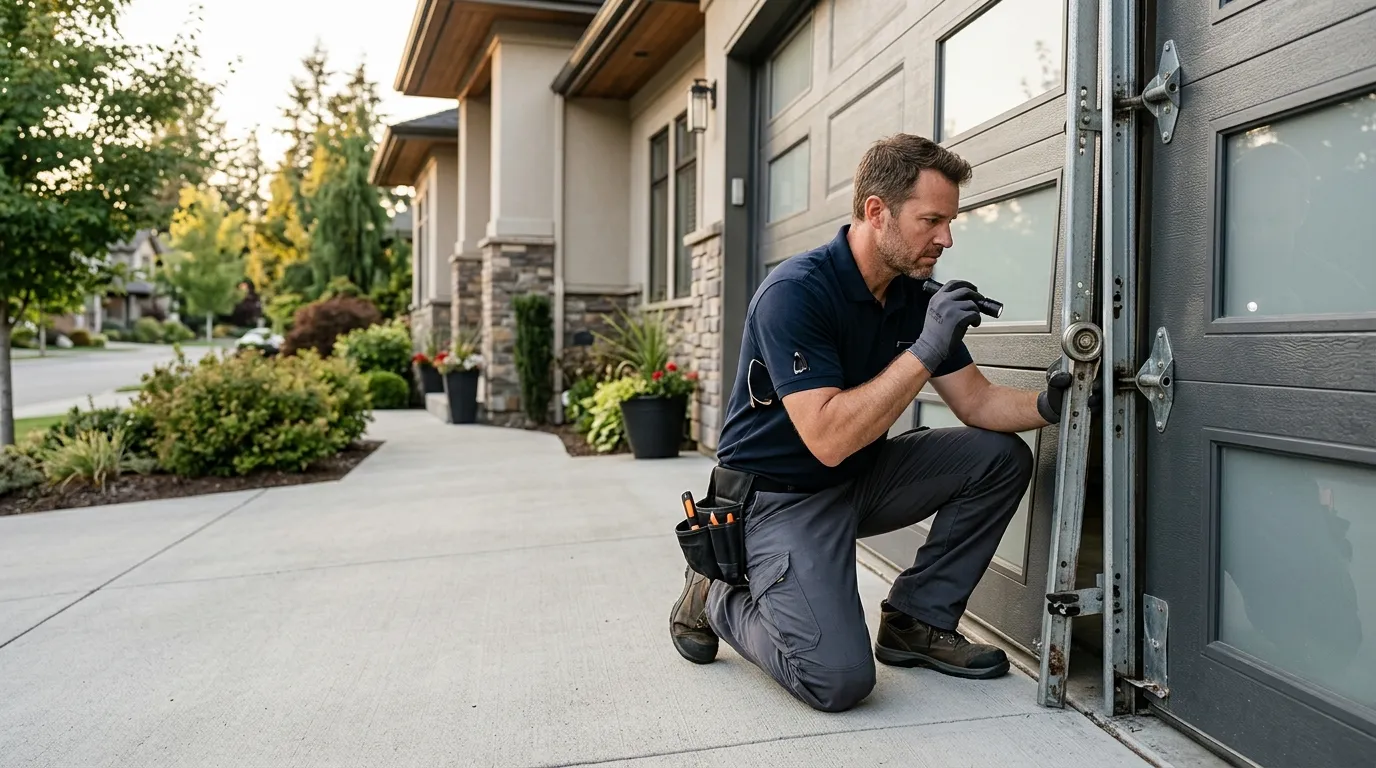
Before you call anyone, look at the track itself where it bolts to the framing, both sides, top to bottom. On the older Schaumburg-area houses we mentioned, that's usually where the trouble starts - a bracket pulled loose from wood that's shrunk over sixty-plus years, or a bent section from years of minor bumps nobody fixed. Check for a gap between the roller and the track, or a spot where the track pinches narrower than the rest of its run. Look at the cable on both sides of the bottom bracket; if one side looks slack or frayed while the other is taut, the door was already running crooked before it left the rail.
Don't try to force the door back onto the track yourself - under spring tension that's how fingers get caught. If the door is off but the opener still runs, disconnect the opener arm first so nothing keeps pulling on a door that isn't seated. That's the one thing worth doing before anyone gets out to look at it.
What we find
The Situation
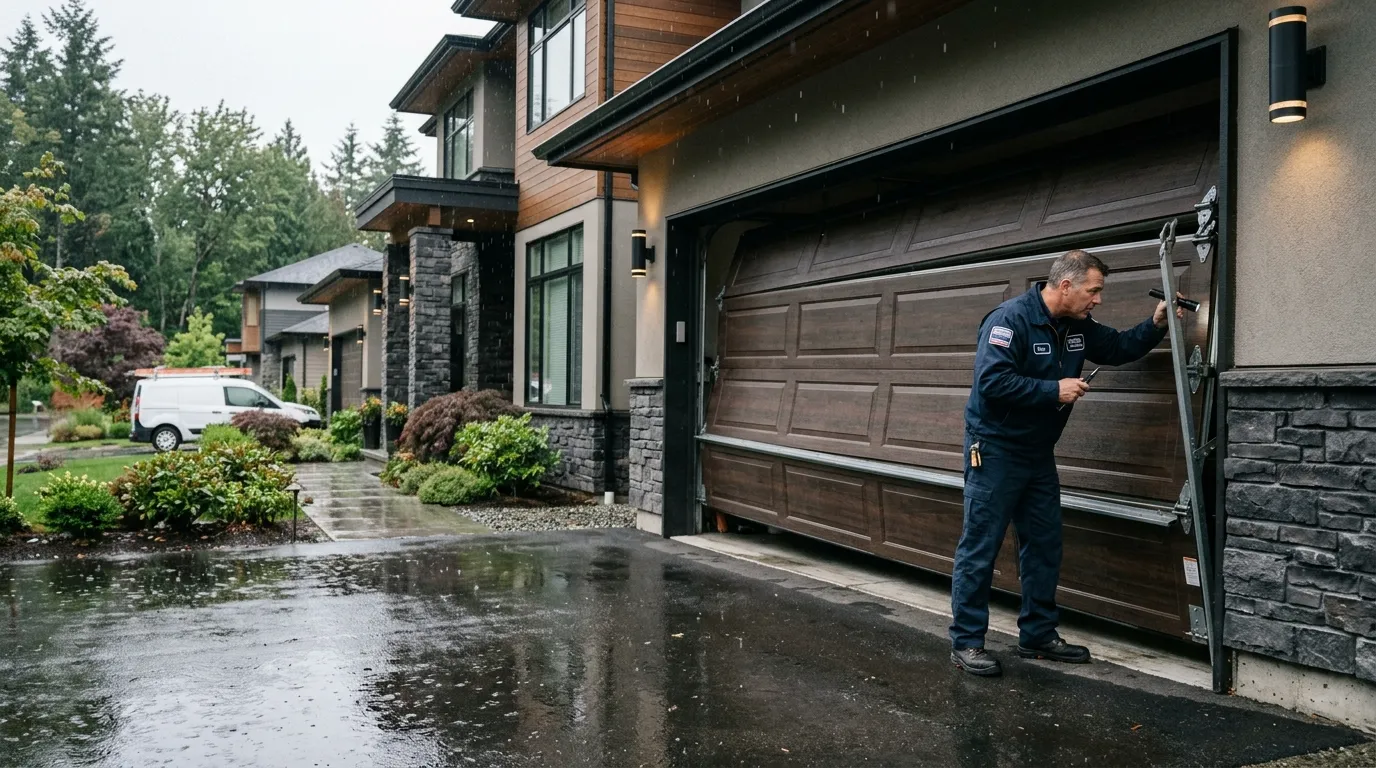
Most of what we find once we're on site in a Schaumburg house from that 1960s-70s stretch is a combination, not a single cause. The track brackets have worked loose over the years, the rollers are the original steel ones (which don't hold up the way nylon does), and cold has stiffened the lift cables just enough that a slightly bent track finally lets a roller pop free. In newer builds closer to 2009, we more often find a single clean cause - a broken cable, a bent section from an impact - because the hardware itself hasn't had decades to fatigue.
Either way, an off-track door is not a DIY realignment job. The door is heavy, the springs are still under load, and forcing the panel back into the track without releasing that tension is how people get hurt or bend the track worse. Sometimes the honest answer is that the track on an older door has been bent and re-bent enough times that replacing the track section is cheaper long-term than fighting it back into shape again.
How we work
What It Costs
We don't have a set number to give you here without seeing the door - an off-track call can be a twenty-minute bracket tightening or a track and roller replacement, and those are two different jobs. What we can tell you is what drives the difference: whether it's brackets alone or the track is actually bent, whether the rollers are the original steel ones or already upgraded, and whether the cables need replacing at the same time since they're usually already stretched by the time a door jumps track.
Median household income across this area runs around $112,168, and most of the roughly 261,093 owner-occupied houses in the wider service area are the age where this kind of repair, done once and done right, tends to outlast another patch job. If you want a real number, that comes from a look at the door, not a phone guess.
Questions
Common questions
Can I push my garage door back onto the track myself?
We'd rather you didn't. The door is under spring tension even when it looks still, and forcing a panel back onto bent or misaligned track is how the track gets bent worse or how someone gets a hand caught. Disconnect the opener arm so nothing pulls on it, and leave the repositioning to a service call.
Is an off-track door always the track's fault?
No. We see it caused by a broken cable letting one side of the door drop, worn rollers popping out of a track that's actually fine, or a bracket that's worked loose over the years. On older Schaumburg-area houses from the 1960s-70s stock, loose or fatigued brackets are common; on newer builds it's more often a single broken part.
Does cold weather actually cause this?
It contributes. In a moderate cold climate band like this one, repeated freeze-thaw cycles loosen fasteners and stiffen cables over a season, which is why we see more off-track calls in the coldest stretches than in summer. It's rarely the sole cause, but it's often the thing that tips an already-loose bracket over the edge.
Ready when you are
Need a garage door sorted in Schaumburg?
Schaumburg Garage Door Pros repairs and installs garage doors, springs and openers in Schaumburg, IL and the surrounding area.