
Guide
Why Garage Door Safety Sensors Drift Out of Alignment in Schaumburg
Schaumburg homes built mostly in the 1960s-70s see sensor brackets shift with seasonal freeze-thaw and aging trim. Here's what actually causes drift and what to check first.
Local detail
How Local Conditions Play In
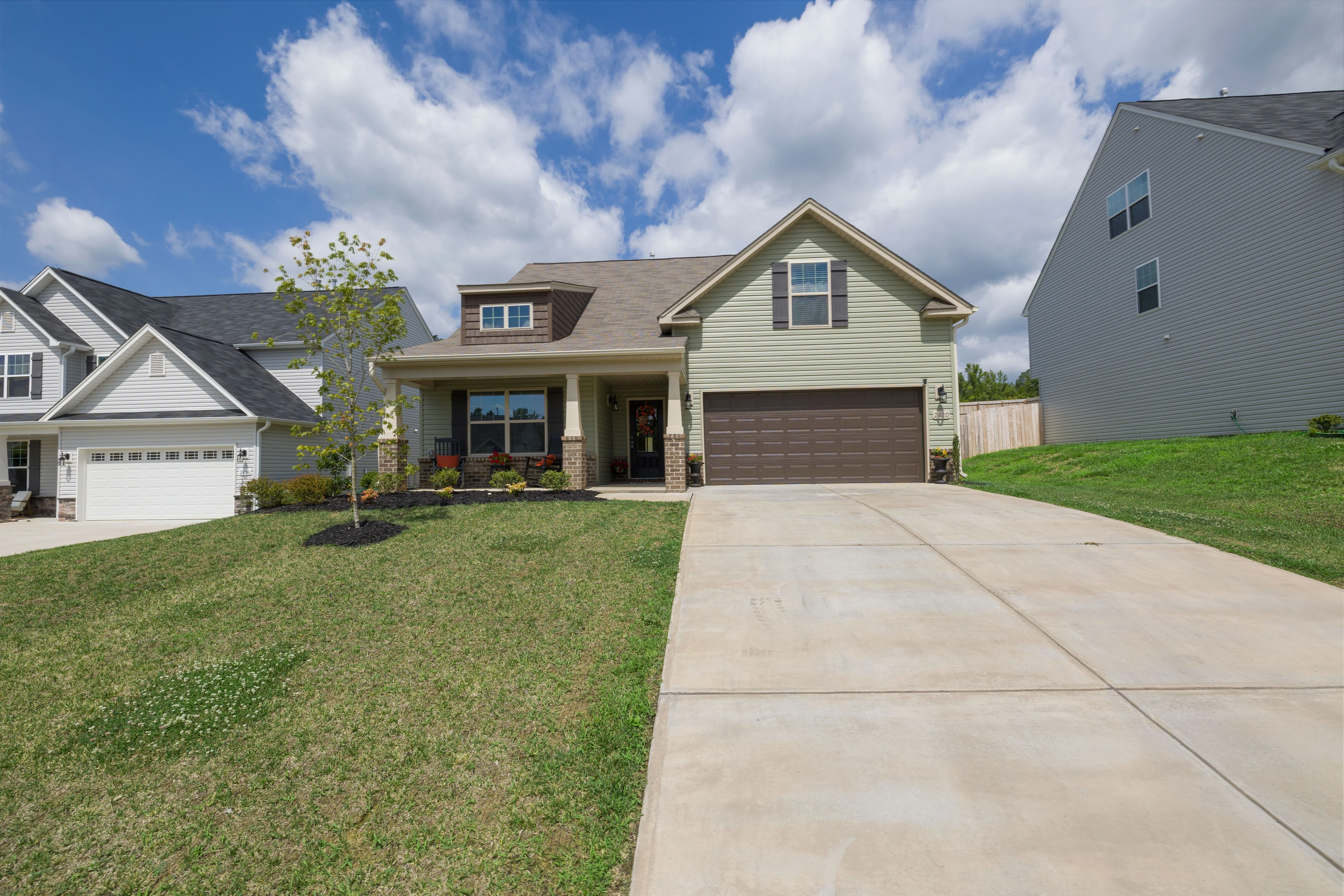
Schaumburg's housing stock runs from 1938 to 2009, but the bulk of it, across the 92 named subdivisions in this service area, went up in the 1960s and 70s. That matters for sensors because federal law didn't require photo-eye safety sensors on garage doors until 1993. On a house from the 60s or 70s, the sensors you have now almost never came with the original door and opener. They got bolted on afterward, usually onto whatever wood trim or steel jamb was already there, not engineered into it. That retrofit mounting is weaker than a factory setup and it's the first thing that moves.
The climate here is cold-moderate, which means real freeze-thaw cycling every winter. The slab under your door and the jamb it's fastened to expand and contract with ground temperature. A bracket that's dead level in July can be off by a sliver in January, and it takes very little to break the invisible beam between the two sensor eyes. This isn't a one-time problem you fix and forget. It repeats every heating season on a lot of these older jambs.
The area
What to Look At First
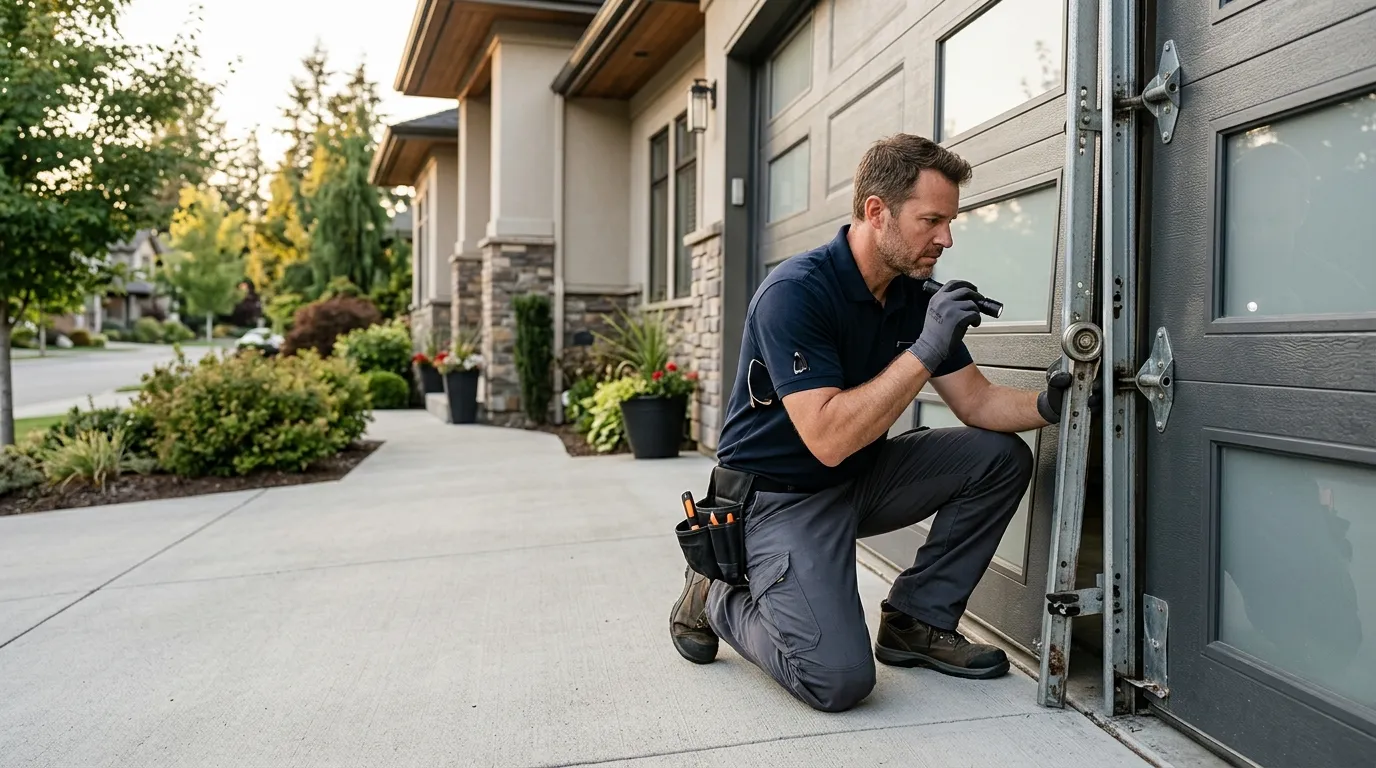
Start at the brackets themselves, not the sensor eyes. On a house from the 1960s-70s wave that makes up most of this area, the brackets are frequently screwed into softwood trim that's shrunk and split over five decades. Wiggle each bracket by hand. If it moves independent of the door track, that's your drift source, not the electronics.
Next, check the two eyes are pointed at each other, not just facing forward. A slab heave of an eighth of an inch at one side is enough to walk the beam off the receiver lens, especially on doors where the sensors sit only a few inches off the concrete.
Look at the wiring too. Older retrofits often ran low-voltage wire along the wall with staples that loosen as wood trim moves seasonally, and a sensor that's mechanically aligned but intermittently losing signal will act exactly like one that's out of alignment. Rule that out before you touch the brackets again.
What we find
The Situation
Most of the calls we get for this are on doors where the jamb itself has aged along with the house. A garage built in the 1960s or 70s median-era stock has had 50-plus years of slab settling, and the sensor brackets are usually the newest hardware on the oldest structure. That mismatch is the actual root cause more often than a bad sensor unit.
We also see it on houses at the newer end of the 1938-2009 range, where builders sometimes mounted sensors to vinyl or composite trim that flexes more with temperature than the wood trim on older homes. Different material, same result: the beam walks.
One limitation worth saying plainly: if the jamb itself is out of square, no amount of sensor adjustment holds for long. Realigning the eyes buys you a season, maybe two, but if the wood or slab keeps moving, you're back to the same call. At that point the fix is re-anchoring the bracket to something stable, not just tweaking the eyes again.
How we work
What It Costs
We don't have a fixed number to give you here without seeing the door, and honestly a straight sensor realignment is a different job than replacing a rotted jamb bracket or rerunning wire. What we can tell you is that in a service area where the median household income runs $112,168 and most housing dates to the 1970s, the sensor hardware itself is rarely the expensive part.
The labor to track down where the drift is actually coming from, especially on an older retrofit setup, is what the job is. If your door won't reverse or the eyes won't hold a light steady, call and we'll walk through it before anyone shows up with a truck.
Questions
Common questions
Why do my garage door sensors keep going out of alignment every winter?
In a cold-moderate climate like Schaumburg's, the concrete slab and the jamb it's fastened to shift slightly with each freeze-thaw cycle. On older homes, sensor brackets were often added after the door was already installed, so they're mounted to trim or jambs that move seasonally, which walks the beam off the receiver.
Is it the sensor unit or the mounting that's usually the problem?
On houses from the 1960s-70s wave that makes up most of this area, it's almost always the mounting, not the electronics. Wood trim shrinks and splits, brackets loosen, and the two sensor eyes stop facing each other exactly. Replacing a sensor unit without fixing the bracket usually just delays the same call.
Can I fix sensor drift myself?
You can check bracket tightness and eye alignment yourself with the door open and power off. If the jamb or trim underneath is warped or the wiring staples have pulled loose, that's a repair job, not an adjustment, and it's worth having someone look at the anchoring before you keep re-aiming the eyes.
Ready when you are
Need a garage door sorted in Schaumburg?
Schaumburg Garage Door Pros repairs and installs garage doors, springs and openers in Schaumburg, IL and the surrounding area.