
Guide
When the Power Goes Out, a Schaumburg Garage Door Opener Needs a Plan
Most Schaumburg garages run openers built for 1960s-70s houses with no battery backup - see what a cold-climate power outage means for your door and opener.
Local detail
How Local Conditions Play In
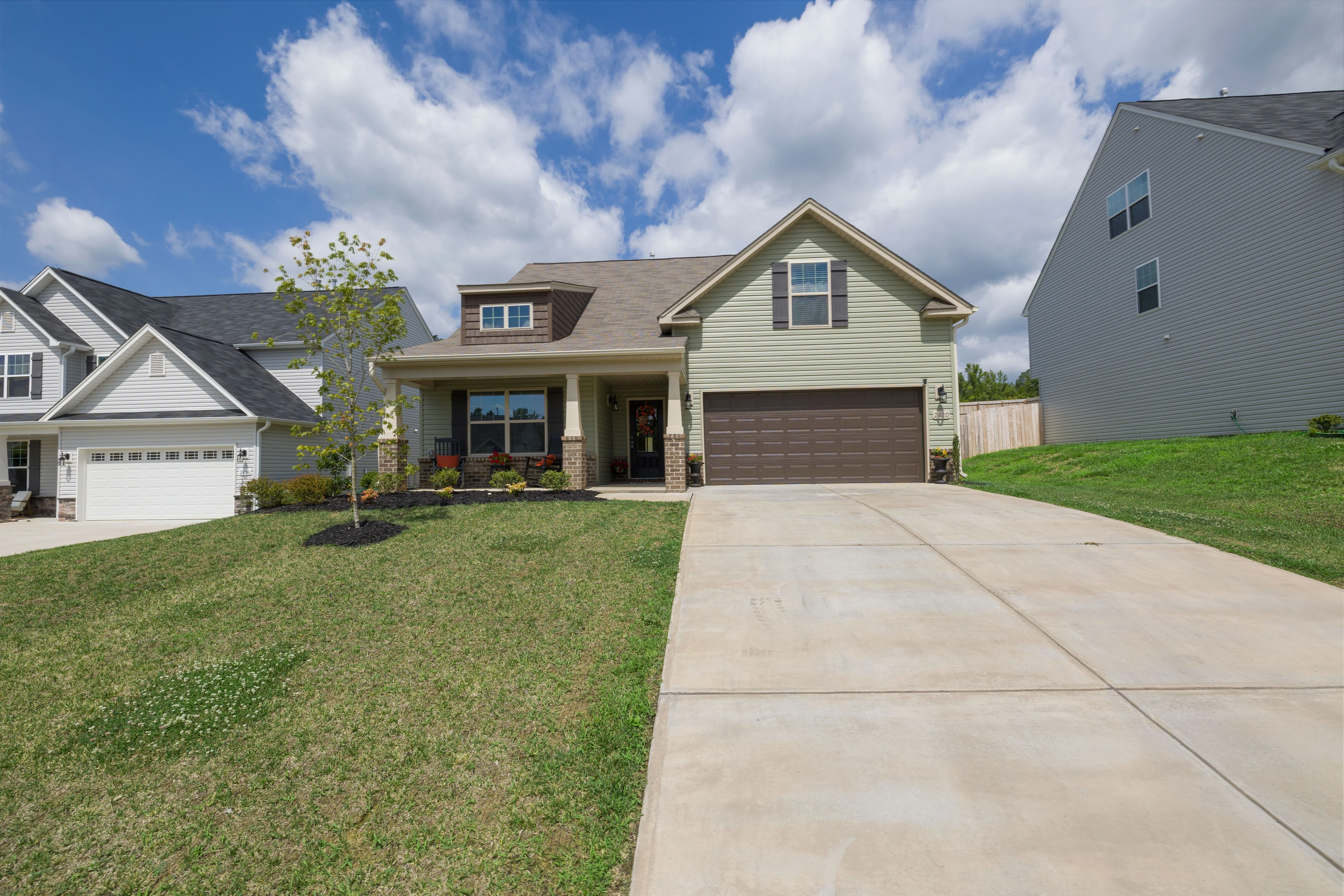
Schaumburg sits in a cold-moderate climate band, and winter power outages here tend to arrive with ice and wind, not just cold air. Houses across the area were built between 1938 and 2009, with a median year of 1977, and most of the stock in the 92 named neighborhoods that make up this part of the county dates from the 1960s and 70s. That matters for openers: a unit installed when the house was built, or even a replacement from twenty years ago, almost never has battery backup.
When the grid drops in a cold snap, those doors won't move until the power comes back or someone pulls the manual release. Newer openers with battery backup run the door on stored charge for a set number of cycles, but that only helps if the unit was swapped out sometime in the last decade. In a lot of Schaumburg garages, it wasn't, and that gap between build era and opener technology is the whole story here.

The area
What to Look At First
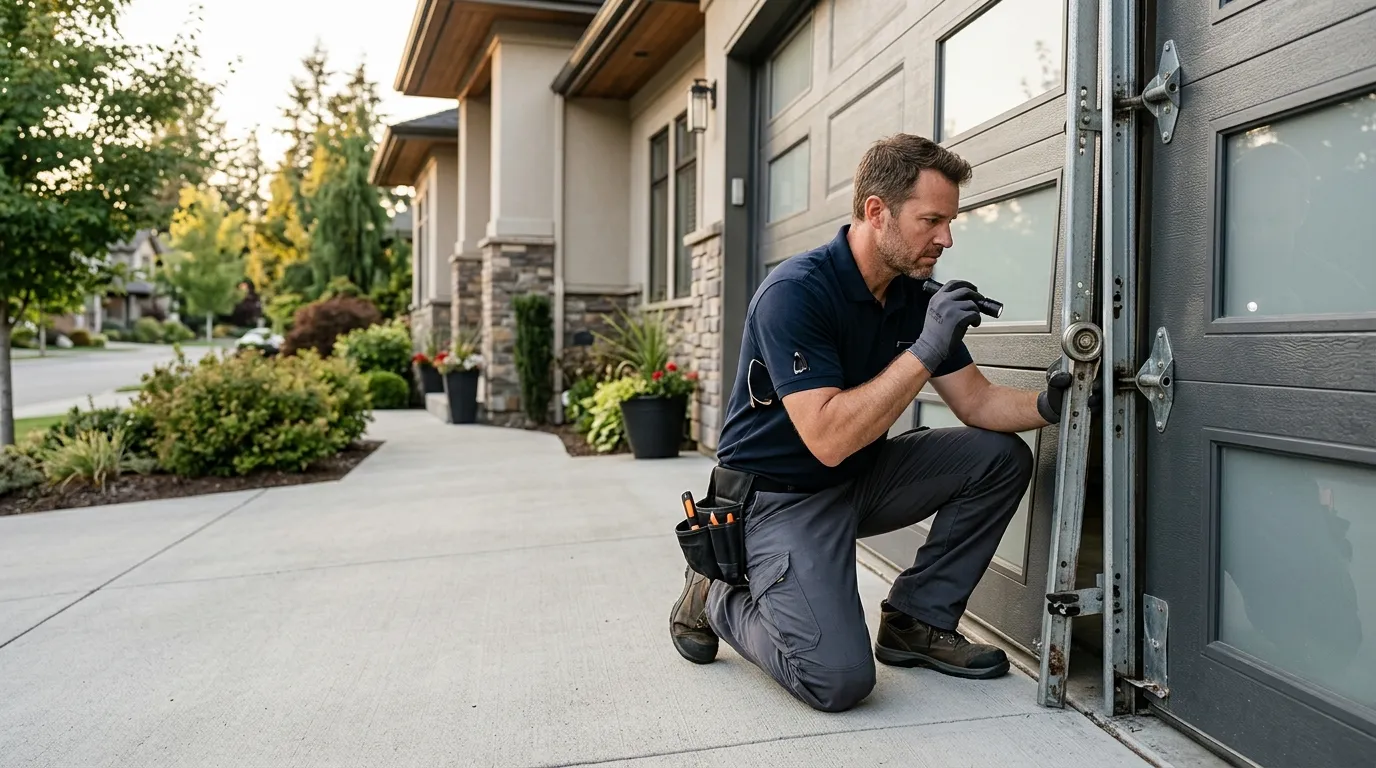
Before you assume a dead opener means a dead motor, check three things. First, the wall switch - if the light on it is off too, the breaker or the outage is the problem, not the opener. Second, look for the battery backup indicator light on the opener head; if your unit was installed before battery backup became standard equipment, that light won't exist at all, and given how much of the housing stock here runs from the 1960s through the 70s, that's common.
Third, find the manual release cord - the red handle hanging from the trolley - and make sure it pulls the arm free so you can lift the door by hand. On an insulated steel door in cold weather, that lift is heavier than it looks, so know before you need it, not during an outage. If the opener stays dead every outage and the house is older, adding battery backup solves the recurring problem instead of leaving you pulling a cord every time the grid drops.
What we find
The Situation
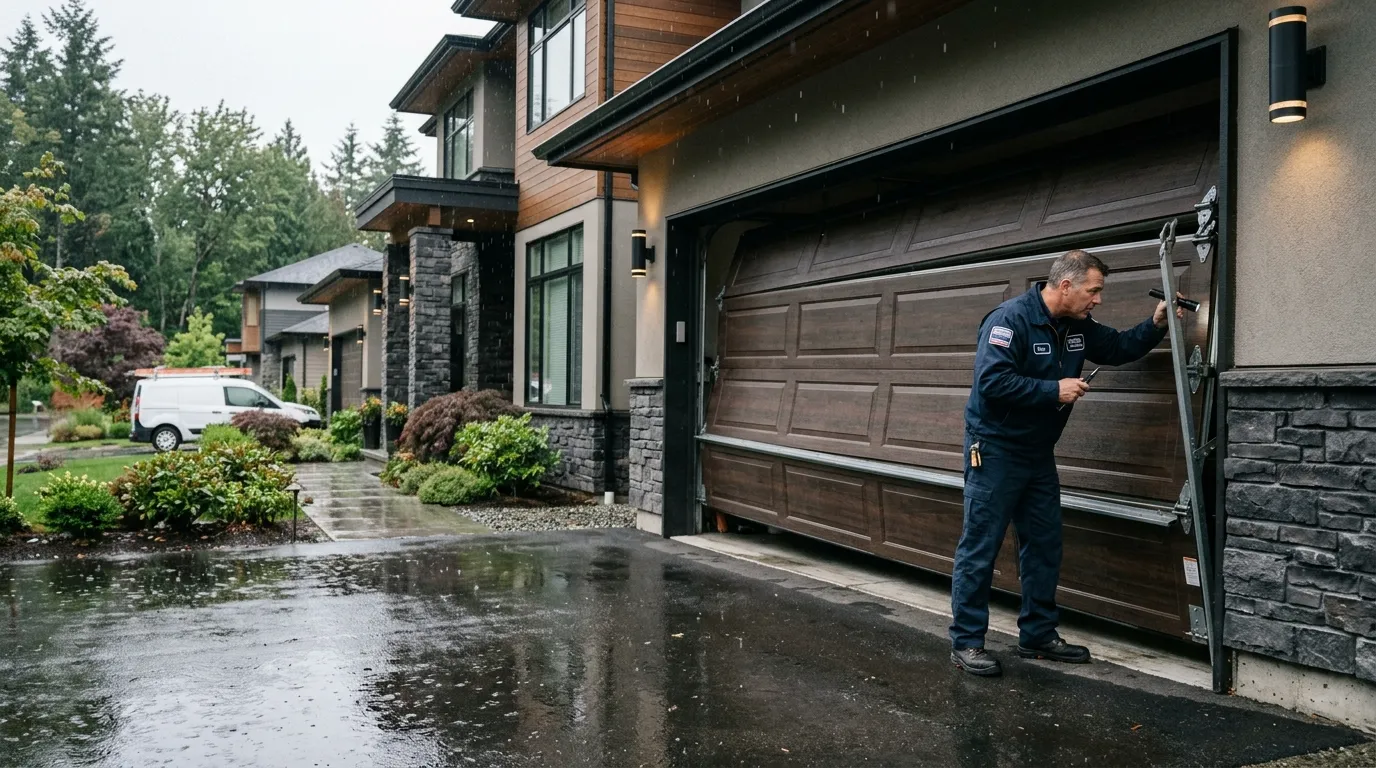
Picture a January outage that lasts a few hours, the kind this cold-moderate climate produces more of in winter than a milder region would. In a Schaumburg house built in the 1970s, the original opener - or the first replacement it ever got - draws straight off house power with no backup cell. The door sits shut, the car sits in the driveway, and somebody has to find the release cord in the dark.
That's the actual failure mode we see, not a burned-out motor. It's a wiring-era problem: openers manufactured decades ago were built to run only on grid power, full stop, and swapping the opener head later doesn't always mean the homeowner asked for or paid extra for the battery option when they did it. Across a service area running from Roselle three miles out to Wood Dale seven miles, we see the same pattern in blocks with similar-age housing stock, and it always separates into two groups fast: houses where a wired opener sits stuck the whole outage, and houses where somebody replaced the unit for the backup and never notices the outage at all.
How we work
What It Costs
We don't have a set number to give you here without seeing the door and the opener - a torsion spring double door behaves differently under battery power than a lightweight single door does, and the reason to add backup is different in an attached garage than a detached one. What we can tell you is where the cost logic points: retrofitting battery backup onto an opener that already has a compatible motor is a smaller job than replacing the whole head, and either one costs less than a service call at 11pm during an outage because the door won't budge.
Given the median household income across this service area sits around $112,168, most owners here are weighing a one-time opener upgrade against repeat manual releases every storm season, not against ignoring the problem entirely. If your opener is already near the end of its life for other reasons - stripped gears, a chain that jumps - that's the moment to combine the backup upgrade with the replacement instead of paying for labor twice.
Questions
Common questions
Does my Schaumburg garage door opener need battery backup?
If your house dates from the 1960s or 70s, which covers most of the stock in this area, and the opener has never been replaced with a newer unit, it almost certainly doesn't have backup power built in. The only way to know for sure is to check the opener head for a battery indicator light.
What do I do if the power goes out and my garage door won't open?
Find the manual release cord hanging from the trolley on the track and pull it - this disconnects the door from the opener arm so you can lift it by hand. Expect it to feel heavier than the opener makes it feel, especially on an insulated steel door in cold weather.
Why doesn't my older opener have a battery backup light?
Battery backup wasn't standard equipment on openers installed when most Schaumburg-area houses were built between the 1960s and 70s. If the unit hasn't been replaced since, there's no backup cell and no indicator light for one, because the feature simply wasn't part of the design.
Ready when you are
Need a garage door sorted in Schaumburg?
Schaumburg Garage Door Pros repairs and installs garage doors, springs and openers in Schaumburg, IL and the surrounding area.