
Guide
Is Your Schaumburg Garage Door Worth Repairing or Replacing?
A look at when a Schaumburg garage door built for 1960s-70s hardware is worth repairing versus replacing, based on local housing age and climate stress.
Local detail
How Local Conditions Play In
Schaumburg sits in a cold-moderate climate band, and that matters more for garage doors than most owners think. A door doesn't fail because of one bad winter - it fails from thirty or forty of them. Freeze-thaw cycling works on the weak points: the bottom bracket welds, the seam between panel sections, the end bearings on the torsion shaft. Steel contracts in January and expands again by July, year after year, and that cycle is what turns a door with cosmetic wear into a door that binds on the track or drops a cable.
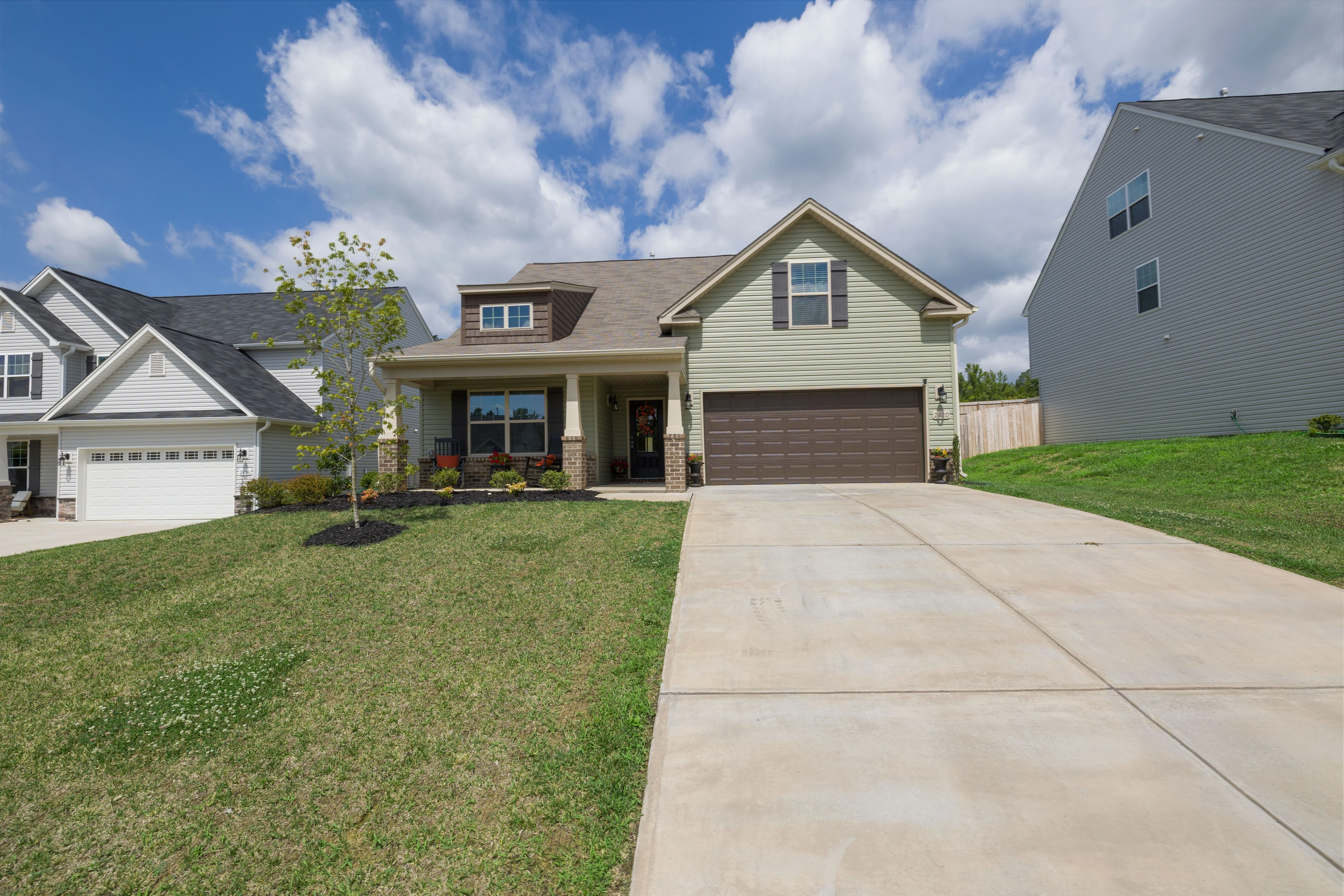
Most houses in this part of Schaumburg went up between 1938 and 2009, with the bulk of the stock dating to the 1960s and 1970s. A door built for that era is often original steel on side-mounted torsion hardware, sized and hung for a garage opening that predates a lot of the extension spring and photo-eye standards you'd find on anything newer. That doesn't make it bad. It makes it a different repair job than a 2015 build, and it's worth knowing which one you've got before anyone quotes you anything.
The area
What to Look At First
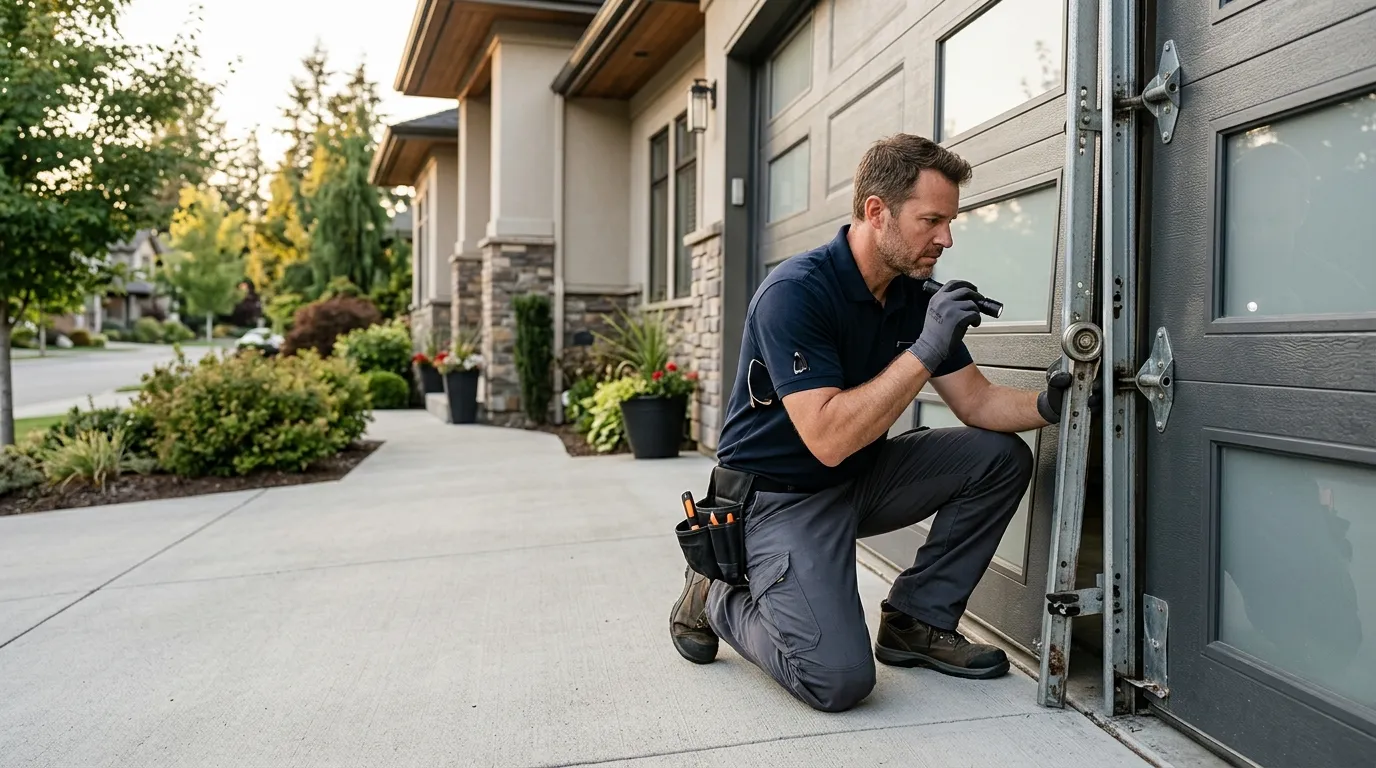
Before you decide fix or replace, look at four things. First, the panels - surface rust is cosmetic, but rust that's eaten through a seam or a bottom panel means water has been getting in for years, and that panel won't hold a new spring's tension reliably. Second, the track - check for rust pitting or bends where the door has been forced past a stuck point. Third, the springs - a torsion spring on a door from the 1960s-70s stock common here is often the original size, and if it's never been replaced, it's overdue regardless of how the door looks. Fourth, the opener, if there is one - an older door sometimes runs on an opener added later that doesn't match the door's weight.
The honest limitation here: we can't tell you what your door needs from a description over the phone. Rust that looks surface-level from the driveway can be through-metal on the inside face of a panel, and that changes the whole recommendation. A real look at the door is the only way to know if you're fixing a spring or replacing a section.
What we find
The Situation
Across the service area - 525,414 households, with 261,093 of them owner-occupied - a large share of houses fall into that 1960s-70s build window that defines Schaumburg's housing stock. A door from that era was built well for its time, but it wasn't built to current spring-cycle ratings, and parts for some of the original hardware are getting harder to source new. That's the real fork in the road: not whether the door still opens, but whether the parts holding it together are still serviceable.
A door with a solid steel frame, tracks that are still straight, and one failed component - a spring, a cable, a roller - is almost always worth fixing. A door with rust through more than one panel, a bent track from age rather than a single impact, and an opener mismatched to its weight is telling you the frame is the problem, not any one part. At that point a repair is a stopgap, and most owners in an older Schaumburg house end up replacing within a year or two anyway.
How we work
What It Costs
We're not going to put a number here that isn't tied to your door, because it wouldn't mean anything. Cost depends on whether you need one spring or a pair, whether the drum and cable need to come off with it, whether the track is salvageable, and whether the opener has to be reset or replaced to match a new door's weight. What we can tell you is the decision logic: with median household income across the service area at $112,168, a lot of owners here find that full replacement on an older door pencils out close enough to a major repair that it's worth pricing both before committing to either.
What we don't do is talk you into a repair on a frame that's already failing just because it's the cheaper number today. If the panels are compromised, a new spring on that door is money spent twice. Get someone out to look at the actual hardware before you decide.
Questions
Common questions
How do I know if my garage door is original to the house?
If your Schaumburg house dates to the 1960s or 70s - common for this area - and the door has never been swapped, look for a manufacturer plate riveted to the top panel or the end stile. No plate, older baked-enamel finish, and steel gauge heavier than what's sold now are all signs it's original. We can confirm on a visit.
Does the cold weather here actually shorten a garage door's life?
Yes. Schaumburg's cold-moderate climate means repeated freeze-thaw cycling on the metal, seams, and hardware every winter. Over decades that stresses welds and bracket bolts more than a single bad storm would. A door that's seen forty winters has taken forty rounds of that stress, which is a big part of why age matters more than mileage on these doors.
Is it ever cheaper to fix an old door than replace it?
Often, yes - a single failed spring, cable, or roller on an otherwise sound steel frame is usually a smaller job than replacement. The math flips when rust or track damage touches more than one part of the door at once, because then you're paying for a repair that only buys a short stretch of extra life.
What won't you repair?
If a panel has rusted through in more than one spot or the frame has warped from age rather than a single impact, we'll tell you that straight rather than patch it. A repair on a compromised frame doesn't hold, and we'd rather lose that job than have you calling us back in three months.
Ready when you are
Need a garage door sorted in Schaumburg?
Schaumburg Garage Door Pros repairs and installs garage doors, springs and openers in Schaumburg, IL and the surrounding area.