
Guide
When a Spring Goes in Cold Weather: A Schaumburg Homeowner's Guide
Schaumburg homes built mostly in the 1960s-70s face cold-weather torsion spring failures differently than newer builds. Here's what to check and expect.
Local detail
How Local Conditions Play In
Schaumburg sits in a cold moderate climate band, and that matters more for a garage door spring than most people think. Torsion springs are wound steel, and steel contracts as temperatures drop. A spring that's been carrying a door's weight for fifteen years with some fatigue already in the coil doesn't need much more stress to finally let go, and a hard overnight cold snap is often what pushes it there. This isn't unique to any one street in town, but it is a pattern we see across the area every winter: doors that worked fine in October snap a spring in January.
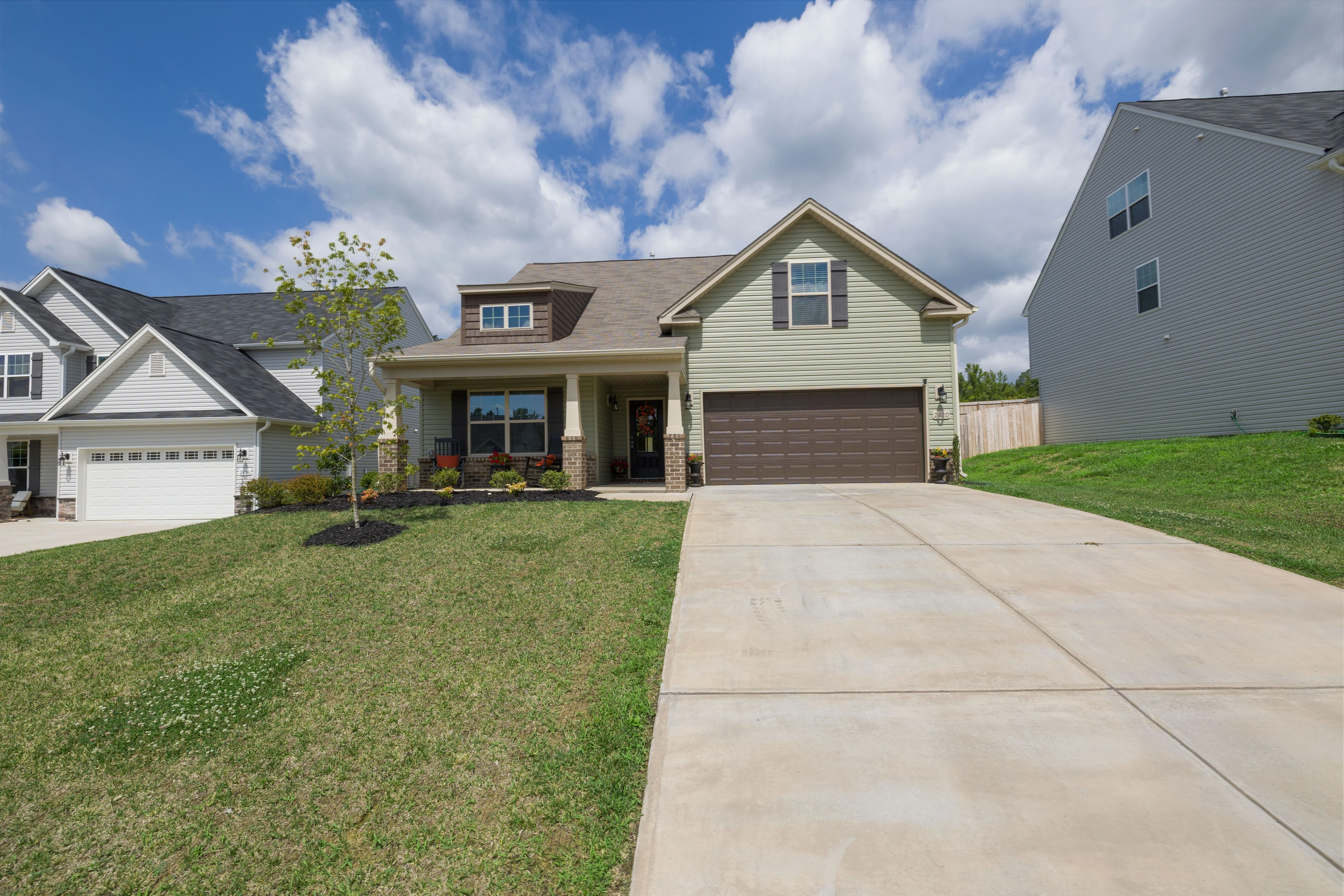
Housing here was built mostly between 1938 and 2009, with the bulk of stock going up in the 1960s and 70s (median year 1977). That means a lot of original or first-replacement torsion hardware is now 40 to 60 years old, sized to door weights and coil specs that were standard decades ago. Cold doesn't cause the failure by itself - fatigue does - but cold weather is when a spring that's already near the end of its life tends to give out, because the steel is less forgiving of that last stress cycle.

The area
What to Look At First
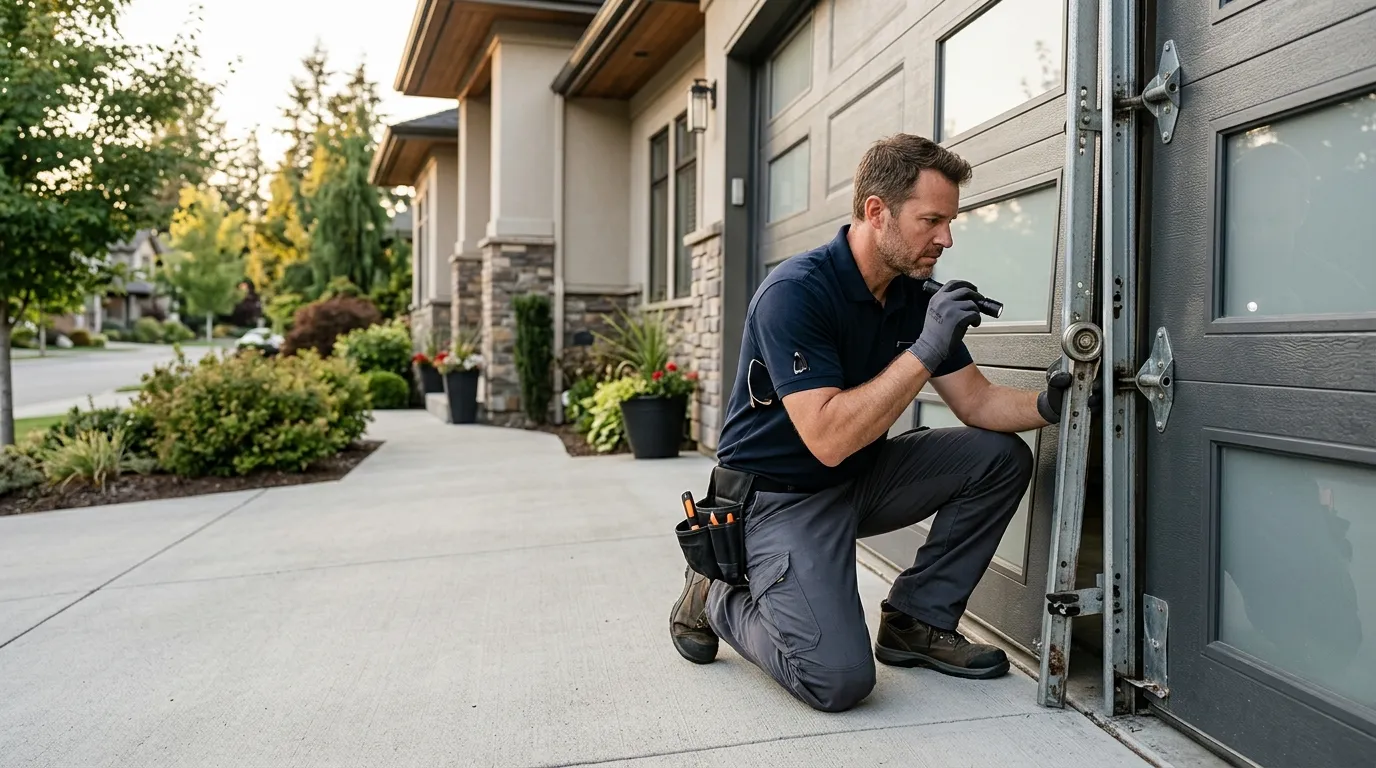
If your door won't open, or opens a few inches and stops, look at the spring above the door before you touch anything else. A broken torsion spring usually shows a visible gap in the coil, and you may have heard a loud bang from the garage when it happened - that's normal, not a sign anything else broke.
Check the age of the hardware if you know it. Homes from Schaumburg's 1960s-70s wave that still have original springs are well past the typical spring lifecycle, and cold snaps are exactly when that hardware finally fails. If the door has a single spring on a double-wide panel, that's an older configuration common in this housing stock and worth flagging to whoever comes out, since parts for single-spring double setups aren't always the fastest thing to source.
Don't try to open the door manually past that point, and don't let anyone (including yourself) try to release the cable tension without knowing what they're doing. A wound torsion spring under load is the most dangerous part of the whole system.
What we find
The Situation
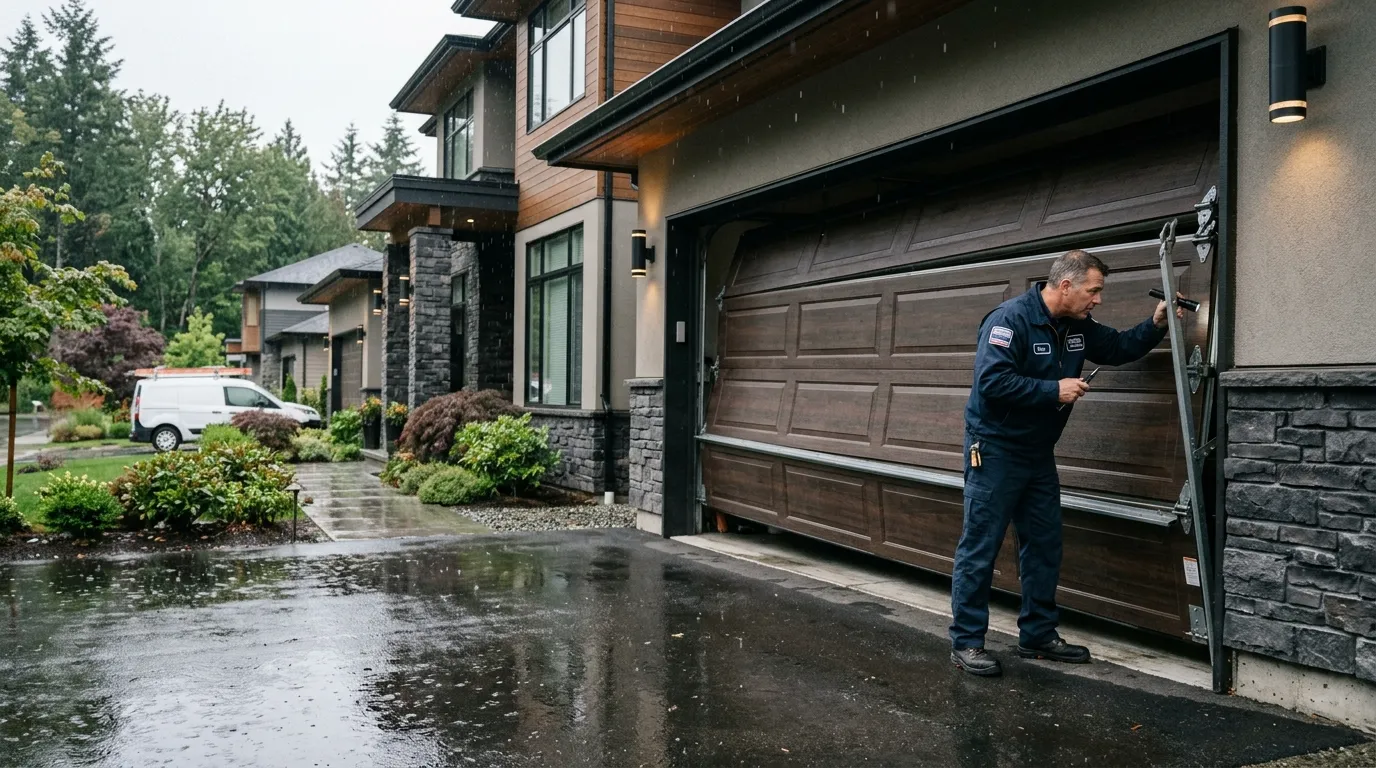
A broken spring in cold weather is a mechanical failure, not an emergency in the sense of danger to your house, but it does mean the door is either stuck shut or unsafe to run on the opener. The opener isn't built to lift the door's full weight alone, and forcing it will burn out the motor or strip the gear.
Across the service area - Schaumburg and the towns around it like Roselle, Hanover Park, Streamwood, Itasca, and Bloomingdale - the mix of housing ages we work in is fairly consistent: enough 1960s and 70s construction that torsion spring replacement is one of the most common cold-weather calls we get. It's not a sign of a bad door or bad luck. It's the age of the hardware meeting a cold morning.
One honest limitation: if the drum, cable, or track shows damage from the spring failure, that's a separate repair and we won't know the full scope until we're looking at it in person. A spring quote over the phone is only ever a starting point.
How we work
What It Costs
We don't publish a flat number here because spring jobs vary by door weight, spring size, and whether one spring or a matched pair needs replacing - and on older double-wide doors with a single spring, matching that setup can take longer to source than a standard pair. What we can tell you is that this area's household income (median $112,168) and housing stock mean most jobs we see are straightforward spring swaps on doors installed decades ago, not full system replacements.
The honest answer on cost is that it depends on what's on your door right now, and we'd rather look at it than guess over the phone.
Questions
Common questions
Why did my spring break overnight when the door was fine yesterday?
Cold steel is less forgiving of fatigue that's already built up in the coil. A spring nearing the end of its life can hold on through mild weather and then finally give out on a cold night, especially in homes with original hardware from the 1960s-70s building wave common in Schaumburg.
Is it safe to open the door manually after a spring breaks?
No. Without the spring, the door's full weight is unsupported, and the opener isn't built to lift that weight either. Leave it closed and don't force the opener or the manual release until the spring is replaced.
Do older Schaumburg homes usually have one spring or two?
It depends on the door width and when the hardware was last replaced. Many double-wide doors from the 1960s-70s stock were built with a single torsion spring, which is a slower part to source than the matched pairs common on newer installs.
Ready when you are
Need a garage door sorted in Schaumburg?
Schaumburg Garage Door Pros repairs and installs garage doors, springs and openers in Schaumburg, IL and the surrounding area.