Forest Park, Schaumburg IL
Garage Door Service for Forest Park, IL
Forest Park, IL homes date to 1949 on average, older than most of our service area. We work on the springs, track and hardware that era actually has.
Local detail
The Houses Here
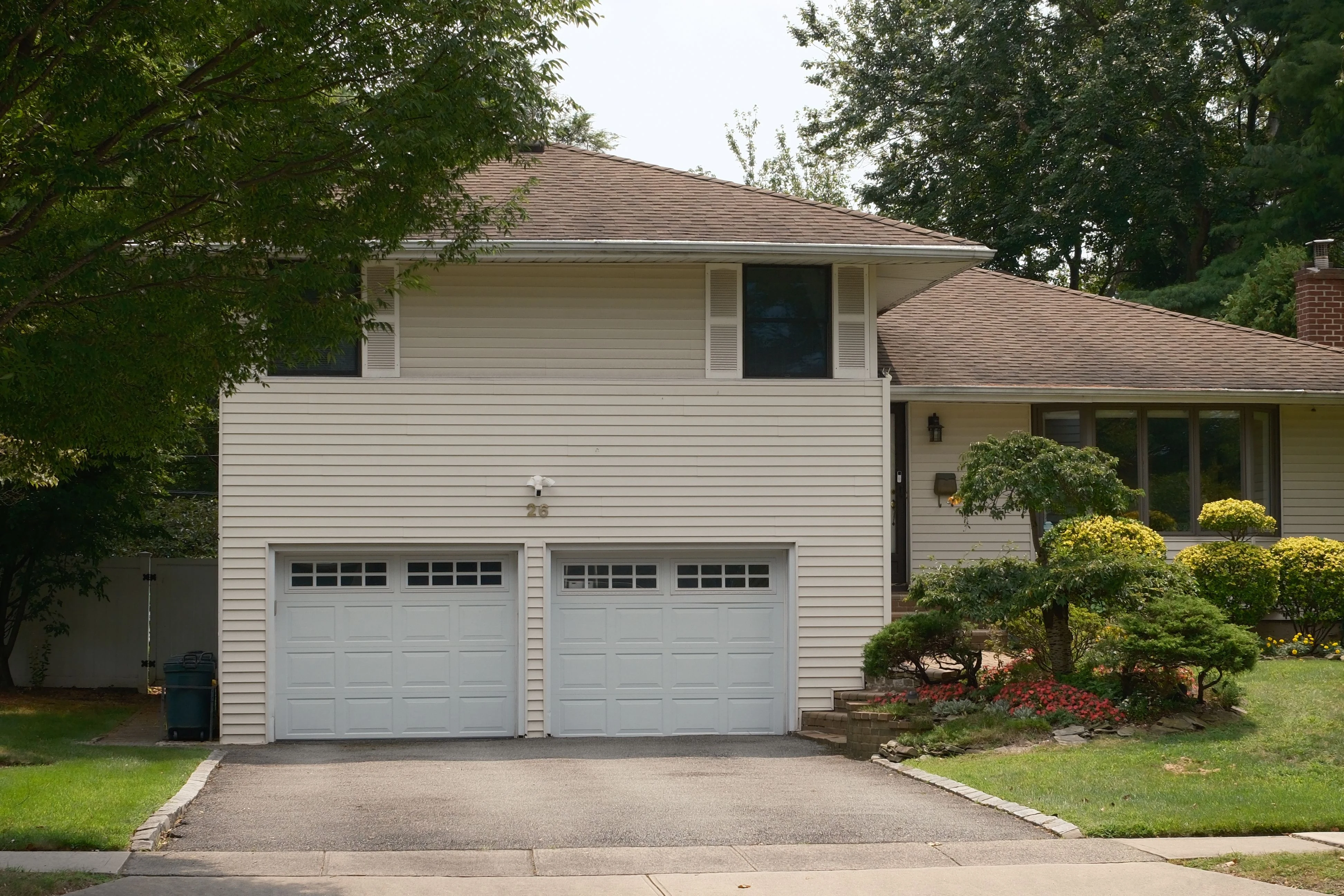
Forest Park's housing centers on 1949, which is a couple decades older than the 1977 median we see across the wider Schaumburg service area, where most stock dates from the 1960s and 70s. That gap matters more than it sounds like it should. A door hung in 1949 was built for hardware nobody stocks new anymore - narrower track, older drum-style pulleys on some jobs, and openers that have usually been swapped at least once by now even if the door itself is original.
With 7,035 households in Forest Park, against 525,414 across the full area we cover, this is a small, dense pocket rather than a sprawling subdivision built in one construction run. That usually means more variety door to door - a mix of replacement doors from different decades sitting next to originals - rather than the uniform look you get in a tract built all at once. Median household income here runs $81,323, below the $112,168 median across the broader service area, which we mention because it shapes what kind of repair versus replace conversation makes sense. We're not guessing at any of this from the outside; it's the reason the job list here looks different than it does ten miles closer to Schaumburg.
The area
What We Will Not Take On
We run out of Schaumburg, and Forest Park is 18 miles out. We don't keep a truck or a depot here, so we're not the outfit to call for a same-day emergency lockout at 6 a.m. - we can usually get there the same day or next, but we won't promise a response time we can't back up from that distance.
We also won't try to force a 1949-era wood door back into service if the frame itself has shifted or rotted at the jamb. Cold-climate freeze-thaw cycles on an older sill can move a frame enough that a new door won't seat right no matter what hardware goes on it, and at that point the honest answer is a carpenter before a garage door company. If a panel set is discontinued and the rest of the door is sound, we'll tell you that too rather than quote a patch that won't hold. Distance and age both cut the same way here: we'd rather say no to a job than show up and improvise.
What we find
The Usual Work Here
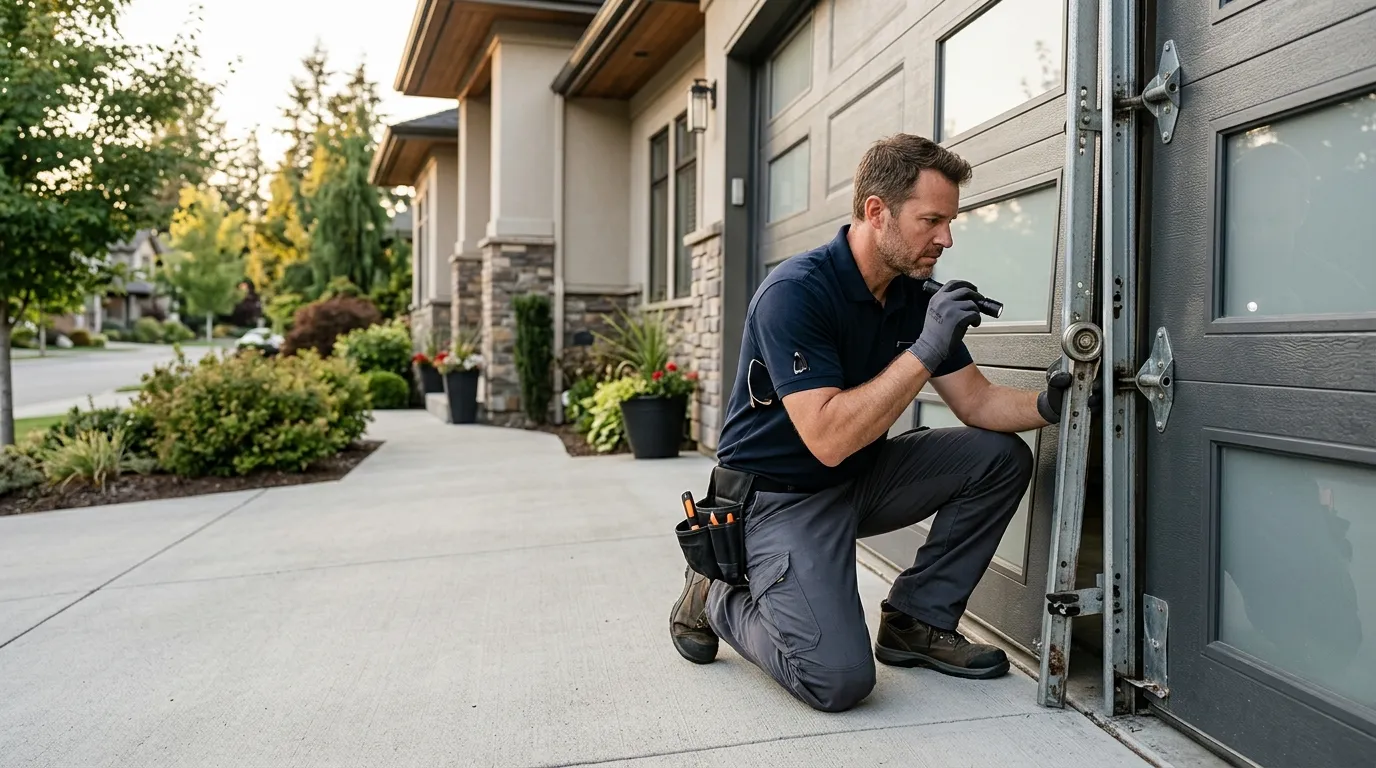
On a 1949-built door in a COLD moderate climate, the most common call is a broken spring - usually a torsion spring that's outlived its cycle count, sometimes an older extension-spring setup on a door that was never upgraded. Second most common is track that's worked loose from the jamb over seventy-plus years of seasonal freeze and thaw, which shows up as the door rattling or binding on one side well before it shows up as a full failure.
Rollers matter more here than in newer stock. Steel rollers on original track wear a groove into the rail over decades, and once that groove is deep enough, no amount of lubrication fixes the binding - the track needs replacing, not just the roller. Openers are almost never original; by now most homes have had at least one replacement, but the mounting bracket underneath is sometimes still the 1949 original, undersized for a modern opener's torque. That mismatch is a quieter problem than a broken spring, but it's the one that causes a second call six months later if it's not addressed the first time.
How we work
How That Shows Up in the Door
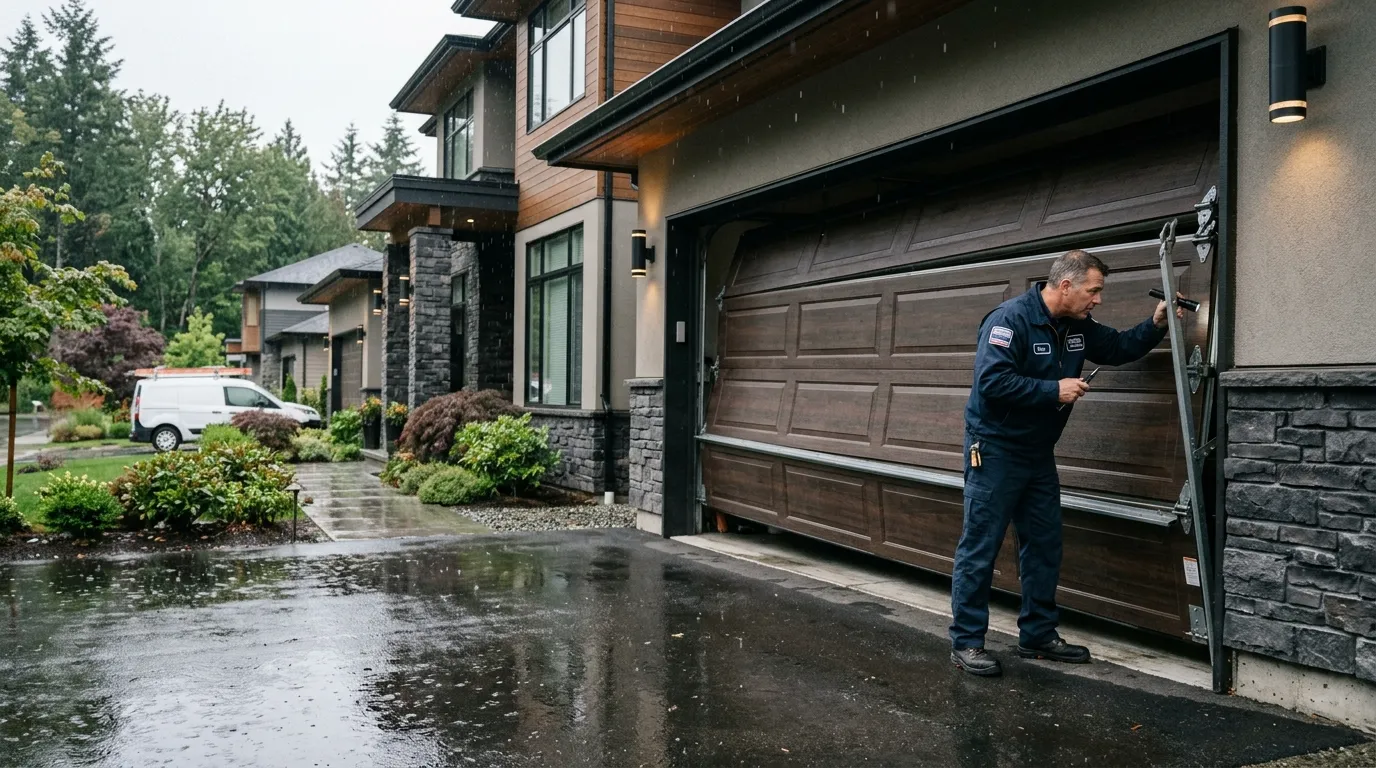
In practice, a Forest Park call often starts with "it's making a grinding noise" rather than "it won't open at all." The grinding is usually the roller-in-worn-track problem, not the spring - and telling the difference over the phone is hard, which is part of why we look at the whole run of track before quoting anything.
A door that drops fast on one side and stutters on the other is a classic sign of one broken torsion spring on a double door with the cable still holding one end. It's not subtle once you've seen it, and it's not safe to keep opening manually until it's fixed - that imbalance is exactly what causes a cable to snap under load.
We also see doors here that open fine on the opener but bind badly when someone tries to lift them by hand during a power outage. That's the bracket-and-torque mismatch mentioned above: the opener is doing more of the lifting work than the spring alone was ever sized for. None of this is exotic. It's what you'd expect from hardware installed for a house built in 1949 and updated in pieces since.
Service areas
Other areas we cover near Forest Park
Questions
Common questions
Do you have a location in Forest Park?
No. We run out of Schaumburg and travel to Forest Park, about 18 miles out. We don't keep a truck stationed there, so we're upfront that we're not a same-day emergency outfit for this area the way we might be closer to home.
Why do older Forest Park doors break more often at the spring?
Houses here run older on average - median build year 1949 versus 1977 across the wider service area - so the springs and track have simply had more decades of cycles and freeze-thaw movement. Age on the hardware, not the door panel itself, is usually the real driver.
Is it worth replacing an original 1949 door instead of repairing it?
Sometimes, and we'll tell you plainly if that's the case. If the panel set is discontinued or the frame has shifted, patching it doesn't hold. If the hardware is just worn but the frame is sound, repair is usually the better spend.
Ready when you are
Need a garage door sorted in Schaumburg?
Schaumburg Garage Door Pros repairs and installs garage doors, springs and openers in Schaumburg, IL and the surrounding area.