
Guide
What Actually Happens When We Show Up for a Service Call
See what's included when Schaumburg Garage Door Pros comes out for a service call - inspection, diagnosis, and repair on doors built between 1938 and 2009.
Local detail
How Local Conditions Play In
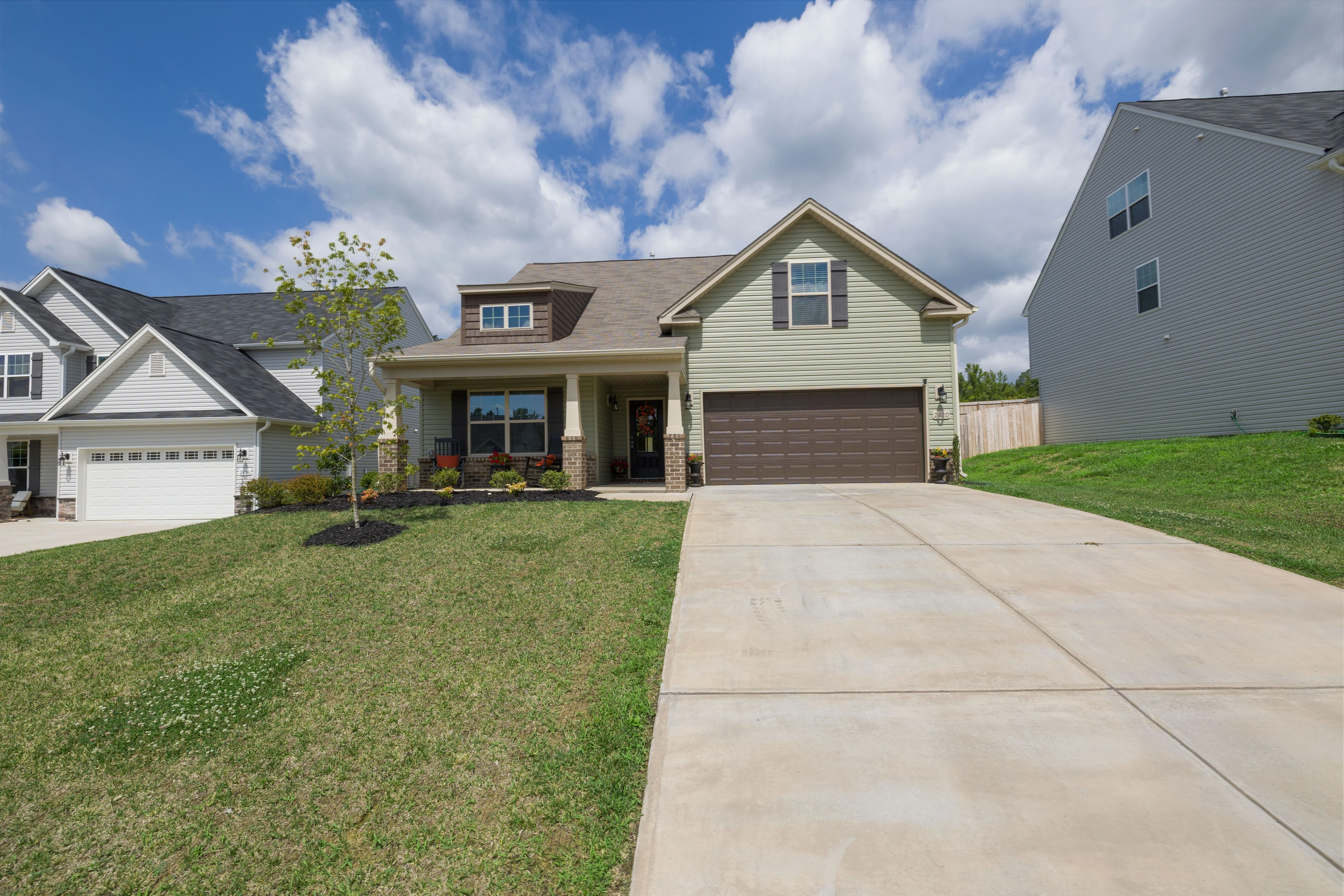
Schaumburg sits in a cold-moderate climate band, and that matters more than most homeowners think. Steel contracts in cold weather, which stiffens torsion springs, tightens nylon rollers against the track, and dries out rubber weatherstripping until it cracks at the bottom panel. Most of the housing stock in this part of town went up between 1938 and 2009, with the median build year landing around 1977, and the bulk of it dating to the 1960s and 70s. That means a lot of the doors we get called out to are original or close to it - single-layer steel panels on side-mounted torsion hardware, installed before insulated doors were the standard choice.
Put that hardware through forty or fifty winters of expansion and contraction and you get predictable failure points: springs that lose tension unevenly, track brackets that have worked loose from the jamb, and openers with drive gears worn down from straining against a door that doesn't move as freely as it did when it was new. A service call here isn't guesswork. It's checking the same handful of parts that cold cycling and decades of use wear out first, on doors built for a different era of garage design.

The area
What to Look At First
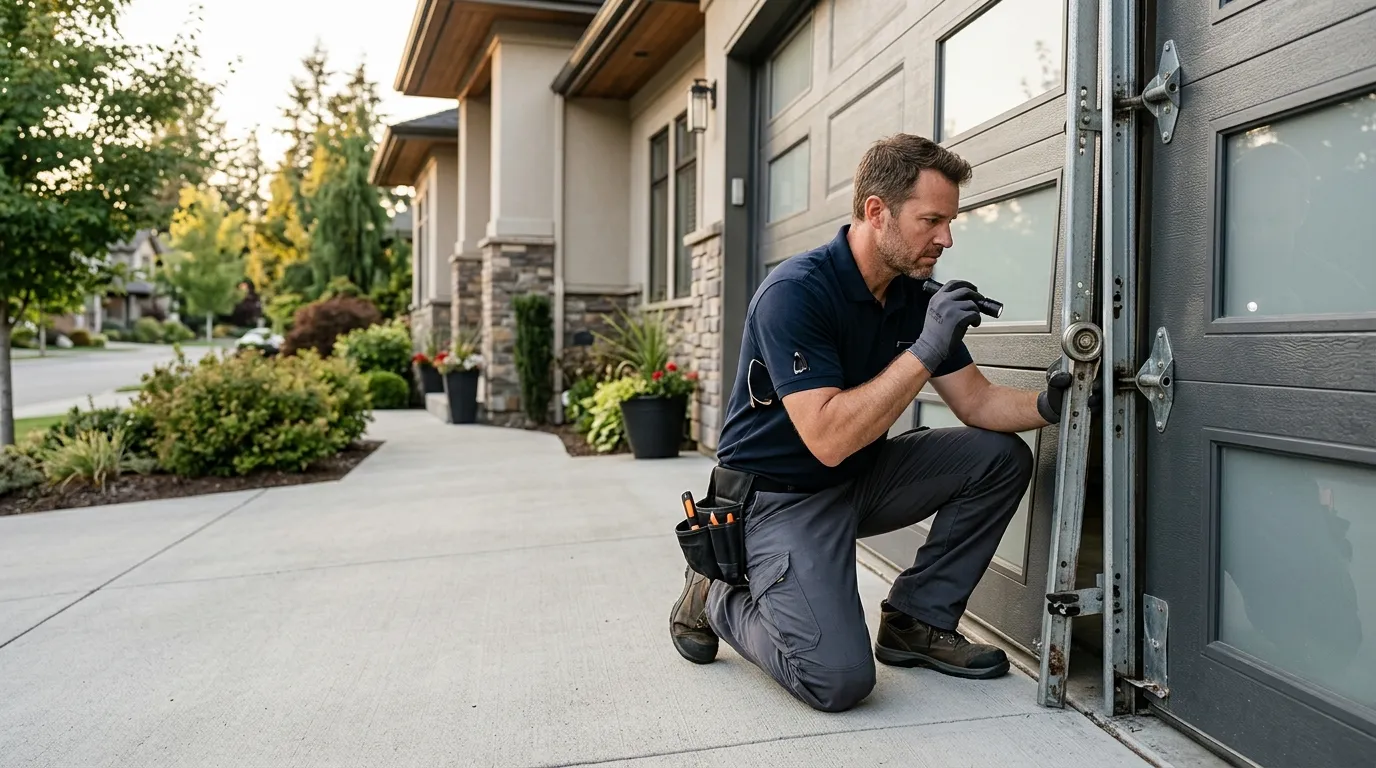
We start at the spring, not the opener, because on a door this age the opener is usually straining to compensate for something else that's already failed. A torsion spring that's lost tension makes the opener's motor and gears do work they weren't built for, and that's often what actually burns out first on a house with 1960s or 70s-era hardware. After the spring, we check the track for alignment - on older homes the jamb has settled over decades, and a track that was plumb in 1975 may not be plumb now. Rollers get a look next, especially if they're original steel rather than nylon; steel rollers on an old door tend to bind up hard once temperatures drop.
Bottom seal and weatherstripping come after that, since a cracked seal doesn't stop the door from working but it does let cold air and moisture into the garage all winter. Last, we check the opener's force settings and gear condition. On a door where the spring has been fighting the opener for months, that gear is often the actual point of failure a homeowner blames on the opener itself, when the real problem started at the spring.
What we find
The Situation
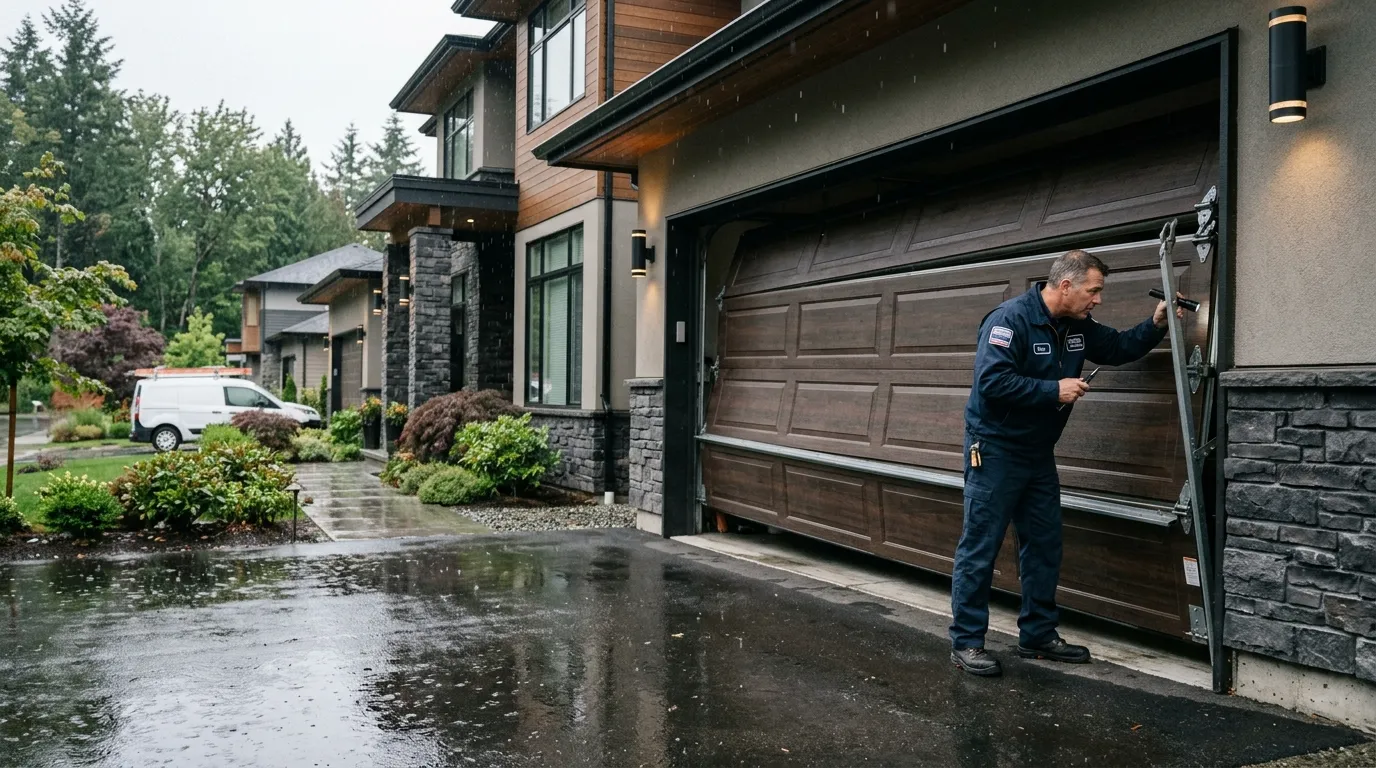
Most calls start the same way: the door won't open, or it opens partway and stops, or it's making a grinding noise it didn't make last week. On a lot of the doors we see, built anywhere from the late 1930s through the 2000s but mostly clustered in that 1960s-to-70s stretch, the door itself is sound - it's the spring or the track hardware that's given out. We walk the door manually first, disconnected from the opener, to feel where the resistance actually is.
That tells us in under a minute whether we're dealing with a spring problem, a track problem, or an opener problem, before we ever touch a tool. From there it's a straight diagnosis: tension test on the spring, a level check on the track, a look at roller wear. We don't guess and swap parts to see what fixes it.
One honest limitation - if the door itself has warped or delaminated, which happens on some of the older single-layer steel panels after enough freeze-thaw cycles, no amount of spring or track work solves that. At that point we tell you straight that replacement is the better call, not another repair.
How we work
What It Costs
We don't post a flat price list, because what a call costs depends entirely on what's actually broken - a spring adjustment and a full opener swap on a 1970s door are not the same job, and quoting one number for both wouldn't be honest. What we can tell you is that most of the households in this area, where the median income runs around $112,168, want a straight number over the phone before we come out, not a surprise on the invoice. So that's how we quote: we ask what the door is doing, give a range based on what that usually means on a door of that age, and confirm the exact cost once we've had eyes on it.
If a repair on an old single-layer door is going to run close to what a new insulated door costs, we say so, rather than patching something that's going to fail again in a year. That's the honest tradeoff on housing stock this age - sometimes the repair is the right call, and sometimes it's just delaying the same conversation.
Questions
Common questions
Why does my garage door stick more in the winter?
Cold contracts the steel in the springs and rollers, which changes how much tension the spring holds and how freely the rollers move in the track. On an older door - a lot of the doors here date to the 1960s and 70s - that contraction is more noticeable because the hardware has less give left in it after decades of use.
Is it worth repairing an original door from the 1970s?
Sometimes. If it's a spring, roller, or track issue, repair usually makes sense. If the panel itself has warped or the steel has delaminated from years of freeze-thaw cycling, repair costs start climbing toward replacement cost, and we'll tell you that straight rather than patch it.
Do you give a price before coming out?
We give a range based on what you describe the door doing, then confirm the exact number once we've inspected it in person. We don't post flat prices because the cost differs a lot between a spring adjustment and a full opener or panel replacement.
What's the first thing a tech checks on a service call?
The spring, before the opener. On older hardware, a spring that's lost tension makes the opener work harder than it should, and that's often what a homeowner mistakes for an opener failure when the real problem started elsewhere.
Ready when you are
Need a garage door sorted in Schaumburg?
Schaumburg Garage Door Pros repairs and installs garage doors, springs and openers in Schaumburg, IL and the surrounding area.